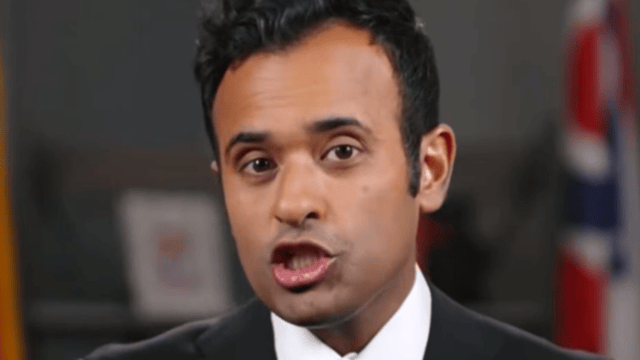
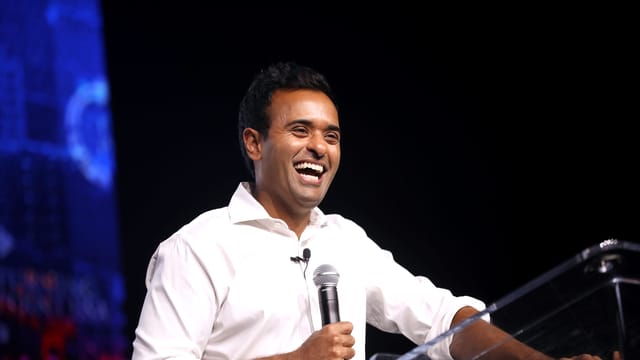
Ohio Republican gubernatorial nominee Vivek Ramaswamy has advocated putting cameras inside school classrooms and keeping children in school year-round, advancing two education proposals that would expand the reach of school monitoring and the amount of time students spend under school supervision.
Ramaswamy called for classroom cameras at least twice during his 2024 presidential campaign. Then, while running for Ohio governor in November 2025, he proposed eliminating the traditional summer break and extending school hours to reduce parents’ child care expenses.
The proposals were made separately, more than two years apart. Ramaswamy has not publicly presented them as one combined Ohio policy. But both are part of his documented education record, and neither was accompanied by a detailed explanation of how the changes would affect students, teachers or school districts.
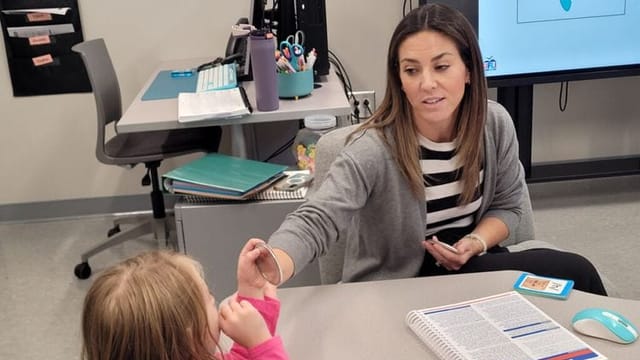
For Ohio families, the implications of pursuing both ideas would be substantial: children attending school throughout the year, remaining in classrooms later each afternoon, and potentially being recorded during their lessons.
Ramaswamy called for cameras inside classrooms
On September 8, 2023, Ramaswamy published an education proposal on X that included a call to “Publish curriculum online & cameras in the classroom.”
He made the demand alongside other sweeping changes to public education, including abolishing teachers unions, eliminating the federal Department of Education, expanding school choice and placing three armed security guards in every school.
It was not the first time he had advocated classroom cameras. On April 28, 2023, Ramaswamy included the same proposal in the description of a video posted to his official YouTube channel, outlining what he wanted to change about American education.
In neither statement did Ramaswamy specify who would operate the cameras, whether they would continuously record classroom activities, whether parents or government officials could access live footage, or how recordings of children would be protected.
He also did not establish whether cameras would be directed at teachers, students or entire classrooms. His proposal called for placing cameras inside instructional spaces without spelling out what those cameras would be permitted to capture or how the resulting footage could be used.
Then came his proposal to keep Ohio children in school year-round
On November 24, 2025, Ramaswamy took his education proposals in another direction, suggesting Ohio schools should remain open year-round and extend the school day until 4 p.m. as a way to reduce child care expenses.
In a social media video promoting his affordability agenda, Ramaswamy said: “Make parenting more affordable by making school year-round and going til 4 o’clock instead of 3 o’clock so you don’t have to pay for childcare.”
His rationale was explicit: keeping children in school longer would reduce the amount of time parents needed to pay for child care.
But extending the school year and daily schedule would shift substantial additional responsibilities onto public school districts. Teachers and support staff would need to cover additional hours or days, buses would operate on expanded schedules, and school buildings would incur additional operating expenses.
Ramaswamy did not explain how Ohio would pay for those changes.
The proposal also proved controversial enough that his campaign removed the original video and published an edited version without the year-round-school remarks. Some of his supporters falsely claimed that a recording of the original proposal was generated by artificial intelligence. The recording was authentic, and his campaign acknowledged the remarks.
Campaign spokesperson Connie Luck subsequently told The Center Square that the discussion was not a formal policy announcement but an exchange of ideas with voters.
Ramaswamy did not categorically reject the idea when questioned about it again in March 2026. Instead, he told Signal Ohio that policymakers should remain open-minded about different approaches to improving education, particularly in poorer communities.
Classroom cameras carry serious privacy implications
Ramaswamy’s earlier proposal to put cameras inside classrooms introduces another dimension to his ideas about public education: the ability to observe what happens inside rooms where children spend much of their day.
Video systems placed inside classrooms can capture students’ academic activities, interactions with teachers, disciplinary incidents and potentially sensitive personal information. Depending on how the system operates, recordings could be accessible to school administrators, technology providers or others granted permission to view them.
Federal law already recognizes that school video recordings can contain protected student information. Under U.S. Department of Education guidance, school-maintained footage that directly relates to identifiable students may qualify as an education record protected by the Family Educational Rights and Privacy Act.
In Seneca County, existing school policies illustrate the importance of defining how surveillance equipment may be used. Tiffin City Schools’ security policy permits cameras inside and outside buildings for safety and security, but requires advance notice to students, staff and parents. It also prohibits placement where people reasonably expect privacy and limits surveillance to maintaining order, safety and security.
Ramaswamy’s classroom-camera proposal did not identify equivalent safeguards. It provided no rules for access to recordings, retention periods, disclosure of student images or preventing footage from being used for purposes unrelated to education.
A costly proposition for already-strained Ohio schools
The financial implications of expanding school operations are particularly relevant in communities such as Tiffin, where public school funding has already been a major issue.
In November 2025, Tiffin voters approved a 0.75% earned income tax levy to support existing school operations, generating approximately $3.2 million annually. District officials have also identified a projected $1.2 million annual revenue loss associated with changes to Ohio property tax law, as TiffinOhio.net previously reported.
Keeping schools open additional days and hours would require more staffing, transportation, utilities and building maintenance. Installing classroom-camera systems would bring additional equipment, infrastructure and data-management expenses.
Neither Ramaswamy’s classroom-camera statements nor his year-round-school proposal explained how districts would finance such changes or what additional funding the state would provide.
Ramaswamy now warns against a surveillance state
Ramaswamy’s previous support for classroom cameras also contrasts with his more recent warnings about government surveillance.
During a July 2026 campaign appearance at the Butler County Fair, he warned that automated license plate readers manufactured by Flock Safety could enable government tracking on a scale resembling an authoritarian surveillance state.
On August 27, he reiterated that position, pledging to prevent Flock cameras from spying on people inside their vehicles and warning against an expansive surveillance state in Ohio.
License plate readers and classroom cameras perform different functions, but both involve questions about how government institutions collect, retain and use information about individuals. Ramaswamy has made those concerns central to his public position on Flock cameras while providing no corresponding privacy framework in his earlier classroom-camera proposal.
As Ohio voters prepare to choose their next governor, Ramaswamy’s record contains two consequential education ideas: placing cameras inside classrooms and keeping children in school throughout the year. One would introduce video monitoring into instructional spaces. The other would extend the amount of time children spend in those spaces.
His campaign has not established that it intends to pursue both proposals together. But the documented statements show that Ramaswamy has advocated each idea, while leaving the costs, student privacy protections and practical consequences unexplained.