
Ohio households have paid among the highest added costs in the country under a set of Trump administration policies on tariffs, energy, gas prices and health care, according to a new analysis from the Center for American Progress Action.
The progressive advocacy group ranked Ohio 13th among states for added household costs, estimating the average Ohio household has paid $2,175 more through June 30 and could pay $3,300 more by the end of 2026.
For a family of four buying health insurance through the Affordable Care Act marketplace, the report estimates the added cost in Ohio rises to $3,688 through June and $6,325 by year’s end.
The report attributes the increases to four policy areas: tariffs, higher residential electricity costs, higher gasoline prices tied to the war in Iran, and the expiration of enhanced ACA premium tax credits for families buying marketplace coverage.
CAP Action’s analysis is not a government estimate. It is an advocacy-group analysis that assigns costs to members of Congress based on recorded votes the group describes as “cost-up” votes — votes that, in its methodology, raised or sustained one of the four added-cost categories.
That matters because the report does not simply measure price increases. It also ties those costs to congressional votes on tariffs, the One Big Beautiful Bill Act, ACA premium tax credits and war-powers resolutions related to Iran.
How the report says Ohio was affected
Ohio’s $2,175 average-household figure includes gas, utility and tariff costs. The higher $3,688 figure applies to a family of four purchasing ACA marketplace coverage because it adds the estimated premium increase after the enhanced tax credits expired.
Ohio household type | Added cost through June 30 | Projected added cost through 2026 |
|---|---|---|
Average household | $2,175 | $3,300 |
ACA marketplace family of four | $3,688 | $6,325 |
Nationally, CAP Action estimates that the average household has paid $2,072 more through June 30 for gas, utilities and tariff-affected goods. For a family buying ACA marketplace coverage, the report puts the added cost at $3,569 through June and projects it could reach $6,162 by the end of 2026.
The group’s methodology treats tariffs as a national cost spread evenly across households. Gas, utility and ACA marketplace costs are calculated with state-level inputs, including Brown University’s Iran War Energy Cost Tracker, U.S. Energy Information Administration electricity data, Yale Budget Lab tariff estimates, Keep Americans Covered state impact analyses and federal marketplace enrollment data.
Ohio’s delegation in the report
CAP Action’s searchable table lists members of Congress, their “cost-up” vote counts and the household costs the group attributes to those votes in each state. Searching the table for “Ohio” or “OH-” shows the state’s delegation.
Among the Ohio House members shown in the report’s table, Republican Reps. David Taylor, Jim Jordan, Bob Latta, Michael Rulli, Mike Turner and Troy Balderson each recorded 12 “cost-up” votes out of 12 tracked House votes. Rep. Dave Joyce and Rep. Mike Carey were listed at 11 of 12, Rep. Max Miller at 10 of 12 and Rep. Warren Davidson at 9 of 11.
The same table lists Democratic Rep. Greg Landsman at 1 of 12 and Democratic Rep. Joyce Beatty at 0 of 12. The full interactive table should be searched directly for the rest of Ohio’s delegation, including additional House members and senators.
Under CAP Action’s scoring system, a member is charged with the full cost of a category if they cast at least one “cost-up” vote in that category. The report says one opposing vote within the same category does not reduce that attribution.
Energy costs connect to Ohio’s data-center debate
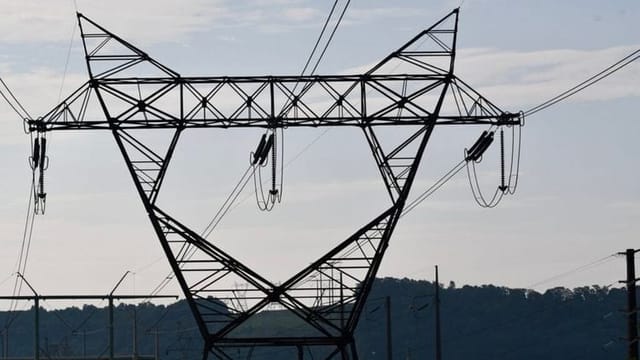
The utility-cost portion of the report lands as Ohio is already debating how much new electricity demand should be paid by data centers and how much risk should fall on ratepayers.
In February, AEP Ohio said its new data-center tariff had reduced projected demand from 30,000 megawatts to 5,700 megawatts, but manufacturers and other critics continued warning that ratepayers could face higher costs if utilities overbuild for speculative projects.
Ohio lawmakers have also been weighing new data-center legislation touching on tax breaks, utility billing, water use and local government impacts. The state has already committed at least $2.3 billion in sales-tax exemptions for data centers, according to reporting by Signal Statewide republished by TiffinOhio.net.
Those debates overlap with CAP Action’s argument that energy policy choices can show up directly in household utility bills. They also connect with Rep. Landsman’s No Harm Data Center Act, which would require data-center operators to pay for the grid infrastructure needed to serve them.
Tariffs and household affordability
CAP Action’s report estimates tariffs have added $1,574 in costs for the average U.S. household through June 30, using a national estimate rather than a state-by-state tariff figure.
That finding fits into a broader affordability debate in Ohio. A Cleveland Fed model previously showed elevated recession risks as tariffs, debt, weak hiring and falling consumer sentiment weighed on the economic outlook. TiffinOhio.net has also reported on analyses finding that the affordability crisis is getting worse for households in Ohio and across the country.
Tariffs are paid by importers at the border, but economists have long warned that much of the cost can be passed through to consumers through higher prices. CAP Action’s methodology uses a 70 percent consumer pass-through assumption, citing the Congressional Budget Office.
Health care and other federal cost shifts
The report’s largest additional cost for marketplace families comes from health care. CAP Action estimates an Ohio family of four buying ACA marketplace coverage would face $3,688 in added costs through June and $6,325 through 2026 once the premium increase is included.
The enhanced ACA premium tax credits expired at the end of 2025. The report says the health care estimate applies only to households buying ACA marketplace coverage, not every Ohio household.
The finding adds to other federal-policy cost shifts affecting Ohio families. In May, TiffinOhio.net reported that a Trump administration child care rule could cost some Ohio families up to $15,000 more annually after rescinding a Biden-era cost cap.
Ohio among the 20 highest-cost states
CAP Action ranked Ohio 13th among the 20 states with the highest total added household costs. The only neighboring states ranked higher were Indiana, Kentucky and Pennsylvania.
How CAP Action calculated the costs
CAP Action’s methodology separates the costs into two totals. The “average household” figure includes gas, utilities and tariffs. The “marketplace family of four” figure adds the ACA premium increase for a family buying marketplace health insurance.
The report says gas costs are based on Brown University’s Iran War Energy Cost Tracker. Utility costs are based on U.S. Energy Information Administration residential electricity data. Tariff costs are based on CAP Action and Yale Budget Lab estimates. Health care costs are based on Keep Americans Covered state fact sheets and federal marketplace enrollment data.
The report’s vote scoring is broader than a simple roll-call summary. It includes final-passage votes, disapproval resolutions, war-powers resolutions and procedural votes that determined whether measures could reach the floor. CAP Action says it did not include messaging votes with no bearing on whether a cost took effect.
Because of that methodology, the report should be read as CAP Action’s attribution of policy responsibility, not as a direct household bill or official government accounting. But the Ohio numbers place the state clearly in the upper tier of the group’s national cost estimates.
For Ohioans already facing rising utility bills, health care premiums, tariffs and other cost pressures, the report adds another data point to the 2026 affordability fight: according to CAP Action, the price tag is already more than $2,000 for the average Ohio household, and still rising.