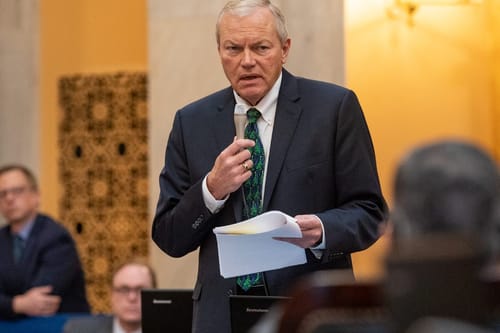
State Sen. Bill Reineke is helping develop legislation that would allow certain utility companies to take possession of private property before a judge determines whether an eminent-domain taking is justified, according to a review of a leaked legislative draft and existing Ohio law.
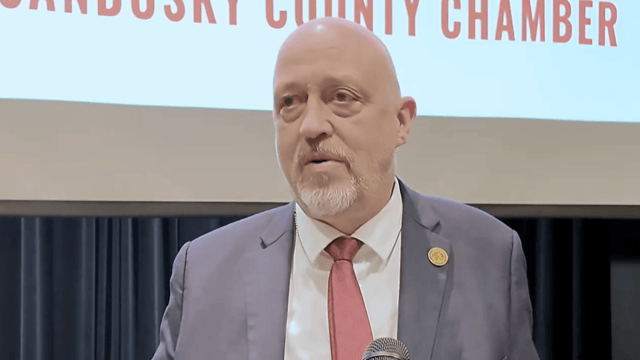
Reineke, a Tiffin Republican preparing to become Ohio Senate president in January, acknowledged Wednesday that he and others had been circulating the proposal before its contents became public. He described it to The Advertiser-Tribune as “a piece of legislation we were sharing to get consensus on” and said he did not know how the draft had been leaked.
The six-page document, identified as Ohio Legislative Service Commission draft l_136_2882, has no bill number or named sponsor. Its language would permit covered utilities to deposit an appraised amount with a court when filing an eminent-domain lawsuit and immediately take possession of the property.
Reineke told the local newspaper the legislation would allow infrastructure work to begin once a court had determined the property could be used for that purpose. The proposed amendment to Ohio Revised Code Section 163.06(B), however, would allow qualifying utilities to deposit money “at the time of filing the petition” and “thereupon take possession of and enter upon the property appropriated.”
The draft contains no requirement for a judge to first rule on the utility’s right to take the property. Landowners would retain their right to challenge a taking and generally appeal an adverse ruling, but utilities could already have possession while those challenges remain unresolved.
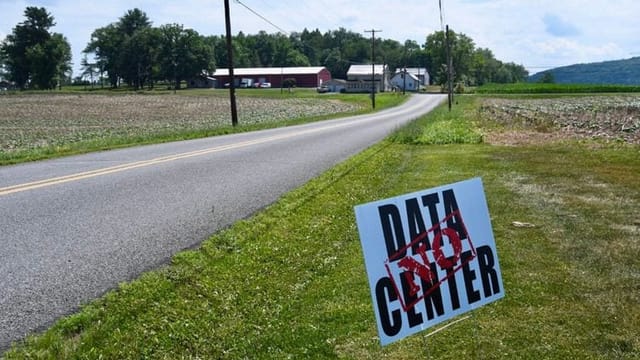
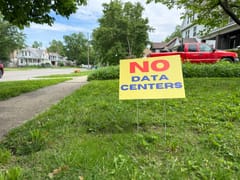
The proposal has drawn organized opposition from the Ohio Farm Bureau, which warns that the change could accelerate the acquisition of private land for electric transmission lines and natural gas pipelines, including infrastructure built to serve energy-intensive data centers.
Utilities could take possession before legal challenges are resolved
Ohio already permits utilities with condemnation authority to seek private property for qualifying public uses when negotiations with landowners fail. The proposed legislation would expand the circumstances in which those companies could obtain possession before the legal proceedings conclude.
Section 163.06(B) currently provides an expedited process, commonly called “quick take” or “deposit and build,” for public agencies undertaking certain road and rail projects. Those agencies can deposit an estimated amount with the court when filing an appropriation petition and take possession before the final compensation award is determined.
The leaked draft would add public utilities to that provision, requiring the deposit to be based on a valuation by a qualified independent appraiser. The same subsection covers structures on the property, allowing occupants 60 days after service of a summons to vacate before the structures may be removed.
Property owners would still be entitled to the preliminary protections in Section 163.04, including at least 30 days’ notice of the proposed acquisition, a written good-faith offer and an appraisal in most cases. They could also contest the necessity or legality of a taking under Section 163.09.
The draft would allow possession before those legal challenges are finally resolved. Existing Ohio law already anticipates such situations for public agencies using expedited procedures, requiring restoration of the property or payment of damages when an agency takes possession and subsequently loses its right-to-take case.
Reineke’s explanation that construction would follow a court determination is therefore more restrictive than the authority contained in the leaked legislation. The draft would place covered utilities within a statutory process permitting possession at the petition-and-deposit stage.
Reineke denies data-center connection despite infrastructure provisions
Reineke rejected suggestions that the legislation could benefit data centers, telling The Advertiser-Tribune that it “has nothing to do with data centers.” He also said that, as the representative of seven rural counties, “the last thing I want is eminent domain.”
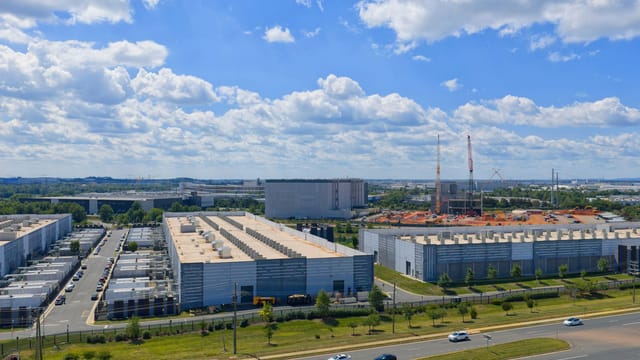
The proposal would accelerate possession of private property for qualifying electric transmission lines and natural gas pipelines, infrastructure that could be constructed to supply data centers with electricity or natural gas. It would also expand the definition of a public utility under Section 163.01 to include certain entities holding Ohio Power Siting Board certificates for those facilities.
Data centers themselves are not specifically named in the draft, and the legislation would not automatically grant their operators eminent-domain authority. Utilities and other qualifying entities would still need independent legal authority to condemn property. But infrastructure serving data centers could benefit from the proposed expedited possession process.
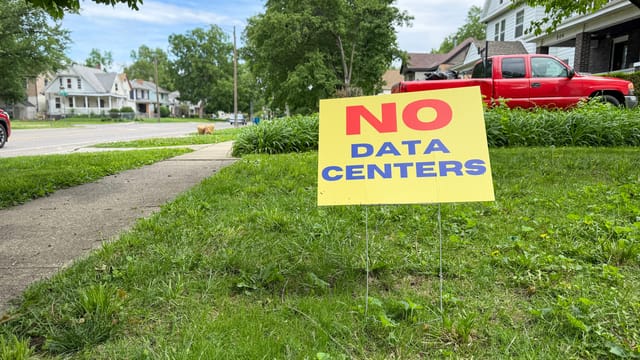
The debate follows a November 3 election in which Ohio voters favored restrictions on data-center development in all 21 related local ballot contests across 18 jurisdictions, according to Ballotpedia’s election analysis. Voters approved measures restricting development or defeated proposals that would have facilitated it.
In Reineke’s own Senate district, Upper Sandusky voters approved a ban on data-center construction with 76.92% support. The measure received 1,893 votes in favor and 568 against, according to reported election returns.
The proposed eminent-domain legislation would not directly overturn those local restrictions. Transmission lines and pipelines supplying data centers outside those communities, however, could qualify for the expedited process if they meet the bill’s requirements.
Business Roundtable advocated the change months before the leak
The Ohio Business Roundtable, an organization representing executives of major Ohio companies, publicly advocated the underlying policy months before the legislative draft surfaced.
In a March 4 energy competitiveness report, the Roundtable recommended adopting a “Deposit-and-Build Framework for Energy Infrastructure.” The organization called for allowing construction to proceed after public necessity was established and appraised compensation deposited with a court.
The Roundtable argued that the change would align Ohio with 45 other states and prevent lengthy infrastructure delays. Its report was developed with participation from more than 35 member companies, including utilities and other energy industry participants.
The recommendation’s reference to establishing public necessity before construction is significant. The leaked legislative language would allow qualifying utilities to take possession when filing an appropriation petition, before a judge necessarily resolves a landowner’s challenge to the taking.
The Roundtable has defended its proposal as a way to improve electricity reliability and affordability without granting condemnation authority to entities that do not already possess it. WEWS reported Tuesday that Roundtable representative Alexandra Denney said she would need to examine the draft’s expanded definition of a public utility when a reporter read the provision to her.
Reineke has also defended the legislation on energy-cost grounds. In a statement reported by the Statehouse News Bureau, he said, “The more we can build out and upgrade our grid, the lower energy costs will be for Ohioans.”
Reineke has confirmed his involvement in developing the proposal, while the Roundtable’s public report establishes that the organization was advocating the same policy months earlier. The participants have not publicly identified who requested legislative draft l_136_2882 or supplied its language.
Farm Bureau warns of push for lame-duck passage
The Ohio Farm Bureau has launched an opposition campaign, urging farmers and other landowners to contact lawmakers before the proposed expansion of eminent-domain authority advances.
“Ohio farmers and landowners should not have to fight to protect their property while a utility company is already building on it,” Farm Bureau President Bill Patterson said in a November 16 statement.
The organization has also issued an action alert opposing additional quick-take powers for utilities. It argues that allowing companies to begin construction while property disputes remain unresolved would diminish landowners’ negotiating leverage and weaken protections for agricultural property.
Evan Callicoat, the Farm Bureau’s director of state policy, told the Statehouse News Bureau that utilities had sought similar authority for years and that his organization had recently learned of a “real push” to pass the proposal during the General Assembly’s post-election lame-duck session. He called it an “egregious expansion of eminent domain authority.”
As of November 18, no introduced bill matching the leaked draft, named sponsor, committee referral or scheduled hearing had been identified in the Ohio General Assembly’s public legislative records. Lawmakers have additional sessions scheduled in December, leaving time for the proposal to be introduced or added to another measure before the current General Assembly adjourns.
Reineke told The Advertiser-Tribune that work on the legislation continues. He has not publicly identified the other people involved in circulating the draft, explained who requested it from the Legislative Service Commission or indicated whether he intends to pursue passage before the end of the year.
The leaked text would give qualifying utilities possession of private property at the beginning of an eminent-domain lawsuit, while landowners could still be fighting in court over whether the taking should be permitted. That provision remains part of the proposal Reineke and others are developing as Ohio lawmakers approach their final legislative sessions of 2026.