

The Ohio Supreme Court upheld a decision last week that, according to its challengers, allowed utilities to overcharge customers to the tune of roughly $115 million. It brings an end to a narrow dispute that started in 2021 but has its roots in the Ohio House Bill 6 scandal.
Two groups challenged a fee, established by H.B. 6 and tacked onto Ohioans’ utility bills, to bailout two coal plants.
That rider allowed the plants’ owners — AEP Ohio, Duke Energy, and Dayton Power and Light — to earn a profit despite operating at a loss.
After the bribery scheme that advanced H.B. 6 came to light, the challengers insisted it would be improper to allow the companies to charge ratepayers for prop up the coal plants.
In the intervening years, state lawmakers came around to that idea. In 2025, they repealed the bailout as part of a major utilities overhaul, Ohio House Bill 15.
The Ohio Supreme Court acknowledged the change in circumstances but kept its focus on the 2021 audit.
Writing for a unanimous court, Justice Megan Shanahan said the PUCO’s determinations were justified.
Even where she acknowledges state regulators gave too much credence to the utilities, Shanahan determined the “the record does not support a finding of reversible error.”
The H.B. 6 rider and the audit
Ohio House Bill 6 set up the Legacy Generation Rider to keep the Ohio Valley Economic Cooperative coal plants running.
But following a legally mandated audit in 2021, several groups challenged the utilities’ use of that rider, claiming the companies were collecting more than they should.
If you incur expenses at work, you usually have to turn in receipts and file an expense report to get reimbursed. Utility cost recovery is similar, just on a much larger scale.
Utilities can only recover costs if their expenses are “reasonable and prudent.”
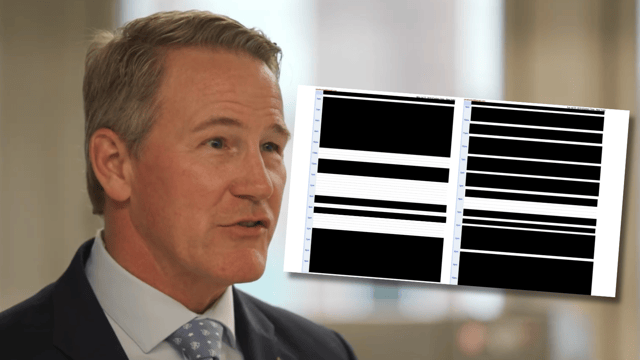
An audit of the Legacy Generation Rider indicated the OVEC plants spent much of 2020 running in the red.
The review also found the plants had inked long-term supply contracts at above-market rates and kept more coal on hand than necessary.
“At this time,” the audit for AEP Ohio states, “the OVEC plants cost customers more than the cost of energy and capacity that could be bought on the PJM wholesale markets.”
But the auditor noted lawmakers may have had other considerations when they approved the rider, like maintaining jobs or fuel diversity, “that outweigh the impact on ratepayers.”
In a 2023 filing with the Public Utilities Commission of Ohio, attorney Kim Bojko from the Ohio Manufacturers Association criticized the audit for turning a blind eye to the largest bribery case in state history.
She noted the utilities themselves and one of the companies supplying that above-market coal had a hand in the H.B. 6 scandal.
“These companies now directly benefit from the customer-funded bailout legislatively enacted by H.B. 6,” she wrote.
“None of the audit reports even mention the bribery issues, or the fact that they may be indicative of a conflict of interest between customers on one side, and subsidized OVEC plants and coal companies on the other.”
But in 2024, the PUCO signed off on the audit — blessing the companies’ charges for the 2020 calendar year.
The Ohio Manufacturer’s Association and the Ohio Environmental Commission challenged that decision all the way to the Ohio Supreme Court.
The Ohio Supreme Court decision
To the Ohio Manufacturers Association and the Ohio Environmental Coalition it clearly wasn’t reasonable or prudent to allow utilities to recoup expenses for running unprofitable plants.
They raised several arguments — the PUCO didn’t consider important evidence, the utilities didn’t meet the burden of proof to justify expenses, and regulators got the standard for reasonable and prudent wrong.
The court brushed aside each argument in turn.
At several points Justice Shanahan determined the challengers had not met their own burden of proof, while finding the PUCO had provided enough in the record to justify their decisions.
In one example, the Ohio Manufacturer’s Association pointed to a report from the regional grid operator PJM indicating one plant might retire early.
That would make the utilities’ claims for advance debt payments imprudent, OMA claimed, but the PUCO excluded the report.
The court, however, rejected the argument because OMA didn’t include a specific citation, and although the report was “proffered” during PUCO proceedings it was never entered into the record.
“In short,” Shanahan wrote, “(OMA) has failed to create a record sufficient for this court to decide whether the commission erred.”
In another example, the Ohio Environmental Council argued the PUCO’s own test of ‘reasonableness’ includes a question of whether a utility’s actions benefit ratepayers and the public interest.
The court rejected that point, determining that the test applied to a different kind of case and has no foundation in state law anyway.
As for operating the plants at a loss, the PUCO accepted the companies’ explanation that they need to keep running even in unfavorable market conditions because “there are significant costs associated with starting up and shutting down.”
Plant operators eventually shifting their strategy as energy prices fell during the COVID-19 pandemic was taken as evidence that the utilities were responding prudently to a changing market.
That was good enough for the Supreme Court, too.
“The commission did not sidestep the analysis,” Shanahan wrote. “Rather, the commission reviewed the combined commitment strategies that OVEC employed during the audit period on behalf of the companies, found that OVEC’s decisions were prudent when they were made, and determined that no costs related to the commitment strategies should be disallowed.”
Follow Ohio Capital Journal Reporter Nick Evans on X or on Bluesky.
This story is republished from the Ohio Capital Journal under a Creative Commons license. View the original article.