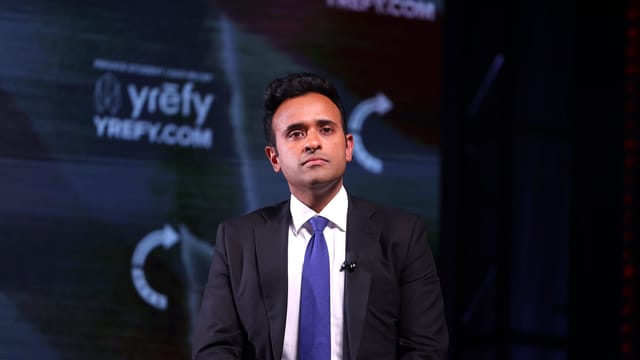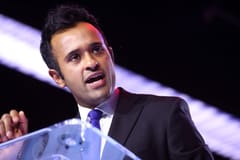


One candidate for Ohio attorney general is calling for the state inspector general to investigate new revelations about ties between the head of the state’s quasi-public economic development agency JobsOhio, the governor’s office, and Intel, a company that has received millions.
The other candidate hasn’t responded to questions about the matter.
John Kulewicz, the Democratic nominee for AG, last week amended his complaint to Ohio Inspector General Randall J. Meyer with details of other possible conflicts of interest on the part of Josh Rubin, a lobbyist who chairs the board of JobsOhio, that were reported last week by the Capital Journal.
The latter calls itself a private corporation. But it was created by the General Assembly and Gov. Mike DeWine appoints its board.
JobsOhio was allowed to lease the state liquor franchise for far less than it was worth. It has since disbursed more than $2 billion in what at least used to be public money to businesses in the form of incentives.
Kulewicz’s complaint says that Rubin’s dual roles raise questions about whether he’s using JobsOhio funds to benefit his lobbying clients.
The Capital Journal’s new reporting showed that “Mr. Rubin continues to lobby for Intel even during his tenure as chairman of the board,” the amended complaint said. “Mr. Rubin was actively lobbying the governor on Intel’s behalf as recently as April 2026.”
It added, “This conduct continues to raise ethical questions about Rubin’s ability to serve the interests of the People of Ohio versus the interests of his clients and his own pecuniary interests as CEO of the CJR Group.”
A spokesman for Keith Faber, Kulewicz’s Republican opponent in the attorney general’s race, didn’t respond to questions for this story.
Last week’s analysis of lobbying disclosures and other records showed that Rubin was registered to lobby both JobsOhio and the governor on behalf of Intel from the time Gov. DeWine appointed him to the JobsOhio Board in September 2023 until the beginning of this year.
They also show that Rubin actively lobbied DeWine for Intel through that period and into 2026.
The state has awarded Intel more than $600 million for construction of what is now a long delayed chip-making plant northeast of Columbus. JobsOhio has awarded at least $27 million for the project.
With the project delayed by at least five years and its future uncertain, Rubin is in a position likely to have some authority over whether to try and claw back some portion of the money JobsOhio has awarded. The agency won’t answer questions about the matter.
A spokesman for DeWine said Rubin’s multiple roles didn’t amount to a conflict. Despite being registered to lobby JobsOhio for Intel, his “activity and expense” filings show he actively lobbied the governor’s office on the Intel project, while he made no such filings regarding JobsOhio, DeWine Press Secretary Dan Tierney said.
In emailed responses to written questions, Kulewicz disagreed, saying, “This is an apparent conflict of interest. And at a time when we urgently need to restore public confidence in government, this also creates a clear appearance of impropriety. When you take on a job like this and answer the call to public service, you do so knowing that you can only serve the People of Ohio. You can’t serve both the public and the powerful.”
Faber’s spokesman was sent the same questions as the Kulewicz campaign. He didn’t respond.
With narrow exceptions, JobsOhio was exempted from the state’s ethics laws when it was created in 2011.
Paul Nick, executive director of the Ohio Ethics Commission, said that his office for the most part doesn’t have jurisdiction over Rubin, the rest of the JobsOhio board, or its staff. However, he said, Rubin’s roles as a board member and an Intel lobbyist appear to contradict his pledge to the governor to “cease services for any clients on matters in front of JobsOhio…”
Nick said that when JobsOhio was created, the Ethics Commission advocated that it be subject to the same ethics laws that state agencies are. Kulewicz said that should happen now.
“JobsOhio replaced several functions of the Ohio Department of Development,” he said. “It serves a public purpose doing work on behalf of the People of Ohio. It would function better if it were subject to the same ethics rules and laws as everyone else who works on behalf of the People of Ohio.”
DeWine’s office and JobsOhio say JobsOhio’s ethics policy requires board members to declare possible conflicts and for the board to vote whether to recuse them. Both said it’s a strong policy.
A review of the few board records that are public apparently held no instances in which Rubin, a lobbyist with dozens of clients, declared a potential conflict. Asked multiple times to share documents showing that Rubin had ever declared a potential conflict, JobsOhio didn’t respond.
Kulewicz said that shows JobsOhio’s dealings need to be investigated by a third party. That’s why he filed his initial complaint regarding another Rubin client, utility giant AEP.
Kulewicz added that subjecting JobsOhio to open-meetings and records laws would allay suspicion and prevent the need for outside investigation.
“None of this would be necessary if the legislature were to remove this veil of secrecy,” he said. “That is my preferred method to correct this. We already have sufficient protections for trade secrets and certain business information in Ohio — JobsOhio does not require near-complete exemption from our public records laws. I would advocate for that change.”
This story is republished from the Ohio Capital Journal under a Creative Commons license. View the original article.