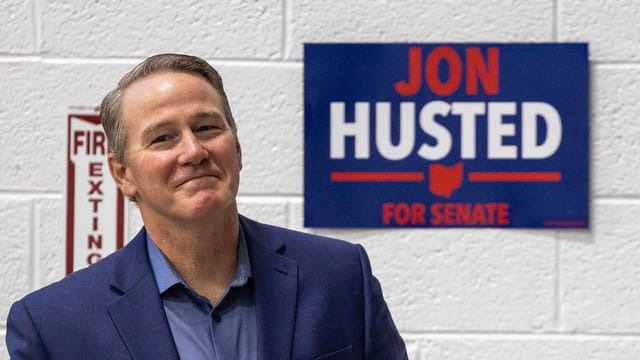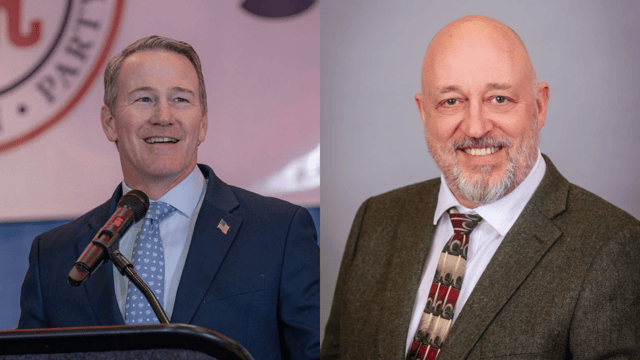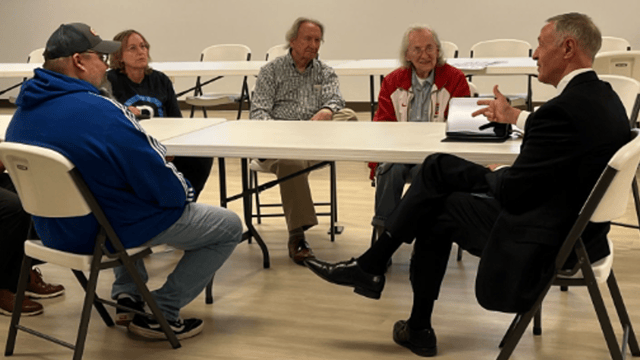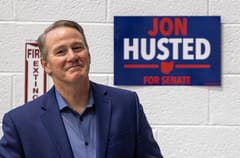
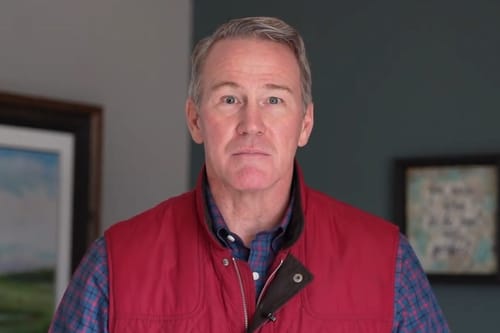
Republican Sen. Jon Husted is trying to reinvent himself on health care just as more than half a million Ohioans brace for steep premium hikes that health-policy analysts warn were made more likely by the very policies he has long supported.
Husted, who is up for election in 2026 to the U.S. Senate seat he was appointed to after former Sen. J.D. Vance became vice president, now presents himself as willing to negotiate a bipartisan extension of the Affordable Care Act’s enhanced premium tax credits.
For years, Husted opposed these subsidies, dismissed their effectiveness, and backed efforts that experts say would have raised costs for working families. His new posture arrives at a moment when those consequences are finally converging on Ohio’s health care system.
Throughout his political career, Husted has repeatedly sought to weaken the ACA’s core mechanisms for lowering premiums.
In an October interview on 55 KRC’s Brian Thomas Morning Show, he argued the enhanced subsidies were “not the way to go” for working families and alleged they encouraged improper enrollment practices. But independent health-policy analyses have found the ACA’s enhanced credits significantly lowered premiums for middle- and lower-income households and contributed to reductions in the uninsured rate in Ohio and nationally.
Husted also dismissed the long-term value of the credits.
On Spectrum News 1, he called them “a temporary COVID subsidy,” even though the enhanced credits were designed to address longstanding affordability gaps that predated the pandemic. For many Ohio families, the credits reduced monthly costs by hundreds of dollars — savings that would have been eliminated under the policy positions Husted supported.
As the budget fight intensified this fall, Husted escalated his rhetoric rather than addressing analyses showing that the policies he championed helped drive today’s affordability challenges.
In an interview with Semafor, he framed the premium credits as a “pandemic-era program” people had become dependent on. Days later, he told The Columbus Dispatch that the subsidies were “a Democrat problem,” despite hundreds of thousands of Ohioans from both parties relying on them to afford coverage. On NewsRadio WTAM, he went further, labeling them “Biden-era COVID bonuses.”
Examining Husted’s fraud allegations
Some of Husted’s most forceful claims involve alleged fraud in the ACA marketplace. In his 55 KRC appearance, he claimed the system was “filled up” with fraudulent enrollments and said there “may be as much as $30 billion” in losses — figures far higher than any verified estimate.
Federal oversight data does not support such a number. According to the Centers for Medicare & Medicaid Services, the improper payment rate for the ACA’s premium tax credit program was about 1% in 2022 — roughly $563 million of more than $55 billion in subsidies.
Analysts at the Kaiser Family Foundation note that concerns about “zero-claim enrollees” often stem from reporting delays or plan-switching and do not indicate large-scale fraud. These findings directly undercut Husted’s repeated suggestions of tens of billions of dollars in losses.
Despite this, Husted continued portraying the subsidies as inherently wasteful. In an interview with Dayton 24/7 Now, he described them as “bailouts of the system.” A Senate floor speech captured by Forbes Breaking News again cast them as “COVID bonuses” propping up what he called a “failed Obamacare system.”
A long record of opposing affordable care
Husted’s current repositioning contrasts with his long history of supporting Republican efforts to weaken the ACA, restrict Medicaid eligibility, and eliminate consumer protections that keep premiums manageable. Reporting from TiffinOhio.net shows he supported proposals that would have increased costs for people with preexisting conditions, reduced coverage options, and dismantled the very premium tax credits now at risk.
Analysts during the ACA repeal debates — including the Congressional Budget Office — found that similar measures would have sharply increased premiums and reduced coverage for millions. Those warnings mirror the affordability concerns Ohio families are now experiencing under the policies Husted promoted.
More recently, on WLWT5, Husted claimed the ACA “doesn’t work” and requires “huge government subsidies because it was poorly constructed.” On Newsmax’s National Report, he called the ACA subsidies “a complicated issue,” insisting the government should reopen before addressing them — even as Ohio families were receiving notices about impending premium spikes.
Democrats: Husted helped create the crisis
Ohio Democrats say Husted’s sudden interest in extending the subsidies reflects the growing pressure created by his own policy choices.
“Jon Husted has already voted against lowering health care costs — and it was to pay for tax cuts to billionaires,” said Sherrod Brown, the former U.S. senator from Ohio now running against Husted in the 2026 election. “Half a million Ohioans are facing higher premiums due to a health care crisis that Husted himself created.”
Tony Wen, Senior Communications Advisor for the Ohio Democratic Party, said in a statement that Husted’s decisions directly fueled the instability now hitting Ohio families. “Jon Husted voted eight times to make health care more expensive for Ohio families — all to fund tax breaks for billionaires and corporations. Now, because of Husted’s health care crisis, more than half a million Ohioans are bracing for their premiums to double or triple next year.”
What’s next?
Husted now says he is “certainly willing” to discuss extending the expiring credits if Democrats accept broader reforms — a position he reiterated in his interview with The Columbus Dispatch. Whether this new stance leads to meaningful action or represents a political recalibration remains unclear.
For the Ohio families facing steep premium increases, the immediate question is whether Husted’s shift comes soon enough — and whether his long record of opposition will continue shaping the outcome more than his latest statements.