Federal inspectors have faulted seven Ohio nursing homes in recent years for discharging residents to homeless shelters — people who could not manage their own medications, who used walkers, who in at least one case did not know who had dropped them off. The state’s largest long-term care lobby says the problem is bigger than any one facility and that Ohio needs to step in. The senator on Ohio’s ballot in November helped write the law that made those facilities harder to sue.
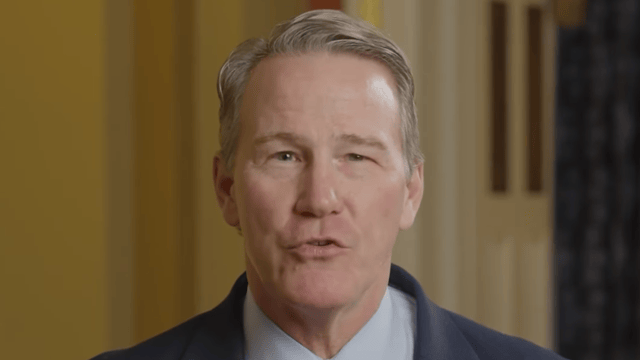
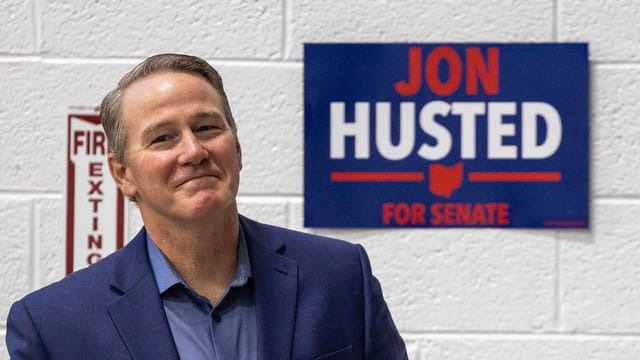
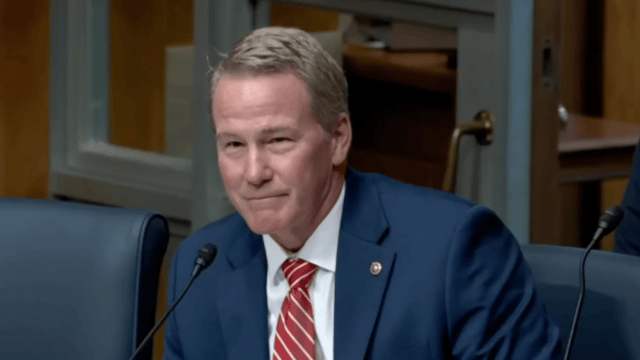
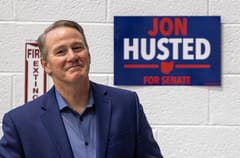
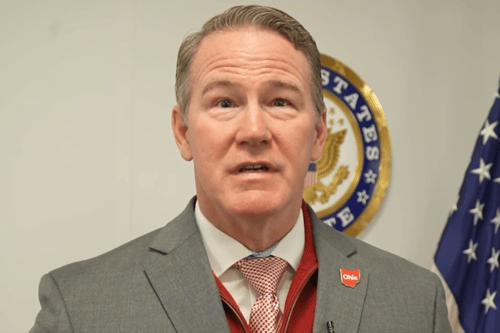
U.S. Sen. Jon Husted, R-Ohio, was one of 45 House members who cosponsored House Bill 412 in 2002, a measure that folded nursing homes and residential care facilities into Ohio’s legal definition of a “medical claim.” That change cut the window for filing suit against them from two years to one and barred state inspection findings from being introduced in court. Husted has since accepted more than $1 million in campaign contributions from the nursing home industry, its executives and lobbyists, NBC4 in Columbus reported this month.
He faces former U.S. Sen. Sherrod Brown on Tuesday, Nov. 3.
What inspectors found
The pattern was documented in April by Signal Ohio, which reviewed federal inspection reports and interviewed long-term care advocates. Reporter Jake Zuckerman found that the Centers for Medicare and Medicaid Services had cited Eastland Rehabilitation and Nursing Center in Columbus and six other Ohio facilities over efforts to discharge patients to shelters, most of which went through.
At Eastland, a woman was involuntarily discharged after being caught drinking beer. Staff could not find her a substance-use treatment bed and never called the county’s psychiatric bed board, inspectors wrote after an Aug. 3, 2023 visit. They took her to a shelter instead, where roughly 100 people were already on the waiting list. She arrived using a walker, incontinent, carrying a large bag of medications, managing diabetes, a tibia fracture and alcohol-related dementia. The shelter initially refused her and left her outside in late-summer heat before relenting and calling a city rapid response team. Neither the facility nor the inspectors could locate her by the time the report was written.
Three other cases run through the reporting. A man who had lived at the Laurels of Hillsboro for 22 years — diabetic, with glaucoma, cataracts and suspected autism — was taken to a shelter after his insurance stopped paying, according to a Dec. 29, 2025 inspection. Federal law entitles residents to 30 days’ notice. He got none, was never taught to manage his own medications, and arrived without needles. The facility was sold in July 2025 and now operates as Hillsboro Health and Rehab; a receptionist told Signal the facility is in substantial compliance with the state.
Meadowbrook Manor in Trumbull County gave a resident a 30-day notice and moved him out in 20, a July 2025 inspection found. He left with two weeks of medication, no prescriptions, no appointments and no care plan, and the shelter flagged a mismatch because he could not climb to a top bunk. The facility refused to take him back. At New Lebanon Rehabilitation and Healthcare Center, a woman with spinal and neural disorders, depression and arthritis was discharged to a shelter on roughly 24 hours’ notice after her insurer cut off her treatment.
The industry’s answer
Scott Wiley, chief executive of the Ohio Health Care Association, the state’s largest long-term care trade group, told Signal the situation reflects a national trend.
“This issue has been growing as more residents face unstable housing. State oversight and resources are needed to help tackle the issue on a larger scale to find meaningful, long-term solutions for Ohioans who struggle with homelessness. It will require a collaborative approach that a single nursing facility provider is not equipped to manage on their own.”
OHCA has spent decades building the political relationships that shape that oversight. Between 2016 and 2020, Ohio’s nursing home industry put roughly $6.1 million into state politics through trade association PACs, a nonprofit linked to OHCA and facility operators themselves, an Ohio Capital Journal analysis found. The DeWine-Husted ticket took about $331,000 of it.
Neil Clark, the Republican lobbyist indicted in the FirstEnergy bribery investigation who died in 2021, described OHCA’s fundraising reach in a posthumous memoir quoted by the Capital Journal: “If FirstEnergy were a bank, then the nursing home industry is like having 500 ATM machines located around the state. Walk up, punch in a number and take out what you want. They have perfected the art of keeping politicians happy.”
The association also runs an awards program. Its published list of quality award winners shows Arbors at Sylvania receiving a Bronze Quality Award in 2024. That September, according to a wrongful death lawsuit Signal reviewed, a resident at that facility was left in the same position through 33 consecutive eight-hour shifts and developed a pressure ulcer that exposed bone and led to a fatal infection. The suit is pending and has not been ruled on. Prestige Healthcare, the Louisville company that operates the Arbors chain, declined to comment; a spokesperson said the company’s position is no comment.
Across the chain’s 16 Ohio facilities, at least 11 plaintiffs have filed suits since Jan. 1, 2024 alleging negligence or medical errors that caused deaths, and CMS inspectors concluded that care at three Arbors homes — Milford, Stow and Minerva — contributed to residents’ deaths. CMS has fined Arbors facilities more than $648,000 over the most recent three-year period. Medicaid paid the chain $233 million over three years.
How Ohio measures quality
The state’s system for rewarding good care has been questioned for years. Experts interviewed for a January 2022 Ohio Capital Journal investigation said the quality incentive metrics written into state law are easily gamed, letting substandard homes collect incentive payments.
“If you set the bar so low that everybody can meet it, then you haven’t differentiated anyone,” said Jane Straker, director of research at the Scripps Gerontology Center at Miami University. “You’re not paying for quality; you’re just paying everyone for checking a box.”
The federal record is not reassuring either. ProPublica’s database of CMS inspections, updated in July, shows 191 of Ohio’s 922 nursing homes — about one in five — were cited for a serious deficiency in the past three years, meaning inspectors found immediate jeopardy to resident health or safety. Ohio homes have drawn $21.2 million in penalties and 172 payment suspensions.
Locally
Seneca County has five nursing homes. One has been cited for a serious deficiency in the past three years, and four have been cited for infection-related deficiencies, according to the same data. Total penalties across the county come to $14,400, with no payment suspensions.
The discharge rules at the center of the statewide reporting have been enforced in Tiffin. In a June 2024 complaint inspection, Autumnwood Care Center on East State Route 18 was cited three times over a transfer: for discharging a resident without an adequate reason or the required documentation, for failing to give timely notice of the transfer and appeal rights to the resident and the ombudsman, and for failing to let a resident return after a hospital stay that exceeded the facility’s bed-hold policy. Inspectors graded all three as causing no actual harm. The record contains no finding that anyone was sent to a shelter. Autumnwood has no fines or payment suspensions on file for the past three years.
The money and the vote
Ohio Secretary of State campaign finance records covering Husted’s state committees from 1999 through 2026 show the Ohio Health Care Association’s political action committee gave him $39,250 across 17 contributions, beginning three weeks before the 2000 general election and running through June 2014. Two more of the association’s own people gave $2,500 on top of that — including Peter Van Runkle, listed in the filings as the association’s president, who gave in 2006, 2007 and 2015. Together, OHCA’s PAC and its executives account for $41,750.
A second nursing home trade group, the Ohio Academy of Nursing Homes, gave another $17,500 through its PAC between 2001 and 2009. Counting both associations and OHCA’s executives, the trade groups that speak for Ohio’s nursing homes have given Husted’s state campaigns $59,250.
The operators themselves gave far more. Across the same records, contributions from nursing home chains, their owners and their executives total roughly $449,000 from about 84 donors. The largest are familiar names in the industry: Ronald Wilheim of CommuniCare Health Services and his wife, Dina, gave $15,499.69 each on July 12, 2023. Chris Chirumbolo, chief executive of Carespring Health Care Management, gave $10,000 on Aug. 1, 2023. Brian Colleran, who the Capital Journal reported operates Foundations Health Solutions and manages 57 Ohio nursing homes, gave $45,145 across five contributions between 2004 and 2010. Gerald Schroer Jr. of the Schroer Group, which operates the Altercare chain, gave in 11 separate years, most recently $1,000 in August 2023.
The giving continues at the federal level. Federal Election Commission records show the American Health Care Association’s political action committee — OHCA is that group’s only chartered Ohio affiliate — gave Husted for Senate $1,000 on Aug. 26, 2025 and another $1,000 on June 15, 2026. NBC4 reviewed Husted’s most recent campaign finance report and found more than a dozen nursing home PACs or lobbyists have given at least $34,000 to his Senate campaign so far.
The example was raised by Norm Wernet, president of the Ohio Alliance for Retired Americans, a labor-affiliated group that pushes for home- and community-based care and argues the nursing home industry lobbies against it.
“Wrong to see that somebody like Sen. Husted, when he was in the legislature, would co-sponsor a bill that, in fact, avoided the liability on the nursing homes,” Wernet told the station. “So that, that’s one example of how the politicians get continued support again and again.”
Husted’s office responded to NBC4 on a different question — the federal budget law — saying nursing homes received no net cash infusion or additional federal dollars under H.R. 1, and that the law made it easier for states to move toward home- and community-based care. The statement did not address the 2002 state legislation.
That distinction matters for the people at the end of these inspection reports. Medicaid, not Medicare, pays for most long-term care in Ohio, and the same federal law is squeezing the home-based programs that keep people out of facilities in the first place. Nearly 140,000 Ohioans rely on Medicaid-supported home care and face uncertainty as the deepest cuts take effect Jan. 1. Disability advocates have warned that the shift could push people back into institutions. Husted has also voted against amendments that would have directed federal investigations into insurance denials and Medicaid coverage losses — the same insurer cutoffs that preceded several of the shelter discharges.
Leilani Pelletier, Ohio’s statewide long-term care ombudsman, estimated roughly 13,000 Ohioans are discharged from a nursing home every month. Involuntary discharges to shelters are rare, she said, but facilities are legally required to ensure a discharge is safe and appropriate and do not get to decide unilaterally where someone goes.
“The real issue is when people are discharged to a homeless shelter and there’s been no work or investigation done on if that would be a safe or appropriate discharge,” she said.
Chip Wilkins, who runs Dayton’s long-term care ombudsman program, put it more plainly. Residents sent to shelters typically end up in a hospital within days because the shelter cannot meet their needs, he said, and he has seen an uptick over the past six months.
“It is as cruel as it sounds,” he said.