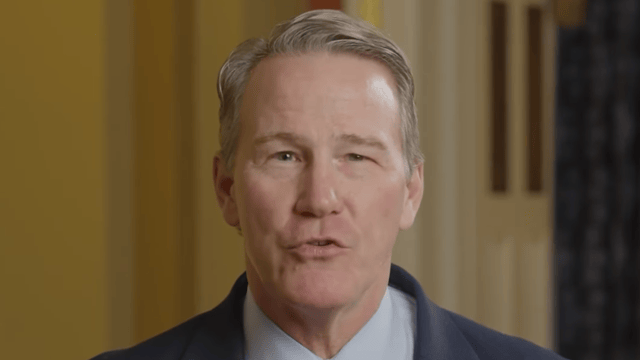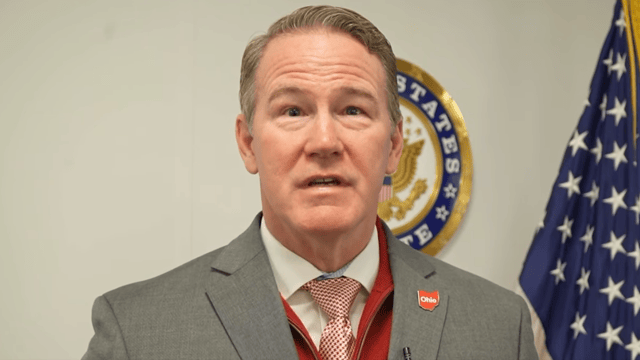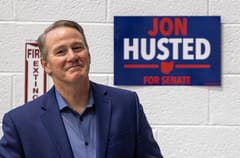


Former Ohio Democratic U.S. Sen. Sherrod Brown is running for his old job in the Nov. 3 election.
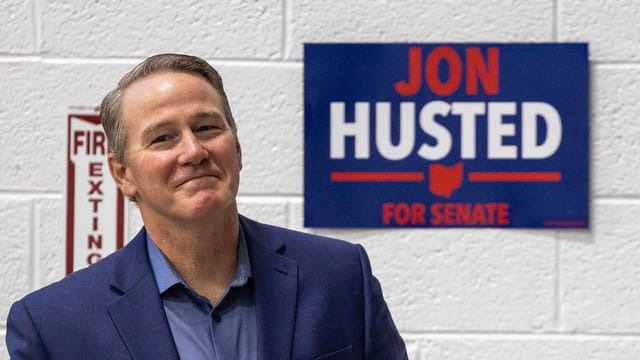
He is challenging Republican Sen. Jon Husted, who was appointed to the seat by Gov. Mike DeWine when J.D. Vance resigned to become vice president.
On Oct. 2, Brown responded to emailed questions from the Ohio Independent about the stakes of this year’s election.
This interview has been lightly edited for length and clarity.
With the war in Iran fueling high gasoline prices, inflation continues to make the cost of living higher for Ohioans. What would you do in the Senate to make things more affordable?
The first thing we need to do is end this reckless war in Iran.
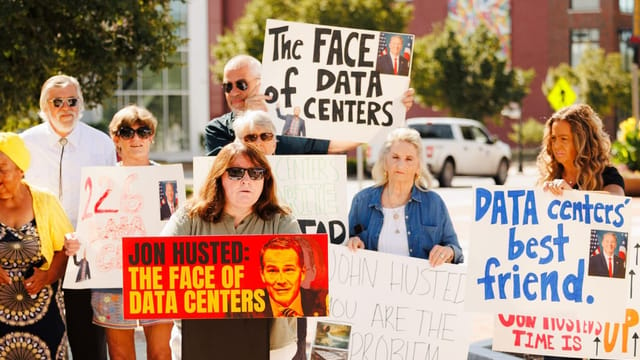
In the Senate, I’ll fight to ensure data centers pay the full cost of their electricity so that Ohioans aren’t footing the bill. Local communities should decide whether or not a data center comes into their community, not out of state corporations and billionaires.
We must make it illegal for drug companies to charge Americans more for the same drug than what they charge in other countries. I’ll push to ban health insurance companies from denying people care their doctors say they need.
KFF estimated in 2025 that the combination of Medicaid cuts in the federal budget package and the expiration of ACA marketplace subsidies would leave about 340,000 more Ohioans without health insurance by 2034. What is your plan to make sure more people can get affordable health insurance and can actually get care when they need it?
My plan is to rescind the $1 trillion in cuts to Medicaid that has put hospitals at risk across Ohio.
In Ironton, I met with Ohioans to discuss how rural communities are struggling to find affordable health care, especially as hospitals brace for potential closures. In Jackson, I heard from veterans who rely on the local VA for health care and are fed up with Jon Husted for standing by as workforce cuts at the VA and soaring health care costs have made life harder for Ohio veterans. In Scioto County, I met with Ohioans whose local hospital is threatened by a bill that Jon Husted was the deciding vote on.
To me, politics and governing have never been about left or right. It’s about whose side you’re on. I’m on your side. I’m on the side of families across Ohio who deserve affordable health care. That’s why I’m in this race. I’m running to stand up for Ohio’s working families. Not Wall Street. Not the drug companies. Not wealthy corporations.
Over your time as a senator, what steps did you back to lower costs for consumers (prescription drugs, health insurance, housing, or other areas)?
I know what some Ohioans may be thinking: there’s no way we can get any of this done. The system is too broken for any progress. I understand that cynicism. We’ve come to expect all this from Washington, for good reason. But I know we can change things for the better because we’ve done it before. Together, we capped the price of insulin at $35 for Ohioans on Medicare. We expanded health care for veterans exposed to toxic burn pits in Iraq and Afghanistan. We saved the pensions of thousands of Ohioans who were ripped off by Wall Street. Together, we fought for the Social Security Fairness Act that made sure every Ohio public service worker and their spouses would receive the full amount of their earned Social Security benefit.
You have proposed a ban on stock trading by members of Congress and lobbying by ex-lawmakers. Why are these steps important and how does political corruption affect Ohio families?
Last year, members of Congress made more than $635 million in stock trades. Far too many members of Congress over the years have become lobbyists. No one who serves in Congress should be able to trade stocks. They also shouldn’t be able to turn around when they leave office and become a lobbyist. If you can’t agree to that, you shouldn’t be in public office. Ohioans deserve a senator who puts workers over billionaires and their own self-interests.
The Husted campaign declined a request for an interview.
Husted’s campaign site says he “works for everyday Ohioans” and “made Ohio the least costly state in the Midwest to start and maintain a business.” In the Senate, he repeatedly voted against resolutions directing President Donald Trump to remove the U.S. military from the Iran war, opposed a resolution to terminate Trump’s tariffs on imported goods from Canada, voted against a three-year extension of expiring Affordable Care Act marketplace subsidies, and voted for the 2025 budget package that slashed tax rates for wealthy individuals and cut about $1 trillion from the Medicaid program over a decade.