Democratic gubernatorial candidate Dr. Amy Acton has rolled out her affordability platform, unveiling a multi-part policy package that would create a state-level earned income credit, establish a refundable child tax credit, launch a public prescription drug platform, and roll back key provisions of Ohio’s 2019 nuclear bailout law.
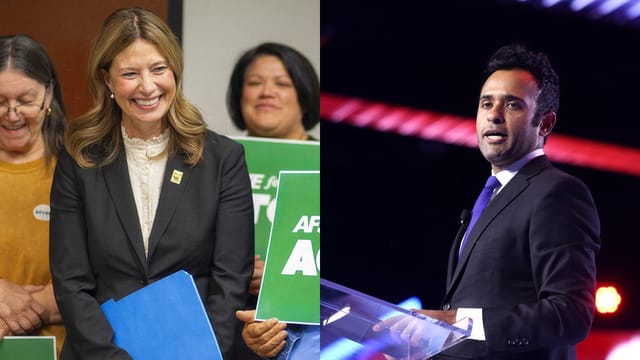
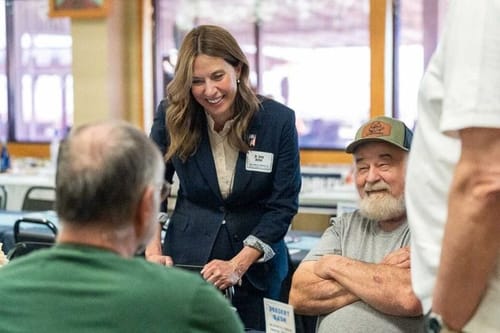
Acton introduced the plan — branded the “ActOn Lowering Costs” agenda — at a roundtable with small business owners and Ohioans at a coffeehouse in Columbus. Her running mate, former Ohio Democratic Party Chair David Pepper, joined her at the event.
“As governor, my number one priority will be lowering costs for working families,” Acton said at the rollout.
Working Families Tax Cut
The centerpiece of Acton’s proposal is a two-part tax package aimed at lower- and middle-income households. It would create a state Earned Income Credit that her campaign says could reach up to 775,000 working families, and a child tax credit of $1,000 per year for children aged 0–6 and $500 per year for children aged 7–18, available to families earning up to $85,000 annually.
According to the campaign, a married couple with two children earning $60,000 a year would receive an additional $1,778 under the combined credits. Acton’s team estimates the child tax credit alone would reach more than 1.4 million Ohio children.
Healthcare and prescription drug costs
Acton, a physician and the former director of the Ohio Department of Health under Gov. Mike DeWine during the early months of the COVID-19 pandemic, built the healthcare portion of her agenda around five planks.
The plan would launch “Ohio Rx,” an online platform leveraging the state Medicaid program’s single pharmacy benefit manager to negotiate lower prescription drug prices for Ohioans. It would also direct state agencies to reduce Medicaid enrollment red tape, require that out-of-pocket medication purchases count toward private insurance deductibles, and strengthen enforcement against surprise billing and aggressive medical debt collection.
On medical debt forgiveness, Acton said she would direct the state to join Cincinnati, Cleveland, Toledo and other Ohio cities that have purchased and retired residents’ medical debt at a steep discount. Her campaign says those municipal programs have collectively relieved close to $1 billion in debt.
Acton’s rollout notes that more than 120,000 Ohioans have dropped Affordable Care Act coverage since 2025 and that 11 rural Ohio hospitals are at risk of closure.
Energy bills and HB 6 rollback
On utility costs, Acton’s agenda calls for reinstating the energy efficiency, demand response, and renewable portfolio standards that were gutted by House Bill 6, the 2019 nuclear bailout law at the center of Ohio’s largest public corruption scandal. She also pledged to appoint Public Utilities Commission of Ohio commissioners “not beholden to utility companies” and to work with the Ohio Attorney General to restore funding for the Office of the Ohio Consumers’ Counsel.
The plan imposes what Acton calls “cost guardrails” on data centers, requiring operators — not ratepayers or local taxpayers — to absorb the additional electricity, gas, water, and environmental costs their facilities generate. It would also bar relaxed air quality and groundwater standards for data center development and call for Ohio data centers to be built by union workers under community benefits agreements.
Acton pledged to work with the 12 other states in the PJM Interconnection regional grid to push for lower wholesale power costs.
Wage theft, fees and consumer protections
The plan’s fourth section targets what Acton describes as predatory business practices. She pledged a day-one executive order requiring faster processing of wage theft complaints, citing campaign data that more than 213,000 Ohioans are affected by wage theft annually through sub-minimum pay, off-the-books work, unpaid overtime, tip theft, and worker misclassification.
Other consumer-protection provisions include:
- Support for House Bill 563, a bipartisan measure targeting concert and sporting event ticket fees on the secondary market
- A “First Click Guarantee” requiring that the first price shown on a ticket website be the final price paid
- A statewide price-gouging hotline and expanded Attorney General enforcement authority
- Age verification requirements for in-app purchases and age-restricted content in mobile app stores
- New consumer protections for veterans, military families, and student loan borrowers, and SNAP EBT modernization to reduce benefits theft
Acton’s plan cites FBI Internet Crime Complaint Center data indicating Ohio had the sixth-largest volume of elder scam complaints in the country in 2023, with losses exceeding $64 million.
Republican response
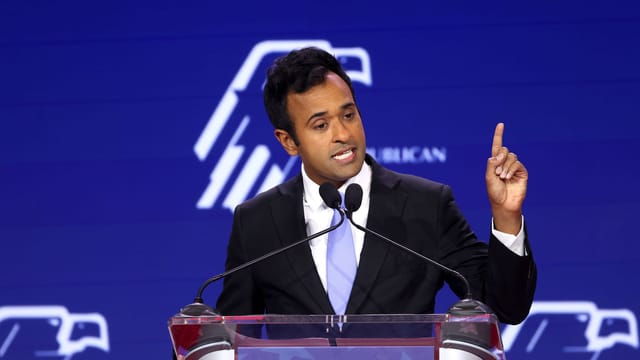
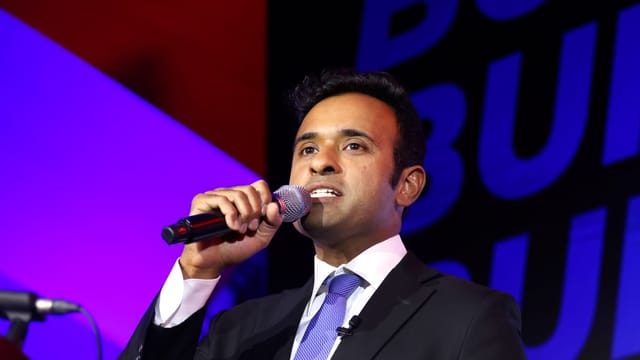
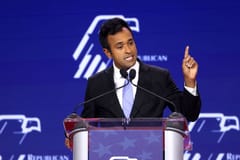
Biotech billionaire and Republican candidate for governor Vivek Ramaswamy has proposed phasing out Ohio’s income tax and rolling property taxes back to pre-pandemic levels. Acton and other Democrats have said those proposals would open a roughly $10 billion hole in the state budget and force deep cuts to schools and local services.
“I think he’s frankly a danger, a real danger, his leadership, to Ohio because he has no idea how to do this,” Acton said of Ramaswamy.
What’s missing
One area not directly addressed in the agenda is property taxes — an issue that has driven sustained protest at statehouses and county auditors’ offices across Ohio, including in Seneca County. Acton told reporters Monday that Ohio’s overall tax code needs a broader examination and said she plans to release a separate property tax policy.