
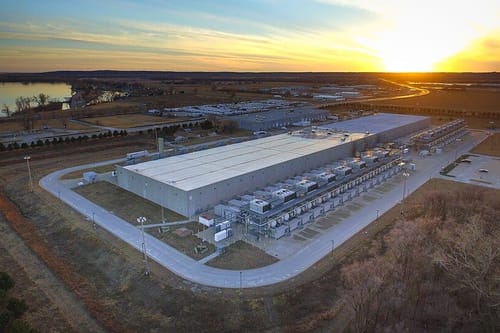
Central Ohio is ground zero of the data center gold rush (or Tulipmania).
Driven in part by generative AI, companies like Meta, AWS (Amazon Web Services), and others are frantically building new data centers that will supply computing power for LLMs (Large Language Models) as well as other digital infrastructure.
Ohio is already home to more than 200 data centers, with another 77 by the year 2030.
These data centers are coming at a considerable cost and are creating a lot of citizen pushback: they are energy-hungry, which means that generation is struggling to keep up with projected demand.
This means building more power generation on top of data centers, and it exposes exactly how helpless many citizens feel as these are approved and built against their wishes.
In order to support an AWS data center, AEP is building out gas cells and diesel generators in order to supply power.
The fuel cells will release more than 1.5 million pounds of CO2 daily in addition to diesel generators emitting carbon monoxide and other pollutants.
It would be the largest such project in North America, built virtually without precedent, and at present, the cells will be sited less than a mile away from Beacon Elementary School in Hilliard, Ohio.
At a time when we’re failing to meet environmental goals that would stave off the worst effects of global warming, building plants and generation like this are making the problem worse.
At the same time, they’re also building 158 “emergency-use” Tier 2 diesel generators.
It’s unclear how regularly they would be used and what constitutes an emergency — federal standards for “emergency use” are shifting.
Running plants like this comes at a very real cost to communities.
In Memphis, Tennessee, gas turbines for xAI are estimated to make Memphis’ smog 30% to 60% worse, and they’re located in a neighborhood with already high rates of asthma from air pollution.
Beacon Elementary School was already affected by pollution in the 1990s; children got sick from odors and pollution coming from the Laidlaw Environmental Service plant, and a third of the enrolled kids wound up transferring out.
For a new generation of Hilliard parents, they’re confronting the fear that their children might be sickened by pollution.
There’s been an enormous backlash in Hilliard among concerned parents and community members, but they’ve been stymied by the way that approvals work and the lack of support from elected officials.
AEP submitted an application to the city’s planning division only to withdraw it days later, claiming that the city’s approval was unnecessary and that only approval from the state was necessary.
Moreover, citizens have to fight two separate battles, one against the fuel cells, and the other against the diesel generators.
The city government claims that all of this is out of their hands and that primary decision-making power rests with the state.
The Ohio EPA has indicated that it would hold a hearing, but Annette Singh, a local resident, received a call from an EPA spokesman saying that a city official thought it was unnecessary and questioned whether one was even needed at all.
Why?
They felt that it would create too much confusion: the hearing would only concern the diesel generators and not the fuel cells, but because citizens wanted to discuss both the meeting would inevitably go nowhere.
The city likewise has dragged its heels on paying for an air dispersion model and now hopes Bloom Energy will conduct an unbiased one to show what effects will accrue to air safety.
The EPA refuses to do one, and so does AEP; they all insist that they don’t have any responsibility here.
It may very well be that the city has no easy recourse left to it at this point and that the state has completely managed to uproot local control over these projects.
It may be that proposed hearings are nothing more than a way to pretend to be transparent to serve a predetermined outcome.
But the right response is not for those looking to protect their communities to throw up hands in defeat or to quietly accede to these projects.
Vocally protesting it and making clear how unpopular these are and how little citizens want them there has value; pointing out the harms that they cause, even if they’re ultimately overridden also has value, because it publicizes the issue.
People can go on the record in vocal opposition, including elected leaders.
There’s no need to make it easy for the state, and if city governments do they alienate their own citizens who no longer feel that they can trust them.
And this gets at the root of the dysfunction these data centers are sowing in American life today.
They’re another example of governments forcing something unpopular down the throats of citizenry, or standing back and allowing it to happen.
It is incredibly corrosive to civic life, and the longer it goes on like this the more it contributes to a breakdown in trust.
This story is republished from the Ohio Capital Journal. View the original article.