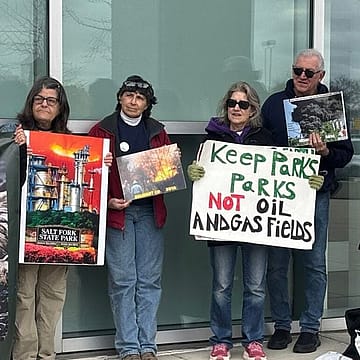
Ohio officials reject 120 years of climate science to approve fracking on public lands, ban renewables, and subsidize carbon capture—putting communities at risk.
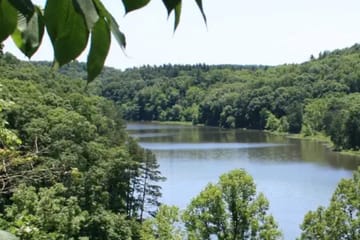
The acreages that make up the Wayne National Forest in Southeastern Ohio are a patchwork of land parcels which lie in 12 Ohio counties. In the 1800s, the region was heavily logged to supply wood for 46 charcoal furnaces used for iron smelting. Farming also damaged the landscape as the remaining areas were cleared for agriculture, causing destructive soil erosion. Nature, time, and help from the Civilian Conservation Corps in the 1930s helped restore the second-growth forests we see today. Sadly, the oil and gas industry is seeking to frack parcels within the wooded areas, possibly destroying the vibrant mesophytic ecosystem that has evolved over the last nearly 100 years. The Bureau of Land Management (BLM) will be accepting oil and gas leasing applications in September 2026 for 41 oil and gas parcels, totaling 2,795 acres. These parcels of the Wayne are located in Monroe and Washington Counties. Currently, they are seeking public input (written comments) pertaining to the 2026 lease sale. These comments are due on Jan. 15, 2026 and can be submitted via the Bureau of Land Management site. More than 85% of Ohio forests are privately owned, making the Wayne National Forest very important for Ohio residents and non-residents. This forest remains a sanctuary for people who need an escape from their hectic lives. Visitors find peaceful settings, as well as spaces for recreating, bird watching, and fishing in the natural environment provided by the Wayne. There are hundreds of miles of hiking trails, horse riding trails, mountain biking trails, and off-road vehicle trails. Over a quarter million visitors find their way to the Wayne every year. The Little Muskingum River flows through the middle of the Marietta Unit of the forest. It “has an exceptional warmwater quality designation” and species like the rare river otter and the state endangered Ohio lamprey make their homes in the river. Additionally, the Wayne is critical habitat for the eastern hellbender salamander, a species which has been proposed for listing as an endangered species. When speaking of fracking in Ohio’s State Parks in 2024, then-state Rep. Don Jones said, “You will never know where fracking has occurred”. I strongly disagree. I live in Harrison County, one of the most fracked areas of Southeastern Ohio. Well pads and fracking infrastructure have taken over the rural landscape. Examining areas around the towns of Scio, Cadiz, and Jewett via a satellite image with Google Maps reveals over 179 well pads in the county. These appear like small white squares on the Google landscape map, but if you zoom in on these pads, you will see some of the infrastructure associated with fracking; large storage containers, wells, compressors, roads, and often the outline of pipelines crossing through the areas. These well pads are not reclaimed because many times wells are often re-fracked. What was once a region of rural beauty has become an industrial zone, as fracking eats away at the wooded hills like metastatic cancer. Fracking significantly impacts forests, as land is altered for well pads, roads, pipelines, and other infrastructure. Research shows that up to 19 acres per well pad is needed for gathering lines. In addition to gathering pipelines, there are transition pipelines, and distribution pipelines, as well as roads to the well pads. The construction of this infrastructure results in clearcutting of the forested area, which leaves gaps in the forest canopy. Think of it as death by a thousand cuts. The Halliburton loophole legislation of 2005 exempted natural gas drilling from most federal regulations created to protect human health and the environment. Companies are exempt from disclosing the chemicals used during hydraulic fracturing but an EPA assessment reported there were at least 1,606 chemicals used in fracking that could impact drinking water. Leaks, spills, and runoff from operations threaten groundwater and surface water quality, impacting aquatic ecosystems. Billions of gallons of radioactive waste brine are generated by the industry. This brine, although toxic in nature, is exempt from the Resource Conservation and Recovery Act. Every day “brine” tankers travel through fracked communities to deliver the toxic brew to Class II injection wells. Fracking the Wayne, especially in the Washington County region, could mean more Class II wells for an area already dealing with well contamination issues from brine infiltration into production wells. The process of high-pressure hydraulic fracking requires 1.5-16 million gallons of water per well. In Ohio, a facility is allowed to withdraw surface water in the amount of “up to two million gallons per day in any thirty-day period without first obtaining a permit from the chief of the division of water resources under section 1521.29 of the Revised Code.” Ohio saw record droughts in the summers of 2024 and 2025. Counties where fracking is ongoing experienced extreme and exceptional droughts in 2024. Withdrawing water from streams decreases volume, increases pollution concentrations, increases water temperatures, decreases dissolved oxygen, and affects the pH, making streams less habitable for aquatic organisms. Surface water will no doubt be withdrawn from the local streams in the Wayne National Forest. Fracking creates air pollution that can seriously impact wildlife. A Colorado study revealed that exposure to air pollution from fracking could cause neurological problems, respiratory diseases, and cancer in wild animals. Some of the compounds released during fracking include benzene, a known carcinogen, as well as xylenes and nitrogen oxides. Studies show these compounds can cause cancers, particularly if exposure occurs within a 0.5-mile radius of a well pad. There are additional issues that will impact the rural area that makes up the Wayne National Forests. The hydraulic fracturing process requires 2,300 to 4,000 truck trips per well. Many of the roads in rural areas are not built to withstand the amount and weight of these trucks and additional traffic has resulted in an increase in vehicular accidents. Anthropogenic noise from fracking reduces habitat quality and interferes with communication for species that rely on acoustic communication. The bright lights on the drilling rigs and pads can significantly impact birds, especially during migration. A 2020 study shows “shale oil and gas production reduces subsequent bird population counts by 15%, even after adjusting for location and year fixed effects, weather, counting effort, and anthropic land-use changes.” Ohio’s Republican legislature and Gov. Mike DeWine sacrificed our state parks to fracking during a lame duck session in 2022. Without any public comment period, our parks were opened up for fracking. Now our only national forest and the rural communities surrounding it will become a new sacrificial zone. The BLM says on its page, “The preliminary parcel list is not subject to protests or appeals.” Does this mean Ohio’s citizens have no recourse? At the very least, we need to let our concerns be known to the Bureau of Land Management. Allowing our natural resources in Southeast Ohio to be exploited to supply power for data centers or to be exported out of the country is not ecologically or economically sustainable for our region. This story is republished from the Ohio Capital Journal. View the original article.
Ohio is witnessing the construction of an unprecedented amount of data centers in the state. Columbus is ranked the 10th largest data center region in North America. However, some communities are pushing back against these enormous facilities. Jerome Township Trustees voted in September for a nine-month moratorium on “receipt, processing, issuance, or approval of any application for a zoning certificate” for data centers. Some of the concerns expressed by communities located close to data centers include: the noise, water usage, acres of land transformed into industrial centers, exposure to air pollution from power generation, high voltage transmission lines cutting through communities and farmlands, and probable increases in their utility bills due to the increases in power consumption. Data centers require an enormous amount of water for cooling purposes. “The Central Ohio Regional Water Study, an analysis of regional water needs by the Mid-Ohio Regional Planning Commission and relevant state agencies, similarly showed water and wastewater demand will be on the rise in the coming decades due to the surging number of data centers,” a report from Gongwer noted. Data centers can consume up to five million gallons per day; the equivalent of a town of 10,000 to 50,000 people. Columbus is one of many major cities across the nation that has been sinking due to water withdraws. Additionally, these data enters also use large quantities of PFAS-gas or f-gas chemicals. The compounds have been linked to cancer, birth defects, decreased immunity, high cholesterol, kidney disease, and a range of other serious health problems. They are dubbed “forever chemicals” because they do not naturally break down in the environment and they are also potent greenhouse gases. The compounds are used in the cooling phase and also to manufacture some semiconductors. Currently the Trump administration is moving to “fast-track” data centers by “expedited chemical review” for compounds used at data centers. The communities in central Ohio will certainly be affected by the explosion of data centers in the region, however, communities in SE Ohio will also be affected. Data centers require large amounts of electricity and 56 % of that energy will be from fossil fuels. According to a report from the Ohio River Valley Institute, “A 100 MW data center, assuming it operates at 70% max capacity over a year, will use 613,200 MWh of electricity. Producing that much electricity from natural gas will consume over 4.4 billion cubic feet of gas. This would emit roughly 300,000 tons of carbon dioxide, which is equivalent to the annual emissions of nearly 60,000 typical passenger cars.” It is estimated that U.S. data centers produced 105 million tons of carbon dioxide emissions in the past year. The natural gas (methane) needed to power these centers will come from fracked gas. Appalachian counties will be facing more health and environmental impacts from fracking. These include; air and water pollution, more Class II injection wells, and excessive surface water withdraws. One fracked well can require from 2 to 16 million gallons of water depending on the length of the lateral drilled. The Ohio Department of Natural Resources keeps data on the amount of surface and groundwater used by fracking companies in Ohio. Harrison County saw 853,000,000 gallons of surface water withdrawn for fracking in 2023. That represents seventy-eight percent of the total water usage in the county. Carroll County saw seventy percent of its total water usage in 2023 go towards fracked wells, and Jefferson County had 421,000,000 gallons of surface water used for fracking in 2023. Ironically these same counties experienced record-breaking droughts in 2024 as well as 2025. Harrison County was in the exceptional drought range for most of the summer of 2024, yet we witnessed water being withdrawn from woodland streams and pumped to fracking well pads all across the county. More fracking means more radioactive brine wastes being produced and injected into Class II wells. The Ohio Department of Natural Resources oversees everything related to fracking including issuing permits for Class II wells. ODNR is being questioned about their ability to regulate the over 200 Class II radioactive brine injection wells, most of which are located in Washington, Athens, Meigs, and other Appalachian counties. The wastes from these wells have been known to migrate into areas far beyond the injection site into oil production wells and groundwater. The 2022 passage of HB 507 during a lame duck session opened up state lands to fracking. Ohioans have watched as their precious state parks are leased out to fracking companies. These data centers will only encourage more fracking resulting in more destruction of our parks. Wildlife sanctuaries like Jockey Hollow Wildlife Area and Salt Fork State Park will be sacrificed to power artificial intelligence. Ohio’s Appalachian region is no longer a bucolic setting of small rural communities; it is an industrial zone littered with wells pads and fracking infrastructure. Soon, communities in central Ohio will experience the same degradation as data centers transform their towns into industrial landscapes. YOU MAKE OUR WORK POSSIBLE. SUPPORT This story is republished from the Ohio Capital Journal. View the original article.
📰
Stay Informed
Get local news and stories delivered to your inbox.
✓ Thank you! You're now subscribed. Pro tip: Add newsbriefing@tiffinohio.net to your contacts to ensure our newsletters reach your inbox.
Free reader account
Create your TiffinOhio.net account?
Get a personalized For You feed, save stories for later, track your reading history, and more features coming soon.
We'll email you a one-time sign-in link — no password needed.
Check your email
Sign-in link sent
We sent a magic link to . Click it to finish creating your account.