
A bipartisan bill to end child marriage in Ohio has stalled in the state Senate after Republicans pulled it from a planned committee vote, leaving in place a state law that still allows 17-year-olds to wed under court approval, according to reporting by the Columbus Dispatch.
Senate Bill 341 was set for a Judiciary Committee vote last week. After a closed Republican caucus meeting, the bill came off the agenda. It is not back on this week’s schedule either.
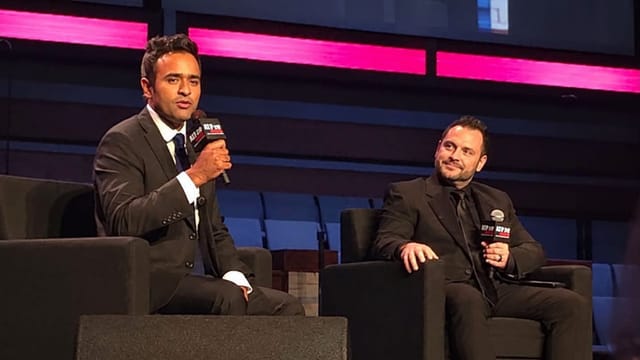
Senate President Rob McColley, R-Napoleon, who is running for lieutenant governor on Republican Vivek Ramaswamy’s ticket, told the Dispatch that even straightforward issues sometimes warrant more time. “We’ve still got time left in this legislative session,” McColley said.
That position is a marked shift from where McColley stood three months earlier. When the bill was introduced in February, he told reporters the Senate would “certainly take a serious look at it and probably pass it,” according to coverage by Morgan Trau of WEWS.
Sen. Bill DeMora, D-Columbus, who is co-sponsoring the bill with Sen. Louis Blessing III, R-Colerain Township, was blunt with the Dispatch about the delay. He said members of the Republican caucus appear comfortable with child marriage continuing in Ohio. Blessing, his Republican co-sponsor, declined to comment.
What Senate Bill 341 would do
The bill would set Ohio’s minimum marriage age at 18, with no exceptions. Under current state law, enacted in 2019, a 17-year-old may marry if a juvenile court finds the minor has completed marriage counseling, a 14-day waiting period has passed, and the spouse is no more than four years older. Parental consent is not required.
The 2019 statute followed a Dayton Daily News investigation documenting 4,443 marriages involving girls 17 and under between 2000 and 2015. Fifty-nine of those involved girls 15 or younger. The newspaper identified three marriages involving 14-year-old girls, including a pregnant 14-year-old who wed a 48-year-old man in Gallia County in 2002.
Unchained At Last, the national advocacy organization founded by Fraidy Reiss, says Ohio recorded 5,062 marriages involving minors between 2000 and 2024 — and that 53 of those occurred under the revised 2019 law.
No witness has testified against SB 341 in four committee hearings, the Dispatch reported.
Reiss told the Dispatch she does not know who in the Senate is holding up the bill. She called the blockage shameful and said it amounts to a betrayal of Ohio girls. The group has announced plans to protest at the Ohio Statehouse on June 3.
Committee Chairman Nathan Manning, R-North Ridgeville, said advocates plan to sit down with senators to make the case for the change.
The bill would leave in place language from a 2004 Ohio statute prohibiting same-sex marriage. That provision is currently unenforceable under the U.S. Supreme Court’s 2015 decision in Obergefell v. Hodges. If Obergefell were overturned, Ohio’s same-sex marriage ban would again take effect.
McColley’s hedge lands in a politically charged campaign
McColley’s reluctance to move SB 341 forward comes as the Ramaswamy gubernatorial ticket continues to face scrutiny over its handling of issues involving child safety and sexual abuse.
During his 2024 presidential run, Ramaswamy’s allied super PAC, the American Exceptionalism PAC, accepted a $100,000 donation from New York hedge fund manager Glenn Dubin, who was named in court documents as an associate of Jeffrey Epstein. The PAC pledged to refund the contribution but dissolved without doing so, according to federal filings.
Ramaswamy’s gubernatorial campaign has also drawn criticism for promoting endorsements from Ohio Republican state lawmakers accused of misconduct involving young people, as TiffinOhio.net previously reported. Those endorsements were briefly removed from Ramaswamy’s website before being restored.
In April, Ramaswamy faced sharp pushback after telling supporters that his Democratic opponent, Dr. Amy Acton, offered no real vision for Ohio “other than to complain about what someone else did to her” — a reference to Acton’s public account of surviving childhood sexual abuse.
Ramaswamy and McColley face Acton and her running mate David Pepper in the November 3 general election.