Ohio is at an energy crossroads. It forged America with steel and manufacturing, but our state is now facing the challenge of how to meet soaring electricity demand from AI facilities, data centers, and a growing central Ohio population, while also achieving state-level energy independence. And that’s all without driving up costs for working families.
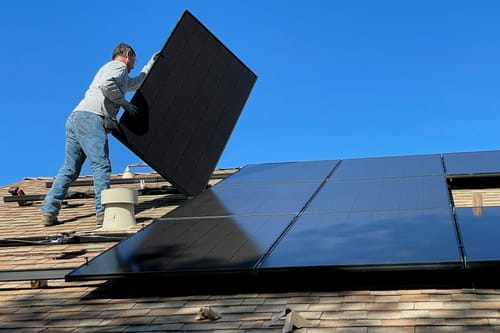
One answer lies, quite literally, overhead.
Solar power represents one of the most practical, cost-effective, and job-creating opportunities available to Ohio.
It strengthens the grid, lowers long-term energy bills, and supports our manufacturing base.
From Mansfield to Toledo to Columbus, our steelworkers already produce the racking and components that support solar arrays across the country. This industry is where American labor meets Ohio ingenuity.
When electricity is produced near the point of consumption — whether homes, businesses, or factories — it eliminates the need for costly transmission upgrades that end up on ratepayers’ bills and avoids importing energy from other states.
One advantage solar installations offer is offsetting demand during peaks, like hot summer afternoons when utilities rely on expensive “peaker” plants to fill the gap.
By offsetting that demand, solar reduces grid strain and keeps energy costs down for everyone.
The need is urgent.
Ohio’s data center and AI boom has placed enormous pressure on local grids, water systems, and energy bills. A key study showed that these facilities now contribute around 95,000 jobs and $11.8 billion to our state’s economy.
At the same time, the electricity demand from these facilities continues to surge, with electric bills doubling for many Ohioans.
In places like New Albany and Dublin, local leaders are already weighing how to balance economic growth with infrastructure capacity.
Solar is the fastest and most cost-efficient way to meet that demand responsibly.
We’re up to the task. More than 26,000 Ohio families have already invested in solar.
Solar United Neighbors, a nonprofit that aids solar owners and supporters, has helped hundreds transition to solar through state-wide bulk purchase programs.
This local investment in solar is saving families money and fueling a growing homegrown industry.
Meanwhile, Ohio’s clean-energy workforce now boasts more than 100,000 jobs and 268 companies operating, specifically, in the state’s solar supply chain.
Terrasmart is one of those companies. It’s a leading solar racking manufacturer and installer that collaborates with 14 Ohio-based companies that supply steel, tubes, fasteners, galvanization, shipping, and installation services.
This is an example of how solar is feeding a state-focused supply chain while also employing more than 250 people in the Cincinnati area.
Every new array supports welders, fabricators, and electricians — the craftsmen who have long defined Ohio’s industrial spirit.
Expanding that workforce creates energy, strengthens small towns, and keeps prosperity within our borders.
That’s why state lawmakers are taking action.
In November, the Ohio House overwhelmingly passed a bill to expand community energy programs, which let Ohioans buy or lease shares in a shared solar project and get credits on their electric bills as if the panels were on their own homes.
For renters, apartment dwellers, and homeowners with shaded roofs, this reform offers a real way to take part in the energy economy. It expands ownership and helps local communities take charge of their power. The bill is now in the Ohio Senate.
Meanwhile, the Public Utilities Commission of Ohio will soon determine how to share the costs of powering the state’s expanding data-center industry. Yet without additional local generation, those costs risk being passed along to everyday consumers.
This is a matter of economic foresight, not ideology.
Passing a community energy bill, supporting domestic supply chains, and aligning state and federal incentives will both protect ratepayers and secure Ohio’s role as a manufacturing leader in the 21st century.
The sun shines on every community in Ohio. Harnessing its power is practical and rightly typifies the belief that the nation’s energy future should be built here at home.
Mryia Williams is Ohio Program Director at Solar United Neighbors, a non-profit that aids and educates solar owners and supporters. Ed McKiernan is President at Terrasmart, a leading solar racking manufacturer and installer that operates in Ohio.
This story is republished from the Ohio Capital Journal. View the original article.