
People opposed to a bill that would require Ohio public schools show a video produced by an anti-abortion group about fetal development to students questioned the scientific accuracy of the video and criticized Ohio’s lack of sex education standards.
Ohio House Bill 485, also known as the “Enact Baby Olivia Act,” would require schools to show either the ‘Baby Olivia’ video or a similar video to students every year starting in fifth grade all the way up through twelfth grade beginning with the 2026-27 school year.
The bill originally required viewing to start in third grade, but an amendment to the bill changed it to fifth grade.
The three-minute “Meet Baby Olivia” video was produced by Live Action, which advocates against abortion, and it shows fertilization and fetal growth.
“Live Action’s Meet ‘Baby Olivia’ video is not scientifically accurate,” Delia Sosa, a fourth-year medical student, said during testimony during Thursday’s Ohio House Education Committee.
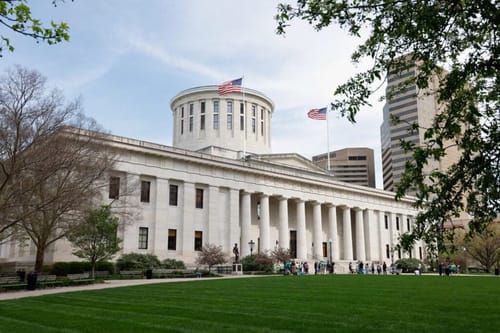
Seven people testified in person against the bill, which was introduced by Ohio State Rep. Melanie Miller, R–Ashland. Nearly 30 people submitted opponent testimony.
“The ‘Baby Olivia’ video does not accurately depict the timeline of growth and development in utero and there is inaccurate data scattered throughout the video, including that fetuses can survive outside the womb at 20 weeks,” Sosa said.
“The earliest recorded gestational age to survive outside the womb was 22 weeks.”
Planned Parenthood calls the “Baby Olivia” video “inaccurate, misleading, and manipulative.”
Planned Parenthood notes that the video counts the embryo’s age from conception, which doctors do not do; claims a fetal heartbeat can be detected at six weeks despite there not being a heart formed and this sound actually an electrical flutter where the heart will later form; and inaccurately displays the look of the embryo, mischaracterizes its activity, and leaves out critical information about at what point it can survive outside the womb.
Fargo Public Schools in North Dakota reportedly stopped showing the “Baby Olivia” video last year after students discovered information in the video was misleading.
“They also found that Live Action was unable to provide data regarding the effectiveness of the curriculum and I think that’s an incredibly important piece,” said Planned Parenthood of Greater Ohio Public Policy Director Danielle Firsich.
Ohio is one of a handful of states without comprehensive sex education standards taught in schools.
Ohio’s curriculum stresses abstinence as a general policy and requires some instruction about sexually transmitted infections, according to the Ohio Revised Code.
“The bill does not require any actual, age-appropriate human growth and development curriculum that would give students the context for concepts related to pregnancy and fetal development,” Abortion Forward Deputy Director Jaime Miracle said.
“It is most certainly not a substitute for comprehensive, age-appropriate health education that equips students with the information they need to make healthy decisions across their life span.”
Dr. Nick Denton, an education researcher and teaching professor at the Ohio State University College of Pharmacy, offered some evidence-based alternatives to the bill.
“Provide students with medically accurate information on reproductive health, contraception, and maternal health as part of a family planning curriculum,” Denton said.
“This empowers informed choices far more effectively than a single video.”
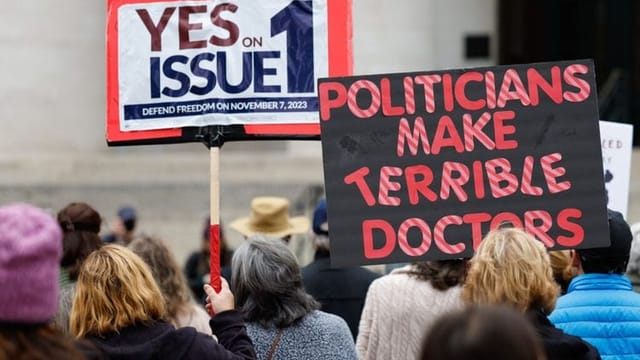
Abortion is legal in Ohio up until fetal viability as determined by a patient’s physician. Ohio voters passed an amendment to the Ohio Constitution in 2023 that added protections to abortion care and reproductive rights to the state’s constitution.
Follow Capital Journal Reporter Megan Henry on Bluesky.
This story is republished from the Ohio Capital Journal. View the original article.