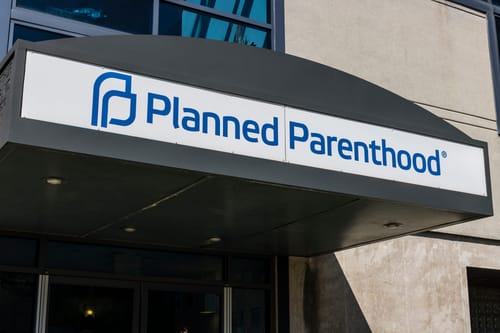

Now that a freeze on Medicaid funding specifically targeted at Planned Parenthood locations and clinics who provide abortion has expired, Ohio’s facilities are working to bring back services they couldn’t afford during the yearlong funding pause.
Though federal law already prohibits Medicaid dollars from being used for abortion services, clinics who also happen to provide those services were cut off from reimbursements for federal funds.
That means funding for sexually transmitted infection testing, cancer screenings, birth control consultations, and primary care visits saw the most impact, according to Planned Parenthoods in the state.
“When patients don’t have access to free or covered STI testing and treatment, then they don’t include it in their appointment, so a lot of infections aren’t caught, which means they are able to more easily spread through a community,” said Lauren Blauvelt, executive director of Planned Parenthood of Greater Ohio.
Blauvelt said it’s still hard to know yet what the full extent of a year of cuts will be, especially compounded by other drops in funding and support over the years.
“We can’t make staffing changes until we start seeing the uptick in patients coming back for care,” she said. “But we’re committed to expanding our services, and that includes preventive care.”
Planned Parenthood of Southwest Ohio decided to close two locations in Ohio when the cuts came down, shuttering clinics in Hamilton and Springfield. Danielle Craig Hemphill, chief external affairs officer for the region’s clinics, said those closures are “permanent,” but the Dayton and Mt. Auburn locations are still open, and telehealth is still an option for those patients.
When the federal spending bill that slashed that funding was signed, 40% of Southwest Ohio’s family planning patients were using Medicaid, according to Hemphill.
Since the funding drops, family planning and gender affirming care visits are down 55% in the region, and proportionally, communities of color have been the most impacted.
“It’s likely that many of these patients have not received care at all and this can have profound effects on their longterm health,” Hemphill told the Capital Journal.
Telehealth services are available from Planned Parenthoods across the state, and both Hemphill and Blauvelt said they are encouraging patients to utilize the services if it’s possible for them.
While not appropriate in every case, telehealth has been touted as a useful access point for those without reliable transportation, low income populations, and those in parts of the state where clinics are not located or in close proximity.
The Ohio Department of Health’s annual abortion report showed a 15% increase in 2025, attributing that increase primarily to telehealth prescriptions.
Mifepristone and misoprostol, the two-drug regimen most commonly known for use in medication abortions, has been FDA approved since 2000 for the practice, and despite congressional hearings and anti-abortion rights movements that claim the contrary, scientific studies over decades have backed up the safety of the drug.
Reproductive health clinics including Planned Parenthood are used to looking down the barrel of cuts and even funding elimination as a nationwide debate over reproductive rights continues.
Republican majorities in both Congress and the Ohio General Assembly have leaned on the side of attempting to further regulate abortion and/or remove funding completely to those who provide the service.
Attempts have come before and after a 2023 constitutional amendment to establish abortion and other reproductive rights in the state passed with 57% of the vote in Ohio.
“We know Ohioans want the decision about their personal health to be personal, not made by politicians,” Blauvelt said. “The right to reproductive healthcare is only as good as the access to that healthcare.”
Ohio has seen legislation introduced that would have created “personhood” bills, meaning in-utero fetuses would have constitutional rights at conception.
There has also been legislation introduced to keep clinics who provide abortion from receiving any Medicaid funding, even after the expiration of the previous cuts.
Neither of the those bills have come to pass, but anti-abortion legislation has become a mainstay of Ohio’s legislature over the last few years.
A 24-hour waiting period law that did pass has since been struck down temporarily by a Franklin County Court, but another waiting-period bill has been introduced and is still making its way through lawmaker scrutiny.
Laws to force abortion providers to pay for burial or cremation of fetal remains and bar things like the use of telehealth for abortion treatment were also blocked by Ohio state courts, even before the U.S. Supreme Court said telehealth abortion services could continue amid a case out of Louisiana.
The legislature is on an extended summer break that is scheduled to last until after the November general election, something that should bring into focus the impacts those elections could have on reproductive health in the next General Assembly, and next year in Congress, according to reproductive rights advocates.
During the election season, Blauvelt said it’s important that voters make their demands clear to incumbent elected officials and potential elected officials when it comes to things like affordability and healthcare access.
“Blocking patients from accessing affordable healthcare is the exact opposite of what voters deserve and what they’re looking for,” Blauvelt said.
This story is republished from the Ohio Capital Journal under a Creative Commons license. View the original article.