Four years ago today — on June 24, 2022 — the U.S. Supreme Court overturned Roe v. Wade in Dobbs v. Jackson Women’s Health Organization, ending the federal constitutional right to abortion and returning the question to the states. In Ohio, voters answered it the next year, enshrining reproductive freedom in the state constitution by about 57 percent of the vote in November 2023.
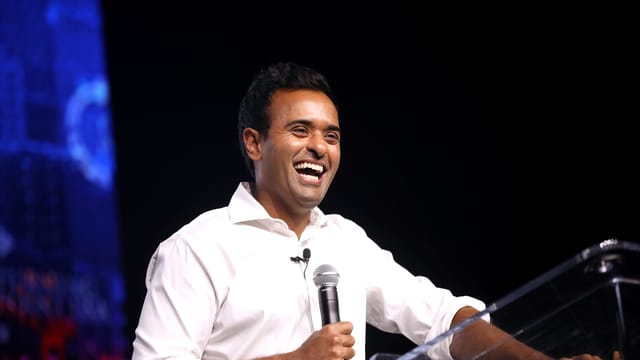
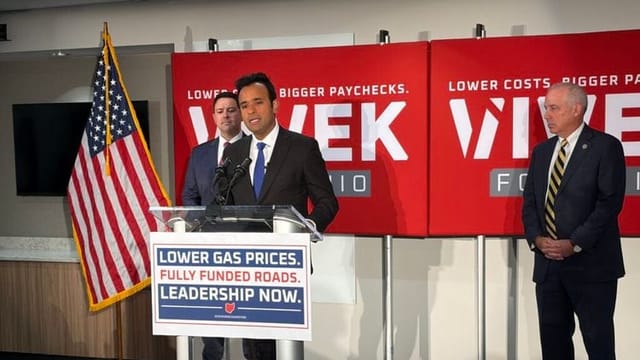
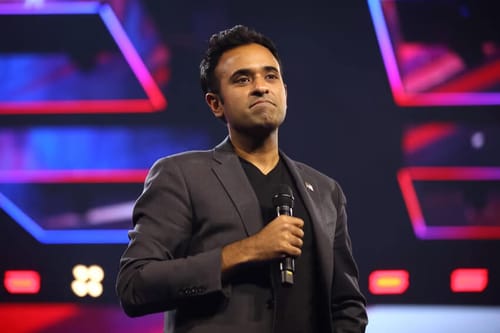
That vote is now a backdrop to the race to succeed term-limited Gov. Mike DeWine. The Republican nominee, entrepreneur Vivek Ramaswamy, has a long public record opposing abortion — one he built largely during his 2023 campaign for president, and one that stands in tension with the amendment Ohioans approved.
Ramaswamy’s stated framework is that abortion belongs to the states, not Washington. He has repeatedly said he opposes a federal ban, arguing the issue should be decided at the state level. A governor also cannot unilaterally repeal a constitutional amendment; Ohio’s protection for abortion up to fetal viability remains in force regardless of who occupies the office, and altering it would require the courts or another statewide vote. Ramaswamy’s campaign has not publicly detailed whether, as governor, he would support new legislative restrictions on abortion access.
What is on the record is how Ramaswamy has described his own position. He has called himself “unapologetically pro-life,” a phrase he used on his own account on July 11, 2023, and repeated to reporters that week. In that same July 11 post, he praised the lawmakers behind Iowa’s six-week abortion ban, writing that he was “proud of” the Iowa governor “and the Iowa legislature for protecting life.” Speaking at the National Conservative Student Conference later that month, he described Iowa’s six-week standard as “progress that should come from the states.” A six-week ban prohibits abortion once embryonic cardiac activity is detected, often before many women know they are pregnant.
On the ruling itself, Ramaswamy has said the justices got it right. During an August 2023 presidential debate, he said he believed “Dobbs was correct to overturn” Roe, framing abortion as a matter for state law. He has also said abortion should be treated as a “human rights” question rather than a “women’s rights” one.
Ramaswamy’s running mate brings a more direct legislative record on the issue. Ohio Senate President Rob McColley, R-Napoleon, was a cosponsor of Senate Bill 23, the 2019 law known as the Human Rights and Heartbeat Protection Act, according to the Ohio Legislature’s official record. At the time, McColley said in a statement from his office that he was “proud” to cosponsor the measure. The law banned abortion after a detectable fetal heartbeat and made no exception for rape or incest; its only exception was for a medical emergency threatening the life or a major bodily function of the pregnant patient. DeWine, who signed it, said at the time that government’s role is “to protect the most vulnerable among us.”
That ban is not currently in effect. It was blocked in court, and a Hamilton County judge struck it down in 2024 after the passage of the reproductive-rights amendment, which protects abortion up to viability — generally 22 to 24 weeks — and later when a physician determines it is needed to protect the patient’s life or health. Even with the amendment in place, Republican lawmakers have continued to pursue measures that test its limits.
The Democratic nominee, Dr. Amy Acton, a physician and former state health director, has made reproductive freedom a central contrast in the race. “Ohioans have made it very clear that they trust women to make their own decisions about their bodies,” an Acton campaign spokeswoman said. “As Governor, Dr. Amy Acton will protect reproductive freedom.”
Ramaswamy won the Republican primary on May 5, 2026. He and Acton meet in the general election on Nov. 3.