
At least one Ohio pension fund is reducing investments in private equity, a form of moneymaking known for precipitating bankruptcies and layoffs.
But as the Public Employees Retirement System expressed concerns over high fees and declining performance, President Donald Trump said he wants make it easier for fund managers to invest individual retirement savings in them. His move comes as a watchdog group reports that private equity firms charge sky-high fees for investments that in recent years have far underperformed the stock market.
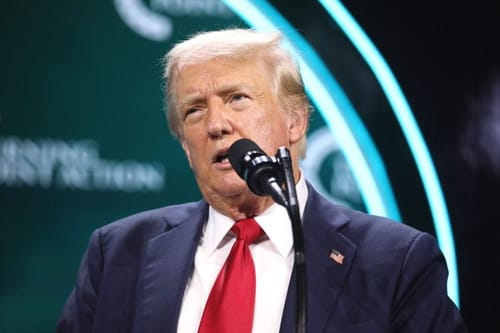
Trump in August signed an executive order making it easier to invest Americans’ 401(k) funds in “alternative investments” such as private equity, crypto, and real estate.
The order said it was “democratizing access to alternative assets.” But it seeks to do so by creating “safe harbors” for fund managers from lawsuits by investors.
“A combination of regulatory overreach and encouragement of lawsuits filed by opportunistic trial lawyers has stifled investment innovation and largely relegated 401(k)… plan participants to asset classes whose returns lack the very same long-term net benefits allowed for and achieved by public pension plans and other institutional investors,” Trump’s order said.
However, the Private Equity Stakeholder Project recently reported that the 15 large private-equity funds last year grew at about half the rate of the MSCI AWCI Index, which comprises about 85% of investible equity in the world. While the big private equity firms grew by 11.2%, the report said, the global index grew by 22.34%.
The big private-equity firms’ investments grew at a rate that was 36% lower than that of the S&P 500, an index that comprises about 80% of the market capital in the United States. The latter index grew by 17.43% last year.
Over the three years ending in December, private equity grew at an annualized rate of 11.24%, the Private Equity Stakeholder Project report said. The S&P 500 grew 22.48% a year during that period, and the MSCI ACWI Index grew by 20.65%.
Despite private equity’s relatively poor performance, the firms charge wildly higher management fees than funds that simply follow the markets. For example, fees charged by the Vanguard S&P 500 ETF are “less than 1% of the median expense ratio charged by the private equity evergreen funds,” the report said.
All that has the Public Employees Retirement System of Ohio rethinking its strategy.
The business-news organization Buyouts in November reported that the pension system in 2024 rejected a consultant’s advice to invest more in private equity. Late last year, its board voted to go a step further and reduce its exposure, Buyouts reported.
Pension systems in Maine, Nevada and Alaska have also reduced their private-equity investments amid concerns that the firms are raising fees and are running out of investment targets.
The industry is hoping 401(k) retirement funds will make up for money it’s losing elsewhere, the Private Equity Stakeholder Project report said.
“Private equity firms are focusing on investments by 401(k) retirement savers and other retail investors not because private equity is a better investment, but because private equity is struggling to fundraise from its traditional base of institutional investors,” the report stated. “Global private equity fundraising fell 11.0% in 2025, making last year the fourth year in a row that private equity fundraising has declined. Based on data from S&P, global private equity fundraising fell to its lowest level in a decade last year.”
The private-equity industry also made nearly $322 million in political contributions in the 2023-2024 election cycle, according to OpenSecrets.org.
This story is republished from the Ohio Capital Journal. View the original article.