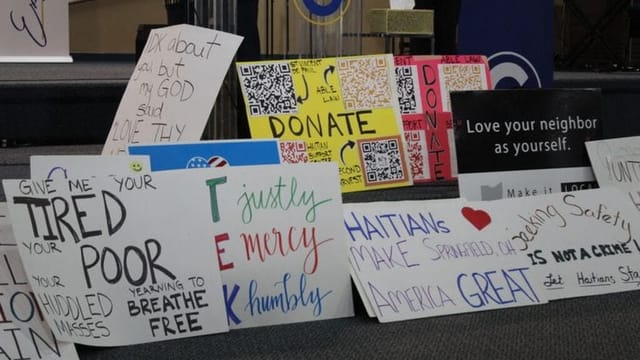
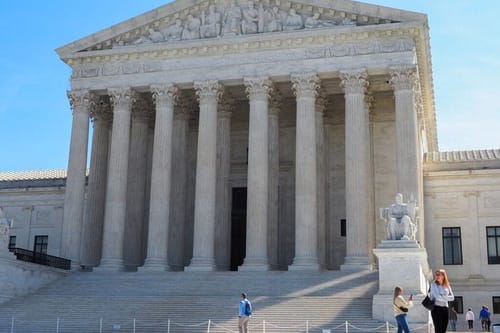

The future of Haitians living in Ohio with temporary protected status hangs in the balance of a United States Supreme Court decision that could come as soon as this week or next.
About 330,000 Haitians and 6,000 Syrians are living in the United States with Temporary Protected Status (TPS), a program that allows people from specific countries in conflict or facing natural disasters the chance to live and work in the United States for a set period of time.
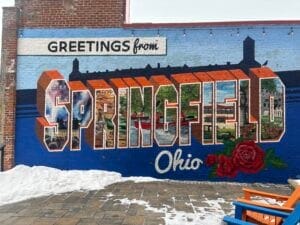
About 30,000 Haitians with temporary status live in central Ohio and an estimated 12,000 to 15,000 Haitians call Springfield home, with a mixture of temporary protected status, citizenship, and other legal status.
Springfield became a flashpoint in the 2024 Election when Donald Trump and JD Vance spread racist lies about Haitian immigrants there.
The U.S. Supreme Court is expected to make a decision either by the end of June or early July on whether the Trump administration can end the Temporary Protected Status program for Haitian and Syrian nationals.
Oral arguments for the case were made in April.
“If (TPS is) terminated, they will essentially immediately lose their work authorization in most states, their access to driver’s licenses, and then also protection against deportation, and they could be put in removal proceedings and subject to deportation,” said Emily Brown, director of the Ohio State University law school’s Immigration Clinic.
Attorneys for Haitian TPS holders filed a motion this week asking the U.S. Supreme Court to dismiss the case, saying new evidence has come to light that shows the Trump administration unlawfully attempted to revoke TPS, according to the Springfield News-Sun.
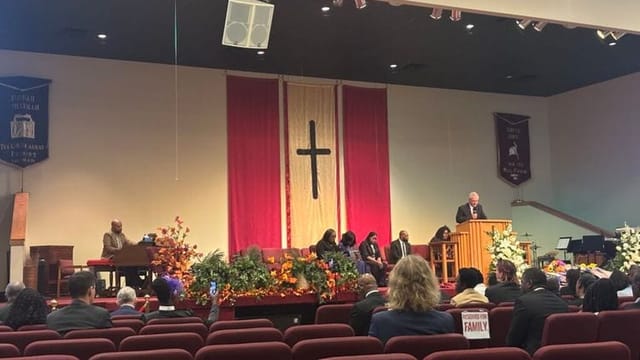
“This new evidence raises profound concerns about the integrity of the process that put our Haitian neighbors at risk,” said Carl Ruby, pastor of Springfield’s Central Christian Church.
Haitians were initially granted temporary protected status after Haiti’s earthquake in 2010 killed 222,570 people.
The Biden administration extended Temporary Protected Status to Haitians in 2021 after the assassination of Haiti President Jovenel Moïse.
Syria was first granted TPS in 2012 and the country continues to experience ongoing armed conflict, terrorist violence, kidnapping, hostage taking, and crime.
Haiti is currently plagued by gang violence and instability, with many fleeing the small Caribbean nation to the United States for their lives. Just last week. a top security official and chief of staff to the nation’s defense minister was kidnapped.
Many of the Haitian refugees in America have no homes to return to in Haiti, and are fearful for their families’ safety if forced to return.
“If TPS goes away, I don’t think most of them want to just get back on a plane and go to Haiti because the violence there is so severe at this point that they think anything is going to be better than going back there,” Brown said.
The U.S. Department of State currently has a Level 4 “Do Not Travel” advisory for Haiti and Syria.
“They’re certainly fearful,” Ruby said.
Haitians can apply for asylum, but the Trump administration put an indefinite freeze on processing all asylum applications at the end of 2025.
“It’s not really like a solution for most people,” Brown said.
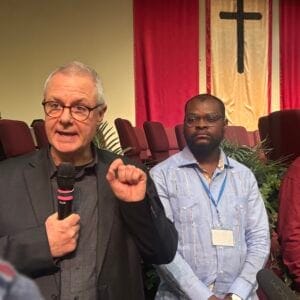
Viles Dorsainvil, executive director of the Haitian Support Center in Springfield, came to the United States from Haiti in 2020.
“No matter what happens, I would be the last person to leave because so many people in the community are relying on me from both sides — from the Haitian community and from the American community,” said Dorsainvil, who is also a masters student at Wright State University.
He sees the U.S. Supreme Court ruling going one of three ways.
The justices could rule in favor of TPS holders, but he said that could still have consequences.
“There might be a possibility for the Trump administration to develop new policies to continue to make the lives of the immigrants miserable, so that they can leave or they can self-deport,” Dorsainvil said.
A decision could come down that gives the Trump administration a certain number of months to end TPS, he said.
“In that period there will be some disturbance in the community, and folks will still be in limbo,” Dorsainvil said.
If the Supreme Court rules against TPS holders, “there will be some type of humanitarian crisis in the community,” he said.
“The schools will be disturbed, the manufacturers will be disturbed, and the whole economy of Springfield will be impacted,” Dorsainvil said.
Springfield Mayor Rob Rue is “not providing any statements or interviews on the matter at this time,” a spokesperson for the mayor said in an email response to the Capital Journal.
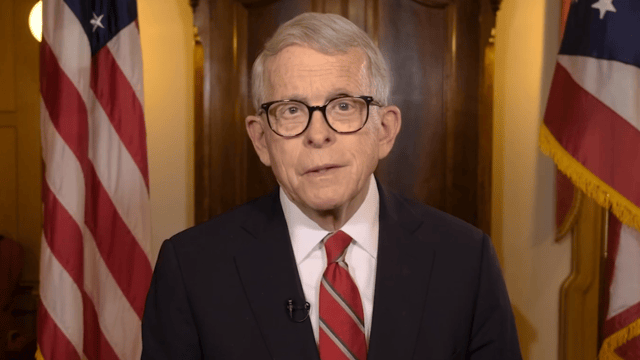
Ohio Gov. Mike DeWine, who was born in Springfield, has spoken several times about how the Haitian people are helping Springfield’s economy.
“I’ve made myself pretty clear in regards to policy on what I think it’s best for Ohio and best for Springfield and these people who are working and helping the economy of Springfield moving forward and doing the things that we like people to do, which is their work,” DeWine said this week.
The DeWines helped support the Becky DeWine School in Haiti, named after their late daughter, but the school had to close due to gang activity in 2024.
Springfield experienced a shrinking population for decades as manufacturing jobs disappeared, but Haitian immigrants have grown Clark County’s workforce by more than 10,000 workers.
Deporting Haitians in Springfield would eliminate roughly $300 million in annual spending from Clark County, with an estimated economic loss projected to exceed $400 million.
Haitians have been making arrangements for power of attorney and custody of their children in case TPS ends, Brown said.
“If TPS does end, everyone expects that ICE will do big raids in Columbus and Springfield and other parts of the country where there are large pockets of Haitians, so you could really see this kind of indiscriminate policing … People are really, really scared about that, and knowing that it could come at any time,” she said.
Ruby said he expects targeted raids from the United States Immigration and Customs Enforcement in Springfield and other cities with a big Haitian population if the Supreme Court rules against TPS holders.
“I think (the Trump administration is) going to rely more on unemployment and trying to get people to self-deport,” Ruby said.
“We think a more likely scenario is we’re going to have a humanitarian crisis with people just out of work and not being able to pay the rent and not being able to buy food.”
To prepare for that possibility, nonprofit agencies in Springfield are trying to anticipate the need for rental assistance and food, Ruby said.
“We’re trying to equip churches to be ready to respond, we are asking churches to provide sanctuary,” he said.
He said they are discouraging people from going to immigration check-ins by themselves.
TPS for Haitians was set to expire Feb. 3, but U.S. District Court Judge Ana C. Reyes blocked the Trump administration’s attempt to end temporary protected status for Haitians living in the United States.
The Trump administration quickly appealed the decision and lower courts blocked its efforts to end Haiti’s TPS.
“People were so scared leading up to Feb. 3, and I think it’s just the same thing now, but even worse because the Supreme Court, we can’t necessarily depend on them to do the right thing,” Brown said.
At the federal level, the U.S. House voted in April to extend TPS for Haitians through 2029. The bill is now in the U.S. Senate, but the White House said President Donald Trump would veto the bill.
The Trump administration has revoked TPS status for 13 countries — Afghanistan, Cameroon, Ethiopia, Haiti, Honduras, Myanmar, Nepal, Nicaragua, Somalia, South Sudan, Syria, Venezuela, and Yemen.
Follow Ohio Capital Journal Reporter Megan Henry on X or on Bluesky.
This story is republished from the Ohio Capital Journal under a Creative Commons license. View the original article.