
Ohio lawmakers are joining the defense for the state’s child care oversight system, while also pledging to improve it with new legislation.
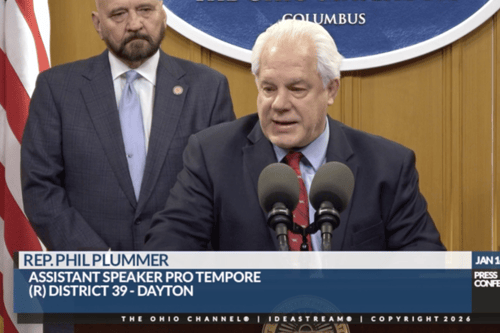
State Reps. Phil Plummer, R-Dayton, and Tom Young, R-Washington Twp., emphasized the strength of Ohio’s verification and investigative process when it comes to child care facilities in a press conference where they also announced a new bill to increase the investigative power available to state authorities.
Ohio House Bill 647 would give the Ohio Attorney General’s Office the authority to investigate “any publicly funded child care program suspected of fraud.”
The Ohio Department of Children and Youth, which leads oversight of licensed child care providers and currently investigates allegations, would be allowed to immediately suspend the license and provider agreement for a facility “under the suspicion of fraud.”
The sponsors of the bill also promoted money the bill would allow to go to “enhanced data analytics” for attendance reviews. Young said the bill would include $5 million in appropriations over the next two years.
Following the allegations of child care fraud in Minnesota originated by a right-wing social media influencer and taken up by the Trump administration, states like Ohio have felt the need to respond to public questions, and were told by federal leaders that they would need to prove the federal money for Publicly Funded Child Care was being used properly.
Plummer said the bill is not only an effort to maintain an already strong system, but also a response to public opinions that the child care system in Ohio is in need of more scrutiny.
“We can’t gaslight this and freak out the federal administration, and they pull our funding,” Plummer said. “Because then we lose child care centers.”
As a parent of children who have benefitted from Ohio’s child care system, Young said he’s glad to see facility workers keeping members of the public attempting to do their own investigations out of child care buildings. He said it further proves the protections at work in the sector.
“There’s no way, (even) as a parent, I can walk through that door and just walk back to a classroom,” Young said. “There are protocols, and they are tight and there’s a reason for that: for their safety.”
Ohio Gov. Mike DeWine released a statement after the Minnesota allegations began to make headlines, and held a press conference with Ohio Department of Children and Youth Director Kara Wente soon after.
They said Ohio’s system is diligent in addressing allegations of fraud should they come about, and maintaining high standards in child care facilities.
In 2025, Wente and DeWine said there were 124 referrals from the public about facilities, and of those, 61 overpayments were identified, and 12 facilities were closed.
So far this year, Wente said “with all of the statements, and press conferences, and social media,” the agency has received more than 60 referrals.
Referrals are allegations, and haven’t necessarily been investigated or proven any wrongdoing.
Wente attended the press conference introducing Plummer and Young’s bill, urging support for the added protection, and increased authority for the department to keep funds from facilities until an investigation is complete.
“What we know is there are times when we need to turn the spigot off to the public funds, and then continue the investigation and have the ability to work with the provider and come back,” Wente said.
She said the bill also helps the department continue work they’ve already done, creating new avenues for data.
The department just started a “random sample” of 400 child care programs “to collect data and to see what was happening in the program itself,” according to Wente.
“We can’t be at 5,200 programs every day, we are reliant on our data and we are reliant on our analytics, which this bill will help improve,” Wente said.
The director also said “program integrity reviews” were happening at child care facilities in Ohio “well before the headlines started” about Minnesota.
The federal government seems satisfied with Ohio’s program, though. Wente said the department received approval for Child Care Development Block Grant funds on Jan. 13, another federal approval on Jan. 14, and approval for federal Temporary Assistance for Needy Families (TANF) funding last week.
“We depend on these federal dollars,” Plummer said. “We’re doing the best job we can do to protect those federal dollars.”
Child care supporters and organizations in the state have also said oversight is solid, but early childhood advocacy group Groundwork Ohio said they appreciated state leaders and the bill’s sponsors for “responding quickly and seriously to concerns of fraud in the child care system by putting forth a reasonable proposal.”
This story is republished from the Ohio Capital Journal. View the original article.