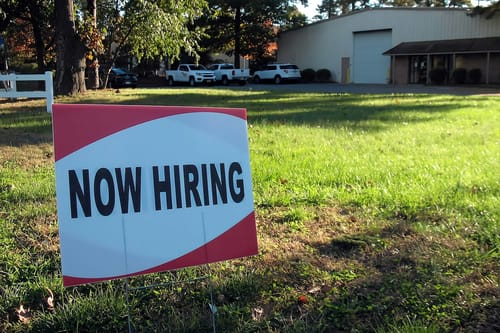

Unemployment rates in Ohio remained low in August but Ohio’s job growth has also slowed, a recent analysis by Policy Matters Ohio said.
There are several reasons for low unemployment happening along with slow job growth, and none are encouraging.
Ohio added an average of 3,100 jobs per month from January to August. But that number dropped to just 2,200 in August.
Meanwhile, the state unemployment rate actually fell slightly — from 3.4% in July to 3.3% in August.
Slowing job growth comes against a backdrop of bigger-than-expected gains nationally. U.S. employers added 162,000 jobs in August, more than double initial predictions, Policy Matters said.
The latest employment data might signal increasing caution among Ohio employers, said Policy Matters researcher Molly Bryden.
“Modest job gains in August could signal a hiring slowdown, after revisions to July’s estimates revealed overstated job growth,”she said in a written statement. “Revisions to both statewide and national indicators over the past several months make a departure from our recent observations – while downward revisions to Ohio’s jobs numbers show weaker growth than initially reported, substantial upward revisions to national estimates show accelerating growth nationwide, reversing job losses shown by preliminary estimates for July.”
She added, however, that stronger-than-expected hiring nationally “signals a recovery from an earlier slowdown, rather than a continued upward trend.”
An important reason why job growth and unemployment rates are falling simultaneously is that the Ohio workforce shrank by another 10,000 people between July and August.
Unemployment only measures the rate of people who have or are actively seeking work. It doesn’t count people who have aged out or have given up.
“Ohio has seen the nation’s largest decrease in statewide unemployment (-1.5 percentage points) since January of 2025,” Bryden said. “However, lower unemployment isn’t always a positive sign – over the same period, Ohio’s labor force level has shrunk by 1.9%: the 10th-largest decrease in the country.”
She added, “As of August 2026, there are 95,000 fewer Ohioans in the labor force than there were this time last year, despite a 39,000 increase in the working age population. While there are 100,000 fewer unemployed Ohioans in the labor force actively looking for work, employment is up by only 5,000 since August of 2025.”
That is part of a national trend. The U.S. Bureau of Labor Statistics reports that, in seasonably adjusted numbers, the U.S. labor force shrank by 1.3 million between July 2025 and July 2026.
And one cause of that is President Donald Trump’s mass deportations.
A report published early this month by Dayton-based data analyst Eric Pachman showed that 2.1 million foreign-born, working-age men left the country since the start of Trump’s second term in January 2025. Eighty-eight percent of them were working when they left, according to the analysis.
The loss was by far the biggest in the data Pachman analyzed.
He also found declining workforce participation by native-born men. Fewer foreign-born male workers and fewer native-born counterparts seeking work could add up to necessary jobs going undone, Pachman said.
This story is republished from the Ohio Capital Journal under a Creative Commons license. View the original article.