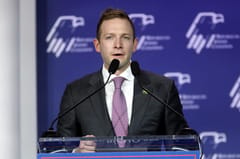
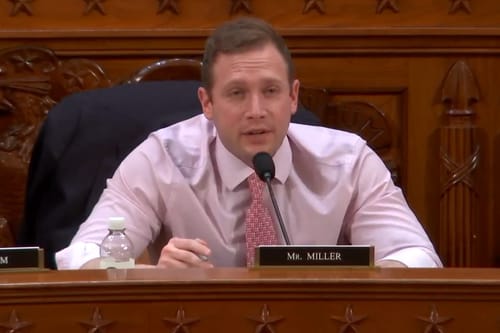

U.S. Rep. Max Miller has spent years promising taxpayers that he would hunt down government waste, cut the “fat” out of Washington and demand responsible spending.
Then taxpayers paid for a radio ad telling Ohioans how Max Miller helped a constituent.
On Aug. 28, Miller’s congressional office aired an advertisement featuring a woman recounting how the Republican congressman helped resolve an immigration case after her husband died.
“Congressman Miller stepped in and never gave up,” the woman says in the ad. “He helped me locate my paperwork and follow it up on my behalf.”
The testimonial continues by telling listeners that Miller’s persistence helped get the case approved.
Miller then comes on himself.
“I’m Congressman Max Miller,” he says. “When our constituents need help navigating federal agencies, my office is here to help you every step of the way.”
Then comes the part taxpayers might want to hear most:
“Paid for by official funds authorized by the House of Representatives.”
In other words, it was not a Miller campaign advertisement paid for by campaign donors.
Taxpayers paid for it.
Seven days before the cutoff
The timing makes the ad especially notable.
The House Communications Standards Commission reviewed Miller’s proposed radio advertisement Aug. 19 and deemed it permissible under congressional communications rules.
Miller’s office then ran the ad Aug. 28.
The House’s official 2026 blackout calendar shows that members seeking reelection were barred from sending unsolicited mass communications beginning Sept. 4 — 60 days before the Nov. 3 general election.
Miller’s taxpayer-funded radio ad ran seven days before that blackout began.
Nothing in the available record indicates Miller violated the House’s franking rules. In fact, the House commission specifically approved the material as “Frankable.”
But legality is not the same question as whether taxpayers should be paying for it.
The congressional franking system allows lawmakers to use official funds to communicate with constituents about their work. What began as a way for members of Congress to keep constituents informed now includes mail, digital advertisements, television, radio, texts and other communications.
Axios reported in April that House members had already spent nearly $1.4 million in official congressional funds on advertisements during the 2026 election cycle, describing the practice as incumbents using taxpayer dollars to give their reelection campaigns a “thinly veiled boost.”
The House’s own communications rules make the distinction on paper: official resources cannot be used for campaign content or electioneering. But lawmakers are still permitted to advertise their official work and constituent services — including with their own names and voices — until the pre-election blackout takes effect.
Miller had just promised to put $1 million of his own money into the race
The taxpayer-funded ad came only weeks after Miller publicly said he was prepared to spend heavily to keep his seat.
On Aug. 6, The Wall Street Journal reported that Miller planned to loan his reelection campaign $1 million, split into two $500,000 installments.
“I am invested in this election in every way and I will invest the resources into my campaign to win,” Miller told the newspaper.
“I am in this for the long haul,” he added.
Twenty-two days later, a radio advertisement featuring a constituent praising Miller was being paid for not by Miller’s campaign account, but by official congressional funds.
The distinction is important: the advertisement was legally classified as an official constituent communication, not campaign spending.
For taxpayers listening to it, however, the ad still repeatedly told them what Congressman Max Miller had done for a constituent weeks before a competitive election.
‘Cutting the fat’
That use of taxpayer money collides directly with the fiscal message Miller has spent years cultivating.
In February 2023, Miller was asked on Fox Business where Republicans intended to cut federal spending.
“We’re going to be looking over every single aspect of where we can be in cutting the fat out of the federal government,” Miller said.
He complained about trillions of dollars in federal spending and warned that continued spending would put the country “into an oblivion.”
The message continued into his reelection campaign.
In October 2024, Miller told Ohioans that inflation was hurting families and promised to address rising costs by “prioritizing responsible spending.”
And earlier this year, he again presented himself as a defender of taxpayers while promoting legislation targeting remaining COVID-era unemployment funds.
“Trying to distribute COVID-era funds years later is not relief, it’s an invitation for fraud,” Miller wrote in February. He said his legislation would “protect taxpayers” and “close the door on waste and abuse.”
Six months later, taxpayers were footing the bill for an advertisement centered on a constituent describing how Miller had helped her.
A taxpayer-funded advantage available only to the incumbent
Miller is running for a third term in Ohio’s 7th Congressional District against Democrat Brian Poindexter.
Poindexter cannot use congressional funds to buy radio advertisements describing people his campaign has helped. Miller can use official funds to advertise constituent services because he already holds the seat.
That is the advantage built into the franking system.
The practice is not unique to Miller and is used by incumbents of both parties.
But the amounts have become substantial.
Axios found that House offices spent a combined $44 million on franked mail during the 2024 election cycle, plus another $19 million on other official communications. About $5 million went toward television and digital advertising, according to advertising tracker AdImpact.
The spending has continued in 2026 as control of the House hangs in the balance.
And Miller is now running in a race that has drawn national attention after allegations of domestic abuse triggered calls from members of his own party for him to step aside. Miller has denied the allegations. The House Ethics Committee announced Aug. 4 that it was reviewing allegations involving Miller.
Miller refused to leave the race and instead announced plans to put $1 million of his own money behind his campaign.
But when it came time to tell Ohioans on the radio about the work of Congressman Max Miller, he did not need to reach into that campaign account.
Taxpayers picked up the bill.