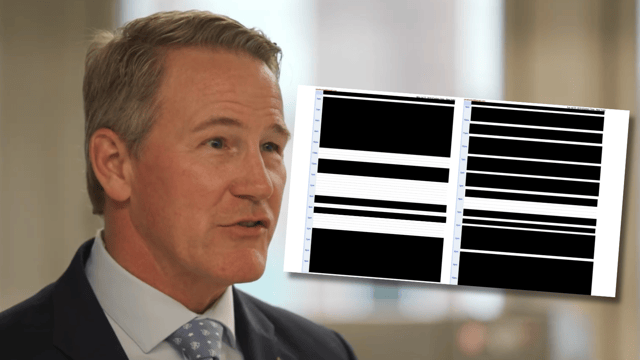

Late last year, Gov. Mike DeWine “reluctantly” signed a bill passed by Ohio Republican lawmakers eliminating Ohio’s four-day grace period for absentee ballots.
DeWine explained that a case from Mississippi, pending before the U.S. Supreme Court, weighed heavily on that decision. If the court held that it’s illegal to accept valid ballots after Election Day, he worried, it could wreak havoc on Ohio’s 2026 election.
Instead, a 5-4 court determined Monday that Mississippi’s grace period — and by extension, other state’s grace periods — are perfectly valid.
Writing for the majority, Justice Amy Coney Barrett said, “while federal law dictates when ballots must be cast, state law dictates when they must be received.”
Ohio impacts
The U.S. Supreme Court’s vindication of a state’s role in setting election deadlines will protect grace periods around the country.
According to the National Conference of State Legislatures, 14 states and four territories currently allow absentee ballots to arrive after Election Day.
And that figure was even higher just a year ago. In 2025, Kansas, North Dakota, and Utah all changed their laws to require absentee ballots arrive by Election Day.
Ohio did, too. Before the change by Ohio Republican lawmakers, the state used to allow absentee ballots post-marked by Election Day the four-day grace period to arrive.
But because Ohio lawmakers acted preemptively, voters in the Buckeye State will still have to get their ballots in by Election Day this November.
League of Women Voters of Ohio Executive Director Jen Miller voiced frustration following the court decision.
“Shame on the Ohio legislature for complying in advance with a ruling that didn’t even go their way,” she said in a statement.
This November will be the first general election without an absentee ballot grace period in Ohio. The change will likely impact several thousand voters.
According to an Ohio Capital Journal review, nearly 7,800 absentee ballots arrived after Election Day during the 2024 election.
The bill eliminating Ohio’s grace period, Ohio Senate Bill 293, got fast tracked through the legislature late last year.
The bill was introduced Oct. 14 and passed both chambers of the General Assembly just over a month later on Nov. 19. In December, it landed on DeWine’s desk.
That prompted an uncomfortable decision. DeWine had previously stated he considered the election integrity matter “settled,” when he signed a photo voter ID law in January 2023.
DeWine went on to say he did not expect “to see any further statutory changes to Ohio voting procedures while I am governor.”
But last December, on the final day he could act, DeWine signed S.B. 293.
In an email, DeWine’s spokesman, Dan Tierney defended the decision, given the information available at the time.
“Governor DeWine was required to act on S.B. 293 in December 2025.” Tierney said. “He could not wait to see what future decisions of the Supreme Court of the United States would be before determining whether to sign the bill. Ultimately, the chaos and voter disenfranchisement that could have occurred if today’s decision went another way were too much of a risk not to have clear standards.”
To Miller, though, the consequences of Ohio Republicans forcing the issue are impossible to ignore.
“For many seniors, voters with disabilities, rural Ohioans, and college students, voting by mail is a necessity — not a convenience,” Miller added.
“We congratulate voters in other states who can benefit from this (U.S. Supreme Court) ruling, while we continue helping Ohio voters overcome unnecessary barriers created by state lawmakers.”
The decision and the dissent
The Republican National Committee and Mississippi Republican Party asserted existing federal statutes set not just the deadline for casting ballots, but also the deadline for receiving them.
They claimed Mississippi’s five-day grace period violates federal law because the term “election” — set for the Tuesday after the first Monday in November — encompasses both actions.
The plaintiffs point to advent of absentee voting during the U.S. Civil War. At that time, no state counted soldiers’ ballots if they arrived after Election Day.
The only explanation, they claimed, is that federal law didn’t allow for late ballots.
But Barrett batted that argument away.
There are several potential reasons for an Election Day deadline, she wrote. Perhaps states, like the plaintiffs, believed late ballots would fuel claims of fraud, or it may have simply been more efficient.
“Frankly,” Barrett added, “in this first experiment with absentee voting, extending the deadline might not have even occurred to them.”
And she noted states changed practice when absentee voting became popular again during World War I.
If plaintiffs’ arguments rely on drawing inference from states’ behavior, shouldn’t that example carry similar weight?
Barrett’s reasoning relied heavily on the Uniformed and Overseas Citizens Absentee Voting Act, which establishes procedures for soldiers and expats to cast ballots in U.S. elections while abroad.
That statute makes repeated references to state deadlines set by state law for the receipt of ballots.
“If the election-day statutes established a nationwide ballot-receipt deadline,” Barrett wrote, “these references to state ballot-receipt deadlines would make little sense.”
In a dissenting opinion, Justice Samuel Alito said the ballots cast in a given election are like a single document expressing the will of the voters.
“What the election-day statutes demand is that this authoritative choice be made on election day,” Alito wrote.
Although he insisted he has no objection to absentee voting or early voting as a practice, Alito wrote, “Election Day is a specified date, not a span of multiple days. The election-day statutes require that federal elections occur on that date.”
Examples of states allowing late arriving ballots from soldiers abroad were simply “departure from this norm,” he wrote, and the majority opinion is blithely brushes aside “two centuries of American election practice.”
Follow Ohio Capital Journal Reporter Nick Evans on X or on Bluesky.
This story is republished from the Ohio Capital Journal under a Creative Commons license. View the original article.