

This story was originally published by Signal Ohio. Sign up for their free newsletters at SignalOhio.org/subscribe.
Ohio’s ban on processed forms of kratom will remain in place after a Franklin County judge rejected a preliminary injunction Tuesday sought by some sellers of the drug.
And with the federal government moving toward prohibition as well, the ruling could mean the end of the legal era for kratom, an increasingly popular drug marketed for purported medical benefits.
Public health officials have dubbed kratom and its derivative products as “gas station heroin” given a flood of calls to poison control centers and people who say they became addicted or overdosed on it.
Part of Common Pleas Judge Mark Serrott’s legal reasoning comes down to the “addictive effects” and “possibility for abuse” of kratom, an herbal drug that interacts with the brain’s opioid receptors and can produce a range of effects from stimulant to depressant pending the dosage.
“[The Ohio Board of Pharmacy] followed the proper procedure in promulgating the rule, and its plain interpretation – while detrimental to plaintiff’s business interests – appears to be beneficial to the public in attempting to prevent the ill effects that may arise from abuse of products containing natural leaf kratom,” Serrott wrote.
Serrott added that the industry’s own legal expert, a U.K. citizen, conceded on cross-examination that the sale of kratom in any form is banned in the United Kingdom and throughout Europe for public health reasons.
His ruling keeps the Ohio Board of Pharmacy’s rule prohibiting the sale of processed kratom in place until trial.
Botanic Tonics, a manufacturer of a popular kratom beverage that brought the lawsuit, said in a statement the company plans to appeal. It said studies show that its drink presents no “significant or unreasonable risk of illness or injury when used as directed.”
What is kratom?
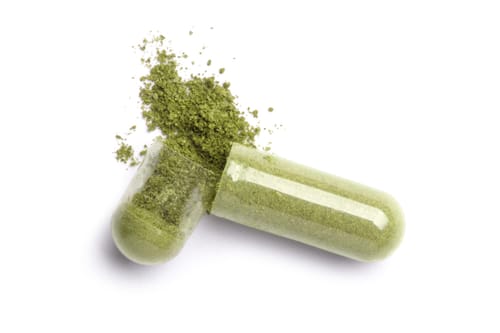
Gov. Mike DeWine, a religious conservative with a skeptical eye toward vices and public policy, last year began a push through his emergency rulemaking authority to restrict sales of all processed forms of kratom. This spans liquid, candy and pill products made from the plant.
However, he said he still has “deep concerns” about sales of kratom as a raw plant material and has sought prohibition through the traditional rulemaking process, though that hasn’t passed or taken formal effect.
Public health experts have watched with alarm as sales of kratom have surged, as have reports of addiction and withdrawal symptoms among its customers. New research from the CDC found that poison control centers nationally reported about 3,400 exposure reports last year, a 1200% increase from 2015. In roughly the same time frame, the Ohio Department of Health says kratom has contributed to 200 unintentional, fatal overdoses.
Some critics have taken to the courts. A Franklin County woman filed a wrongful death lawsuit in April against kratom companies in Ohio after her son fatally overdosed. The case is ongoing and the companies haven’t admitted to wrongdoing. A Florida woman recently won an $11 million settlement in a similar lawsuit. The family of a deceased Washington state man who overdosed won a $2.5 million jury award in 2023. And Botanic Tonics, a prominent company named in the regulatory lawsuit, recently paid an $8.75 million class action settlement in California.
Much of the legal arguments have revolved around a product called “Feel Free,” made by Botanic Tonics, from kratom and kava root. Its marketing says it’s best used when you “want to feel more social, need a clean boost of energy, or need to lock in and focus.”
The fine print warns the tonic can become habit-forming and harmful to your health if consumed irresponsibly.
“DO NOT USE if you have a history of substance abuse,” it states. “When consumed as directed, feel free CLASSIC has not been shown to cause any serious physical harm.”
State and federal governments pursuing kratom bans
Industry retailers and manufacturers said in their lawsuit challenging Ohio’s ban that kratom has historically been used to treat headaches, diarrhea, insomnia, anxiety, and opioid use withdrawal. They tried several legal arguments, including that the Board of Pharmacy’s rules were impermissibly vague and that the agency acted outside the scope of its authority. All failed.
Several plaintiffs dropped their lawsuit once the Board of Pharmacy clarified that the new rule only applies to “synthetic” uses of kratom and not the plant in its raw form.
Botanic Tonics and Krazy Daze, the remaining plaintiffs, will still have an opportunity to make their case at trial, scheduled for June 2027, but Serrott’s ruling means the rule can stand until then.
An attorney representing Krazy Daze didn’t return a phone call.
The federal government may beat Ohio courts to the punch. The U.S. Drug Enforcement Administration last month began the bureaucratic process of scheduling kratom and related substances as a Schedule 1 substance, reserved for drugs with a high risk of abuse and no accepted medical use. Other such substances include heroin and LSD.
In the meantime, states have taken different approaches around the drug. Six (Alabama, Arkansas, Indiana, Vermont, Connecticut and Louisiana) have effectively banned it outright, according to research from the Drug Enforcement and Policy Center at Ohio State University.
About twenty others have taken a more permissive approach, allowing the sale of kratom with age restrictions ranging from 18 to 21, labeling requirements and other consumer protections.
Signal Ohio is a nonprofit news organization covering government, education, health, economy and public safety.