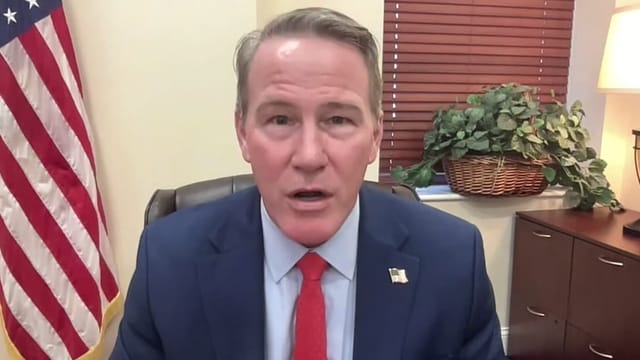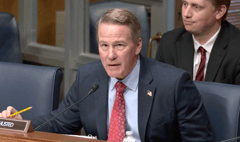
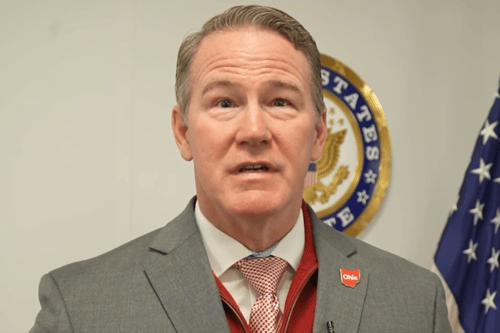
U.S. Sen. Jon Husted said government benefits encourage Americans to “stay single” and “don’t go to work,” arguing that federal policy is “driving the father out of the household” and creating what he called “perverse incentives” for families living in poverty.
The Ohio Republican made the comments during a June 2025 appearance on The Narrative, a podcast produced by the conservative Center for Christian Virtue, months before he introduced legislation aimed at restructuring federal assistance programs.
While discussing poverty, Husted recalled a report he said he read in 1993 that placed people living in poverty into three categories: people involved in what he called “out-of-wedlock birth,” people who did not graduate from high school and people with a drug or alcohol addiction.
“And these stats, they just keep coming, but our outcomes continue to get worse and worse and worse,” Husted said.
Husted then turned to the federal benefits system, saying eliminating the so-called benefits cliff was an issue he was working on.
“The government literally says, stay single, don’t go to work, and you can continue to get government benefits,” Husted said. “It’s wrong. It just makes no sense, because we are driving the father out of the household via government policy.”
Husted continued: “We’re not encouraging family formation, and we’re giving perverse incentives, the wrong incentives for how you may — you’re successful in life, and it needs to stop.”
The remarks came during a June 13, 2025 episode recorded at the Center for Christian Virtue’s Columbus gala, where Husted appeared alongside fellow Republican U.S. Sen. Bernie Moreno.
Remarks became part of broader push to overhaul benefits
Husted formally introduced the Upward Mobility Act in January 2026, making changes to the federal benefits system one of his signature policy initiatives in the Senate.
The legislation would create a five-year pilot program allowing five states to combine funding from multiple federal anti-poverty programs into a single funding stream. Husted says the proposal is intended to eliminate “benefits cliffs,” which occur when a relatively small increase in a recipient’s income causes a larger loss of government assistance.
Husted has argued that the current system can discourage recipients from accepting raises, promotions or additional hours because doing so can leave them financially worse off.
In an op-ed released alongside the bill, Husted acknowledged that people who turn down additional work to avoid losing benefits can be making a rational financial decision.
“Don’t blame them — blame the United States,” Husted wrote. “Our policies create these incentives.”
But while promoting changes to the benefits system, Husted has also repeatedly made sweeping remarks about work, poverty and the people who receive public assistance.
‘Our work ethic is broken’
During a January radio interview discussing his legislation, Husted declared that the country’s “work ethic is broken.”
“Our work ethic is broken,” Husted said. “We don’t have the work ethic in this country that we once had.”
He went on to argue that the federal government can provide people with more money for staying home than for going to work.
Then, during another interview in March, Husted said people living in poverty are “not very experienced at navigating the real world.”
“People living in poverty are just not very, they’re not very experienced at navigating the real world, right?” Husted said.
Husted cited a conversation with a woman who he said told him she did not understand “how money works at a grocery store” because she had grown up and spent her adult life using SNAP benefits.
“And so you literally have to teach people how to budget, how to do all these things,” Husted said.
Husted has made similar arguments for years
Husted’s comments connecting poverty, government assistance and single-parent households predate both his welfare reform legislation and his time in the U.S. Senate.
In 2016, Husted said nearly 40% of Ohio children had been born to a single mother living in poverty and argued that helping young women delay the birth of their first child until after completing their education would improve their ability to support themselves and their children.
“The number one indicator on whether or not you have success in school or economic success in life is whether or not you grew up in poverty,” Husted said at the time.
Nearly a decade later, Husted returned to the connection between government assistance, marriage and poverty during the 2025 Center for Christian Virtue event — this time explicitly arguing that government policy was encouraging people to remain unmarried and “driving the father out of the household.”
The comments fit a consistent argument Husted has made while pushing his welfare reform proposal: that the structure of federal assistance programs can discourage marriage, additional work and higher earnings. They also add to a series of remarks in which the Ohio senator has described the nation’s work ethic as “broken” and questioned the ability of people living in poverty to navigate everyday financial decisions.