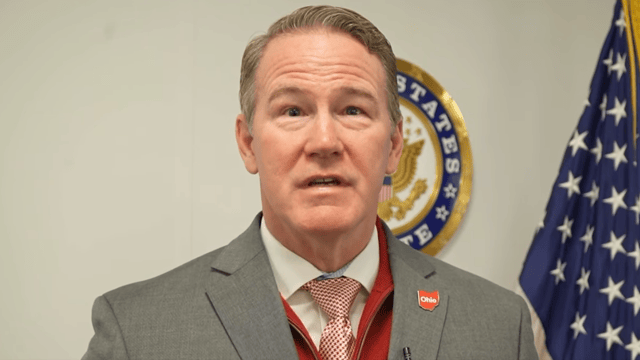
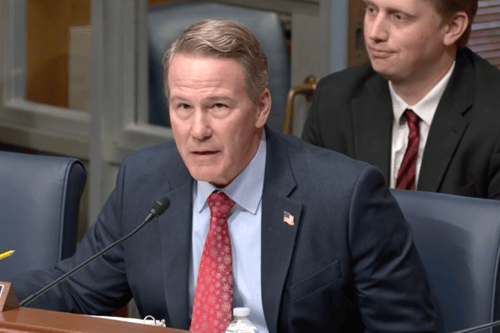
U.S. Sen. Jon Husted called the massive Republican tax-and-spending law he helped pass last year “the most pro-family, working-class bill of the 21st century.”
Since the law was enacted, Ohio’s food-assistance rolls have fallen by 107,573 people — including 50,477 fewer children receiving Supplemental Nutrition Assistance Program benefits — as expanded work requirements and other eligibility restrictions have taken effect, according to an analysis of federal and state data updated Wednesday by the Center on Budget and Policy Priorities.
And for thousands of Ohioans, the connection to the new rules is explicit: The Ohio Department of Job and Family Services notified 12,988 people on April 30 that their food assistance would end because they had not complied with new requirements imposed under the law.
Those requirements now reach groups that previously had exemptions, including older adults, veterans, people experiencing homelessness, former foster youth and some parents of teenagers.
Husted voted for the legislation on July 1, 2025, when the Senate split 50-50 and Vice President JD Vance cast the tie-breaking vote. President Donald Trump signed the legislation into law three days later.
More than 13,000 Seneca, Sandusky residents relied on SNAP before the cuts
The changes reach deeply into Northwest Ohio.
Before the new federal restrictions took effect, 7,232 people in Seneca County and 6,049 in Sandusky County were participating in SNAP in November 2024, according to county-level data compiled by the Ohio Association of Foodbanks. That amounts to 13,281 people across the two counties.
SNAP reached about 13.3% of Seneca County residents and 10.4% of Sandusky County residents at the time.
Seneca County Job and Family Services reported separately that it issued $14.7 million in SNAP benefits during 2024, averaging more than $1.2 million each month. An average of 6,477 county residents and 3,585 families received benefits monthly.
Food insecurity was already widespread before the federal changes. The Ohio Association of Foodbanks estimated 7,900 Seneca County residents and 8,930 Sandusky County residents were food insecure.
Husted said the bill would preserve benefits for people in need
Husted did not portray the legislation as a bill that would result in people losing food assistance when he celebrated its passage.
“This bill will make America safer, stronger and more prosperous,” Husted said in a July 1 statement.
He said the legislation was “prioritizing working Americans,” creating economic growth and “preserving benefits for those in need.”
Weeks later, appearing at an Akron Roundtable event, Husted went further, calling the legislation “the most pro-family, working class bill of the 21st century.”
The Congressional Budget Office now estimates the law’s SNAP provisions will reduce federal spending on the program by approximately $187 billion between 2025 and 2034. CBO said the law expanded the population subject to work requirements, restricted states’ ability to waive them and imposed other eligibility restrictions that will reduce the number of people receiving SNAP.
CBPP describes it as the largest reduction to SNAP in the program’s history.
Veterans, homeless Ohioans and older adults lost exemptions
One of the most consequential changes was an expansion of the SNAP work requirement.
Under Ohio’s current rules, many adults subject to the requirement must work, volunteer or participate in an approved work program for at least 80 hours per month. Those who fail to satisfy the requirement without qualifying for an exemption can generally receive benefits for only three countable months during a 36-month period.
The federal law expanded that requirement to adults through age 64 and to parents and other household members whose youngest child is 14 or older.
It also eliminated exemptions that had applied to veterans, people experiencing homelessness and some young adults who had aged out of foster care.
Before the law changed, Ohio’s SNAP rules specifically listed homeless residents, veterans and certain former foster youth as exempt from the time limit. Under the rules effective May 1, 2026, those exemptions no longer appear.
ODJFS spokesman Tom Betti confirmed the impact in May, telling the Ohio Capital Journal that adults ages 55 to 64, parents with children ages 14 to 18, veterans, homeless individuals and people aging out of foster care were no longer exempt from the work requirements.
On April 30, the state sent termination notices to 12,988 people who had not met the new requirements.
More than 107,000 fewer Ohioans are receiving SNAP
The decline has continued.
Between the law’s enactment in July 2025 and May 2026, Ohio SNAP participation fell by 107,573 people, or about 8%, according to CBPP’s Aug. 26 analysis of USDA and state program data.
Children accounted for nearly half of that decrease. The number receiving SNAP fell by 50,477, or 9%, over the same period. Ohio’s state data define children for this measurement as SNAP recipients under age 22 who live with a parent.
The figures do not establish that every person who left SNAP did so because of H.R. 1. Participation can change for several reasons, including changes in income and household circumstances.
But the decline is occurring as the law’s restrictions are being implemented, and it has been substantially steeper nationwide than initially expected. SNAP participation fell by roughly 5 million people nationally between July 2025 and May 2026, according to CBPP. The Associated Press reported this month that nationwide enrollment had fallen more than 13% over a 12-month period as the new work requirements and other provisions took hold.
CBPP noted that unemployment remained roughly flat nationally during the period, making a dramatic reduction in financial need an unlikely explanation for the entire decline.
The organization also cautioned that some of the law’s major changes were not yet fully implemented when the May data were collected.
Husted: ‘Our work ethic is broken’
Rather than distancing himself from the law’s restrictions after passage, Husted has continued advocating for tougher conditions on public assistance.
In January, while discussing legislation that would allow states including Ohio to restructure federal benefit programs, Husted said Americans had a problem with their “work ethic.”
“Our work ethic is broken,” Husted said. “We don’t have the work ethic in this country that we once had, and we literally have the federal government telling people we will give you more money if you stay home than if you go to work. That’s crazy.”
Research reviewed by the nonpartisan Congressional Budget Office has found a more complicated picture. CBO has said SNAP work requirements cause substantial reductions in participation while producing only small employment gains among some affected groups. TiffinOhio.net previously reported on research reaching similar conclusions.
Ohio faces hundreds of millions in additional costs
The law does more than change who qualifies.
It also shifts a larger share of SNAP’s costs from Washington to state governments. The Health Policy Institute of Ohio estimates Ohio’s annual share of SNAP costs could rise from approximately $146 million to nearly $540 million as the law is implemented — a 268% increase.
Beginning in fiscal year 2027, states will be responsible for a larger share of SNAP administrative expenses. A separate provision beginning later will require states with elevated payment error rates to assume part of the cost of benefits themselves.
The Congressional Budget Office has said those changes could cause states to modify their SNAP programs, reduce costs elsewhere or, in some cases, leave the program entirely.
For Husted, however, the legislation remains one of the central accomplishments of his short Senate tenure.
When he cast his vote in July 2025, he told Ohioans the bill was designed to help working families while “preserving benefits for those in need.”
Thirteen months later, Ohio’s SNAP rolls are down by more than 107,000 people, nearly 13,000 Ohioans have received termination notices specifically for failing the law’s new requirements, and veterans, homeless residents, former foster youth, older adults and parents of teenagers face food-assistance rules that did not apply to them before Husted’s vote.