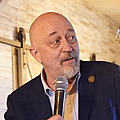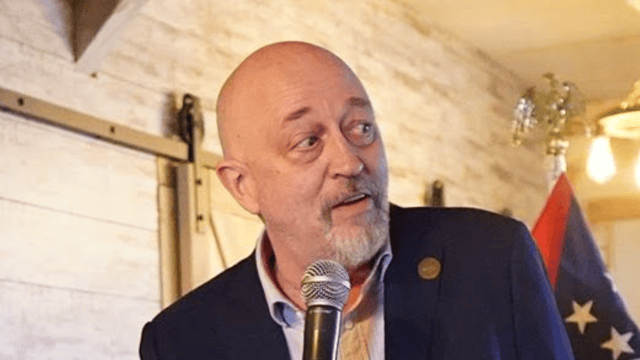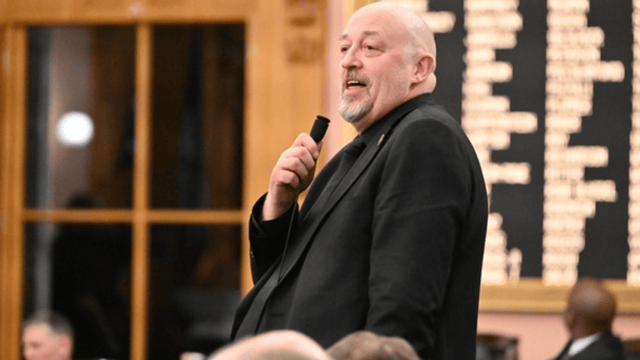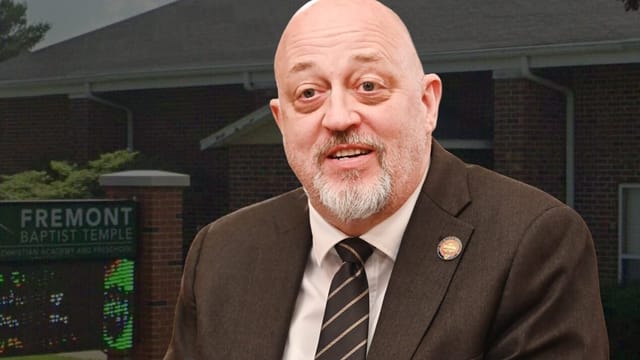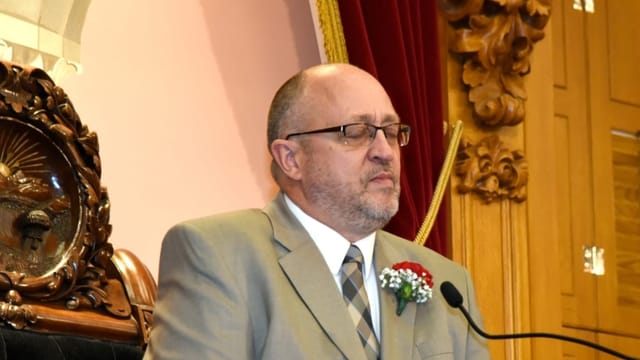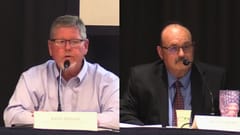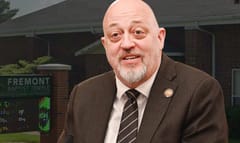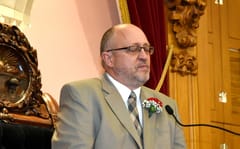
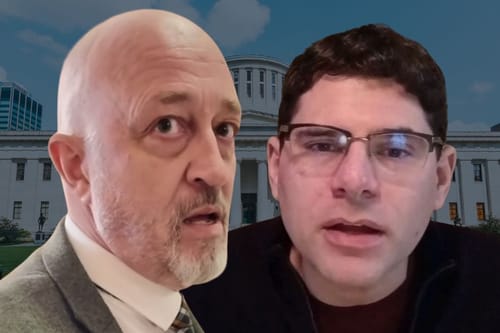
TIFFIN, Ohio — What began as whispers of a Republican primary challenge has erupted into an increasingly combative race, as Tiffin entrepreneur Eric Watson publicly attacks incumbent State Rep. Gary Click’s legislative record while Click dismisses the challenge as inconsequential.
Watson, who founded Watson’s Hat Shop and returned to Seneca County in 2022 after a decade in Arizona, officially announced his candidacy Friday with sharp criticism of Click’s support for Digital ID legislation and what Watson characterized as prioritizing corporate interests over constituent concerns.
Campaign finance records appear to support Watson’s central attack line. An analysis of Click’s campaign contributions from 2020 through 2025 reveals that corporate PACs, industry groups, and out-of-district donors dominate his fundraising, with only 13.9% of his total campaign funds coming from individual donors within the 88th District.
The primary challenge has already drawn attention from far-right activist circles. Former U.S. Senate candidate Mark Pukita commented on Facebook that he understood Click “really has his panties in a wad because he’s got a primary challenger, Eric Watson.” Click replied directly to the comment, writing, “You’re funny, Markie. Not concerned at all.”
Despite Click’s public dismissal, Watson’s campaign has secured the endorsement of Marcell Strbich, a Republican candidate for Ohio Secretary of State who declared Watson “the right man to lead District 88” during a Jan. 21 meet-and-greet fundraiser in Clyde.
Campaign finance records show corporate PAC dominance
Ohio campaign finance records paint a clear picture of Click’s fundraising base. Of the $312,985 Click has raised since first running for office in 2020, Political Action Committees account for $205,361—representing 65.6% of his total campaign war chest. Individual donors account for just 34.4%.
More striking is the geographic breakdown of Click’s support. Among individual donors, nearly 60% of the money—$64,153—comes from outside the 88th District, which encompasses Seneca and Sandusky counties. In-district individual donors contributed just $43,471, meaning local constituents giving their own money represent less than 14% of Click’s total campaign funding.
The corporate and industry PAC contributions include major donations from trade associations and lobbying organizations. The Ohio Auto Dealers Association provided $6,450, the Realtors Political Action Committee gave $4,350, the Beer & Wine PAC contributed $3,750, the Ohio Dental Association PAC added $3,500, and the NiSource Inc. PAC (an energy company) donated $3,000.
Perhaps most relevant to Watson’s criticism is Click’s financial relationship with the American Legislative Exchange Council (ALEC), a corporate-backed organization that drafts model legislation for state lawmakers. ALEC has contributed $7,308 to Click’s campaigns over the years. The organization has faced scrutiny from government transparency advocates for facilitating corporate influence over state policy.
Political advocacy PACs represent Click’s single largest funding source by category, contributing $71,500—nearly 35% of all PAC money. The largest individual contributor to Click’s campaigns is Political Education Pattern/Political Education Patterns, which has provided $40,000 across multiple cycles.
Watson targets Click over Digital ID, corporate ties
In an interview with The Advertiser-Tribune, Watson framed his challenge as a fight against what he views as Click’s allegiance to corporate interests rather than constituent needs. His sharpest attack centers on Click’s co-sponsorship of Digital ID legislation (Bill No. 78), which Watson argues poses serious privacy risks.
“Digital ID opens the door to biometric data collection, surveillance, security vulnerabilities, and election integrity risks,” Watson said. “As state representative, I will never support any bill that jeopardizes your freedoms!”
Watson’s campaign messaging positions the race as a “Battle for Truth & Freedom,” with materials prominently featuring Ephesians 6:11. His platform targets what he calls “unchecked data centers” threatening Ohio farmland, advocates for eliminating digital IDs and property taxes, champions conservative Christian values, and calls for “removing toxins from food.”
On the property tax issue, Watson drew a direct contrast with Click: “Ohio doesn’t have a money problem; it has a spending problem. This is why I fully support ‘Abolish Property Tax,’ while my opponent has not.”
Hard-line positions, sparse voting history
Watson is positioning himself to Click’s right in the Republican primary, challenging a three-term incumbent from Vickery who has built his legislative identity around transgender policy restrictions.
First elected in 2020, Click—a Baptist preacher and former community theater actor—authored House Bill 68, the “SAFE Act,” which prohibits gender-affirming care for minors and bars transgender athletes from women’s sports. Click chairs the House Community Revitalization Committee and serves on the Education, Children & Human Services, and Ways & Means committees.
Yet despite his attacks on Click’s legislative record, Watson’s own participation in local democracy is minimal. Seneca County Board of Elections records show he has cast just one ballot in the district—the 2024 general election. His campaign Facebook page emphasizes his attendance at a 2020 congressional “Election Integrity” hearing and lists former Republican Party committee involvement.
Watson advocates replacing electronic voting systems with paper ballots featuring watermark encryption, describing the 2020 hearing as foundational to his election security concerns.
AI data centers and tax policy at campaign forefront
Watson has made opposition to AI data center development a cornerstone of his campaign, warning of environmental damage to Ohio’s rural communities. He points to threats including wastewater contamination, farmland loss, and rising electricity costs.
“Ohioans have made it clear that they are not happy with AI Data Centers being built in their backyards or right near their rural communities,” Watson told The Advertiser-Tribune. “I would argue that our state representation is not fighting to protect our civil rights.”
On taxation, Watson proposes complete property tax elimination. He claims the revenue gap could be closed through tax transparency measures, fraud investigations, modest sales tax increases excluding food, and a “school tax incentive program” offering deductions for voluntary school contributions.
Watson’s announcement emphasized fiscal accountability: “We the People should be able to see where every tax dollar is going,” pointing to what he views as wasteful spending in Columbus rather than insufficient revenue.
Local heritage, Arizona decade
Watson claims deep Seneca County roots—his campaign says his family settled on Honey Creek in 1832. He graduated from Calvert High School in 2001 and holds degrees in International Studies and Aviation Technology.
In 2012, Watson launched Watson’s Hat Shop in Cave Creek, Arizona. The business gained recognition for custom work serving the film industry and political figures, including President Donald Trump.
Watson and his wife Emily relocated to Ohio in 2022, buying their first house sight unseen in what Watson described as “a leap of faith” to The Advertiser-Tribune.
Since returning, Watson says he has engaged local business leaders through organizations like The Seneca County Collaborative, advocating for support of skilled tradespeople including pipefitters, electricians, and machinists as critical to regional economic revival.
General election matchup awaits primary outcome
While Watson and Click battle for the Republican nomination, Tiffin City Councilman Aaron Jones has entered the race on the Democratic side and awaits the GOP primary winner for November’s general election.
Jones—a first-term councilman, Army veteran, and manufacturing supervisor—launched his campaign emphasizing kitchen-table economics, public education investment, and infrastructure improvements. No Democratic primary challenger has emerged, leaving Jones positioned to advance automatically to the general election.
The May 5 primary will settle the Republican nomination between Watson and Click, while Jones runs unopposed on the Democratic ballot. The winners of each primary will advance to the Nov. 3 general election for the seat representing Seneca and Sandusky counties.
Early in-person voting for the May 5 primary begins April 7, including the Saturday and Sunday before Election Day.
Watson closed his announcement with a pledge: “I will always be an advocate for the Truth. As an Ohio State Representative, I will fight to protect farmland, waterways, and communities.”