Brunner is suing to remove her own party label from the ballot, arguing partisan tags on judicial races violate judicial conduct rules and the First Amendment.
New data shows gay and lesbian Ohioans are 2.6 times more likely to report frequent mental distress, while federal policy removals limit research on disparities.
The group cited election attacks, high marketing costs, and alignment with the Ohio Coalition to End Qualified Immunity as reasons to target 2027 instead.
Utah Gov. Spencer Cox reversed three years of Pride Month declarations, while Tennessee Rep. Andy Ogles deleted a post saying homosexuality has no place in America.
WASHINGTON — Transgender military members won a temporary victory against the Trump administration in federal appeals court Monday when two judges ruled a policy banning them from service violated their constitutional right to equal protection under the law. Judges Judith W. Rogers and Robert L. Wilkins for the U.S. Court of Appeals in the District of Columbia upheld a lower court ruling allowing those plaintiffs involved in the case to continue their service. The decision is a preliminary injunction, meaning the case will continue to play out in court. The policy, issued by President Donald Trump in an executive order in January 2025 and carried out by Secretary of Defense Pete Hegseth, “appears to be driven by the bare desire to harm a politically unpopular group: persons who identify as transgender,” Wilkins wrote for the 2-1 decision . “As such, at this preliminary stage, I conclude that the Hegseth Policy is both arbitrary and based upon animus, and for those reasons the Policy violates Plaintiff-Appellees’ constitutional right to equal protection of the law,” continued Wilkins, who was appointed by President Barack Obama in 2014. Rogers was appointed by President Bill Clinton in 1994. Judge Justin R. Walker, a 2019 Trump appointee, dissented. Walker argued U.S. Supreme Court precedent dictates “the military can deprive its members of rights that the Constitution may well guarantee to civilians.” “Like today’s majority, I cherish those rights, and so I understand the impulse behind the majority’s unprecedented intervention into military affairs. But because the plaintiffs are service members not civilians, and because we are judges not generals, I respectfully dissent,” Walker wrote. Jennifer Levi, the lead attorney for the eight military plaintiffs, said Monday’s appeals ruling is an “enormous victory.” “I will say that the plaintiffs in this case have just served their country with incredible honor and courage, and this decision is a recognition of that fact,” Levi, senior director for GLAD Law, told States Newsroom in an interview. “And really it’s important because (it is) recognizing that those who are capable of serving should be able to continue.” States Newsroom reached out to the Pentagon and the White House for comment. Eight active-duty service members and transgender individuals who are actively pursuing enlistment in the armed forces initially brought the case , Talbott et al v. Trump, against Trump and Hegseth, among other officials and three branches of the U.S. military. The number of plaintiffs has since grown. The preliminary injunction does not extend to the plaintiffs pursuing enlistment, and does not extend universally to all active transgender service members beyond those who filed the case. Kara Corcoran, executive director of SPARTA Pride, an advocacy organization for transgender service members, said many transgender service members, including her, are uncertain about the future of their careers. “While today’s decision provides important relief for certain named plaintiffs, it does not extend protection to the broader transgender military community. Thousands of service members remain subject to ongoing administrative actions, involuntary separation processes, and significant uncertainty about their futures,” said Corcoran, an 18-year Army veteran who is awaiting the military’s decision on whether they will allow her to claim retirement instead of a separation because she is transgender. Corcoran said “there’s a lot of unknowns to the future” for named plaintiffs and others as the government could seek an emergency stay on the ruling as they did in a separate case, Shilling et al v. Trump. In Shilling, the 9th U.S. Circuit Court of Appeals on April 18, 2025, upheld a lower court’s ruling that allowed transgender troops to continue serving, denying the government’s appeal. In May 2025, the U.S. Supreme Court allowed Trump to ban transgender people from the military. “This is now two appellate courts from both Schilling and Talbot who have now signaled to the Supreme Court that yes, this is irreparable harm to people who are in (this situation), and at the same time, it’s discrimination,” she said. This story is republished from the Ohio Capital Journal under a Creative Commons license. View the original article.
The Ohio Supreme Court ruled that a woman has no legal parenting rights to children born to her former same-sex partner, rejecting a lower court's "would-have-been-married" standard as an impossible legal test.
Research shows that state laws allowing health care providers to refuse treatment based on religious beliefs have reduced HIV testing among LGBTQ+ adults by 28% and worsened their self-reported health. Ohio is among 11 states with such conscientious objection laws targeting LGBTQ+ people.
John Kent Tarwater, 55, a Christian author who wrote against LGBTQ+ rights, faces rape and sexual battery charges in Greene County involving victims as young as 10.
The Ohio Supreme Court heard oral arguments on the constitutionality of HB 68, which bans hormone therapy and puberty blockers for transgender minors. A decision is expected in the coming months.
An Ohio House bill would bar child welfare agencies from citing parents’ rejection of a child’s transgender identity as neglect, prompting sharp debate between Republican sponsors and Democrats.
Full Spectrum Rainbow House opens March 16 in Youngstown as Ohio’s only LGBTQ+ adult homeless shelter, addressing housing gaps and discrimination faced by LGBTQ+ residents.
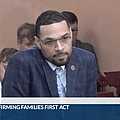
Rep. Gary Click's HB 693, the "Affirming Families First Act," would compel speech by state employees, override local school boards, create a private lawsuit mechanism funded by taxpayers, and restrict child welfare investigations — all in the name of "parental rights."
The U.S. Supreme Court on Thursday allowed President Trump’s administration to enforce its policy requiring that all U.S. passports list only the holder’s sex assigned at birth. The 6–3 decision reverses lower court rulings that sided with transgender and nonbinary Americans, drawing a sharp dissent from Justice Ketanji Brown Jackson, who said the Court’s move “permits harm to be inflicted on the most vulnerable.”