
A federal regulator accused Pepsi, the nation’s biggest food supplier, of fixing prices in a way that would drive customers to Walmart and away from other stores in Ohio and other states. The regulator abruptly dropped the lawsuit months after President Donald Trump took office a year ago.
When the details of the suit were finally revealed in December, it prompted fears that other big suppliers have secret deals with mega-grocers like Walmart.
If true, it could show how non-enforcement of antitrust laws has driven food prices inexorably up since 1980 — and especially quickly since 2020.
“Affordability” is a big issue in the midterm election cycle. But Sherrod Brown and Jon Husted — the candidates for Ohio’s U.S. Senate seat — both declined to talk about the case involving the country’s biggest food company and its biggest grocer and how they might be stifling competition and making food more expensive.
A leader of the group that brought the details of the Pepsi case to light finds that mystifying.
“These are oversight questions that lawmakers should be asking — and loudly,” Stacy Mitchell, co-director of the Institute for Local Self Reliance, said in an email last week.
Sweet deal
In terms of sales, Pepsi’s parent company, PepsiCo., is the largest food company in the United States and Canada. Because of its drinks and snacks sold through its Frito-Lay subsidiary, it’s also one of the country’s biggest purveyors of sugary and ultra-processed food.
In a pre-Super Bowl press release, PepsiCo announced that it was cutting the prices of its Frito-Lay snacks because it knew consumers were strapped by rising grocery prices.
It said it aimed “to bring a little relief — and a lot of joy.”
The company also explained that, “This pricing change is part of PepsiCo’s broader strategy to increase accessibility and offer more choices for consumers.”
The lawsuit the Federal Trade Commission filed against PepsiCo in January of 2025 tells a different story.
The lawsuit alleged that Pepsi provided special advantages to Walmart to create a “price gap” for soft drinks between the biggest retailer and all of its competitors.
“To influence retail prices, achieve the Walmart price gap, and advantage Walmart in the resale of Pepsi soft drinks, Pepsi relies on several potential levers,” the suit said.
“Pepsi selectively (1) provides Walmart with promotional payments and allowances intended to reduce Walmart’s retail prices for Pepsi soft drinks, (2) reduces promotional payments and allowances to other retailers in an effort to nudge their retail prices for Pepsi soft drinks above Walmart’s, and (3) raises wholesale prices to non-Walmart retailers.”
A communication between officials with each company explained that the practice gave Walmart special advantages over its competitors.
Those advantages were aimed at helping the two players stay the biggest in their respective sectors by squelching competition, it appeared to say.
“Pepsi summarized its promotion-related efforts for Walmart in 2018: ‘[W]e invested in both [wholesale] cost and margin to improve your overall profitability and significantly improve your [retail] price gap versus rest of market,’” the FTC suit said.
“This was to drive an advantaged position for Walmart in exchange for an advantaged position on [Walmart’s modular retail displays] to position both Walmart and PepsiCo for growth.”
PepsiCo didn’t respond to questions for this story.
Walmart didn’t respond directly when asked whether the suit’s allegations were true, whether it had a written agreement with PepsiCo, or whether it had special arrangements with other suppliers.
“We don’t comment on others’ cases, but it’s worth noting that the FTC voluntarily dismissed this one,” Hannah Henderson, director of Walmart’s Media Center of Excellence, said in an email.
“We remain committed to negotiating on behalf of our customers so we can deliver value and everyday low prices.”
Fewer stores, higher prices
The FTC lawsuit said the arrangement between the two food giants was a blatant violation of the 1936 Robinson-Patman Act.
Under it, a supplier can’t “give favored customers an unfair advantage in the market that has nothing to do with their superior efficiency,” the FTC says on its website.
It was originally called the Wholesale Grocer’s Protection Act, in reference to the fact that the law was specifically intended to protect small grocers from predatory practices.
After robust initial enforcement, U.S. presidents’ use of the act virtually disappeared around the end of the 1970s, according to the Open Markets Institute, an antitrust think tank.
In 1980, independent grocers controlled more than 55% of market share. By 2022, their share had dropped to less than 30%, the Institute for Local Self Reliance reports.
Over the same period, the market share of the four biggest grocers exploded from around 20% to more than 55% today.
And over that period, grocery deserts have increased dramatically.
As the market consolidated, food prices have risen steeply.
Data from the Federal Reserve Bank of St. Louis show that the consumer price index for groceries in cities was relatively flat between 1950 and the early 1970s.
In the 1980s, it began a sustained ascent, going from 84.8 in 1980 to 317.6 at the start of this year.
The index has increased 30% since the start of 2020 alone.
Shakeup
Amid complaints from smaller stores, the FTC opened an investigation into Pepsi’s practices around January 2023.
It was part of the agency’s effort to step up antitrust enforcement against health conglomerates, online giants, and other huge businesses after decades of relative dormancy.
During the coronavirus pandemic, supply disruptions accounted for some of the increase in prices at the grocery store.
But as the country emerged from the crisis and consumer costs remained high, many wondered whether huge grocers and their suppliers were exploiting the situation.
In March of 2024, the FTC issued a report saying the biggest grocers — Walmart, Amazon, and Cincinnati-based Kroger — engaged in practices that “accelerated and distorted” the effects of the supply-chain disruption.
The following November, Donald Trump won the presidency after running against high grocery prices and promising to lower them.
Three Democratic FTC appointees voted against the two Republican appointees to file suit against PepsiCo on Jan. 17, 2025 — just three days before Trump took office.
Last March, Trump took the unprecedented step of trying to fire two of the Democratic appointees, Alvaro Bedoya and Rebecca Slaughter.
He said their service was “inconsistent with (the) administration’s priorities.”
The third Democratic appointee who voted to sue Pepsi, Lina Khan, had already departed at the expiration of her term.
On May 22, 2025, the Republican appointees to the FTC voted to drop the case against Pepsi, accusing their former colleagues of playing politics.
“The Biden-Harris FTC rushed to authorize this case just three days before President Trump’s inauguration in a nakedly political effort to commit this administration to pursuing little more than a hunch that Pepsi had violated the law,” Chairman Andrew Ferguson said in a statement.
In an email, Bedoya declined to comment on the matter, other than to say, “The complaint speaks for itself. Anyone can read its allegations and understand why we thought it was so important to file the case.”
Mitchell, co-director of the Institute for Local Self Reliance, said the timing of the decision to drop the case was fishy.
“Why did the FTC abandon this case?” she asked.
“Why did they abandon it the day before the judge was to consider how much of it could be unsealed — a move that would have left it sealed forever had we not intervened. Did Pepsi and Walmart lobbyists interact with the Trump Administration prior to this decision? Is the FTC sitting on evidence showing that Walmart has a similar arrangement with other major suppliers in addition to Pepsi?”
Bombshell
Mitchell and her group did intervene, however, and in December a judge lifted most of the redactions from the lawsuit.
She said what was behind the redactions depicted conduct that was even worse than she’d feared.
Not only had Pepsi given Walmart special deals that violated the Robinson-Patman Act, he suit said the two companies surveilled Walmart’s competition to see if they were undercutting Walmart’s prices despite the special advantages Walmart had been given.
Pepsi sought to retaliate if they were, the suit alleged.
In other words Pepsi and Walmart were allegedly trying to stop other companies from doing what they’re are supposed to in a capitalist economy — compete by selling comparable products at lower prices.
Pepsi labeled such retailers “offenders” and in some cases took aggressive steps to punish them, the suit said.
One case involved Food Lion, a regional chain based in the Southeast that has some stores in low-to-middle-income communities and small towns.
“In 2022, Pepsi believed that Food Lion had ‘heavily indexe[d]’ its retail prices ‘against retails at [Walmart] and Kroger’ and ‘set retails relative to these competitors,‘” the FTC suit against Pepsi said. “Pepsi characterized Food Lion as the ‘worst offender’ on the price gap for ‘beating [Walmart] in price.’”
So, the suit said, Pepsi hatched a long-term plan to punish Food Lion for voluntarily taking less of a profit on soft drinks in an attempt to compete with Walmart.
“The plan advised that Pepsi ‘must commit to raising rate [on Food Lion] faster than market by minimum annually,’” the suit said.
“The plan included a multi-year roadmap that recommended a combination of (1) reductions in promotional payments and allowances and (2) wholesale price hikes to raise Food Lion’s dead net price…”
In a statement about the conduct, the Institute for Local Self Reliance said the allegations allowed for only one conclusion.
“The complaint demonstrates the real effect of price discrimination: to ensure higher prices at every retailer, except the one receiving the sweetheart deal,” it said.
Who cares?
An FTC spokeswoman was asked why, in light of the newly un-redacted information, the agency dropped the suit. She referred to the statement that Ferguson released at the time the suit was dropped.
Asked about the un-redacted information last week, neither of the candidates running for one of Ohio’s U.S. Senate seats expressed interest.
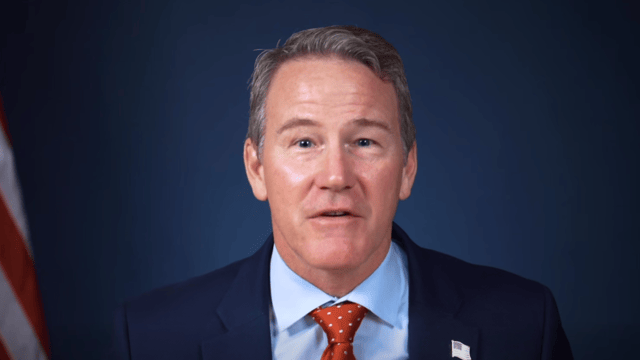
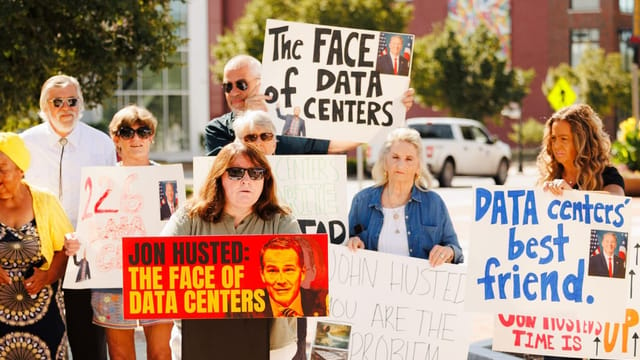
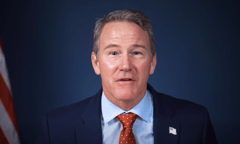
Former Lt. Gov. Jon Husted, a Republican, was appointed to the seat last year after JD Vance won the vice precedency.
His office was asked, among other things, if Husted was concerned that the conduct described in the FTC complaint was widespread and whether he believed the FTC acted properly in dropping the case.
Husted’s office didn’t respond.
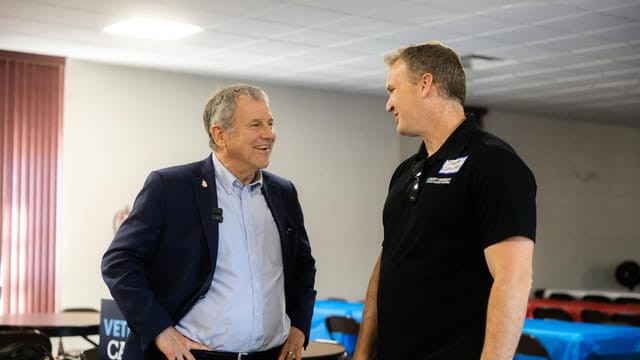
Former Ohio U.S. Sen. Sherrod Brown, a Democrat, is running against Husted after losing his seat in 2024 to Ohio Republican U.S. Sen. Bernie Moreno.
Brown has long campaigned on “kitchen table” issues and in this cycle says he’s concerned about affordability — including that of food.
His campaign was asked the same questions Husted’s office was.
“We got your inquiry and don’t have anything else to provide at this time,” Brown spokesman Samar Ahmad said in a text message.
Mitchell, who led the fight to get behind the redactions in the now-defunct FTC suit, has been dismayed that the media haven’t paid more attention to what she sees as smoking-gun evidence that mega-corporations colluded to raise grocery prices.
“The evidence in the unsealed complaint shows Pepsi and Walmart scheming to force other grocery stores to raise their prices,” she said.
“It’s shocking, especially at a time when many Americans are struggling to afford groceries. Yet there’s been almost no media coverage. The (Wall Street Journal) and Bloomberg ran a couple of small pieces, but there hasn’t been a word about it in most daily newspapers and major news broadcast outlets.”
Mitchell said that might be why Brown and Husted think they can evade commenting on it.
“That’s enabled lawmakers to get away without having to answer questions about this,” she said.
This story is republished from the Ohio Capital Journal. View the original article.