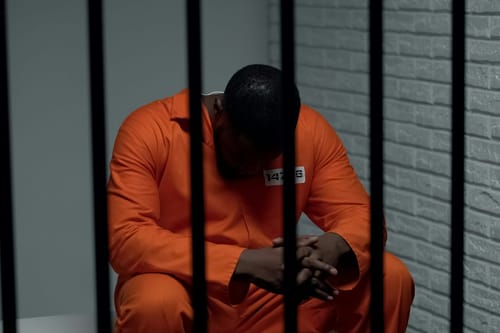
A comprehensive report released by Ohioans to Stop Executions documents what the organization calls a “wrongful conviction crisis” in Ohio’s capital punishment system, detailing dozens of cases in which the state pursued the death penalty against individuals who were later exonerated or whose convictions remain in serious doubt.
The report, titled “Beyond Reasonable Doubt: Confronting the Wrongful Conviction Crisis in the State of Ohio,” centers on a stark ratio: since Ohio reinstituted the death penalty in 1981, the state has executed 56 people. In the same period, 12 individuals have been exonerated from death row. That means for every 5 people Ohio executes, 1 is exonerated.
Official misconduct by police or prosecutors was a factor in 11 of Ohio’s 12 death row exonerations, according to the report. Nationally, official misconduct appears in 70.5% of death row exonerations, a rate that climbs to 78.8% when the exoneree is Black, according to data cited from the Death Penalty Information Center.
The most recent exoneration came in December 2025, when Elwood Jones became the 12th person exonerated from Ohio’s death row after spending more than 26 years in prison for a crime he did not commit. A Hamilton County court had granted Jones a new trial in 2022 after finding that prosecutors under former Hamilton County Prosecutor Joe Deters withheld nearly 4,000 pages of investigative materials, including witness statements about other suspects and evidence that Jones had never been exposed to a virus the victim carried — contradicting the state’s theory of the crime. Under new Hamilton County Prosecutor Connie Pillich, all charges were dismissed with prejudice.
The Jones exoneration is one of many cases in the report where Brady violations — the intentional withholding of evidence favorable to the defense — drove wrongful convictions. The report identifies Brady violations as the single most common form of misconduct in Ohio’s death row exonerations, appearing in 6 of the 11 cases involving official misconduct.
Among the documented Brady violation cases: Cuyahoga County prosecutors withheld 10 pieces of exculpatory evidence in the case of Joe D’Ambrosio, who spent 22 years on death row. Cleveland police hid evidence of an alternative suspect’s vehicle and failed to disclose that the key 12-year-old witness in the case of Ricky Jackson, Kwame Ajamu, and Wiley Bridgeman had tried to recant before trial. Jackson served 39 years — at the time the longest prison sentence of any exonerated person in U.S. history.
30 executions scheduled, several with innocence claims
The report arrives as Ohio has 30 execution dates scheduled between August 2026 and July 2029. At least 4 of those cases involve active innocence claims, and 5 involve pending severe mental illness petitions, according to the report’s data.
Among those facing execution with innocence claims pending:
Melvin Bonnell, scheduled for November 18, 2026. Keith Lamar, sentenced to death for 5 murders during the 1993 Lucasville Prison Riot, is scheduled for January 13, 2027 — two days into the next governor’s term. Lamar was convicted entirely on testimony from other inmates who received reduced charges, early parole, or special treatment in exchange for cooperating with investigators. No physical evidence tied him to the murders, and the report notes that all physical evidence not used at the trials related to the riot was destroyed, including the clothing of Lamar and other inmates. The special prosecutor in the case later admitted under oath to using an improperly narrow standard for turning over exculpatory evidence and to receiving no training on the Brady standard.
Davel Chinn, scheduled for March 18, 2027, has been incarcerated for 36 years in a case that relied almost entirely on the testimony of a 15-year-old witness later found to have an IQ of 48 and “chemically induced amnesia” on the night of the murder. The state suppressed the witness’s juvenile detention records, which revealed those impairments. U.S. Supreme Court Justice Ketanji Brown Jackson, joined by Justice Sonia Sotomayor, dissented from the court’s refusal to intervene, arguing the suppressed records would have substantially impeached the state’s key witness.
Danny Lee Hill, scheduled for July 18, 2029, was convicted based in part on bitemark analysis — a forensic method now thoroughly debunked and linked to at least 39 wrongful convictions nationally. Hill, who is intellectually disabled, has innocence, intellectual disability, and severe mental illness claims all pending.
Beyond the 12: shadow cases, dark pleas, and near-misses
The report argues Ohio’s wrongful conviction problem extends far beyond the 12 official death row exonerations.
An additional 12 individuals faced capital indictments but were sentenced to life in prison rather than death — then later exonerated. The report calls these “shadow death cases” and notes they involved the same systemic failures: official misconduct, coerced testimony, and unreliable forensic evidence. Dwayne Brooks spent 34 years in prison in Cuyahoga County before attorneys obtained previously undisclosed police reports through a public records request showing witnesses identified other suspects but not Brooks. Eric Misch was just 16 years old when he was capitally charged in Lucas County; after 26 years in prison, attorneys discovered 114 pages of undisclosed documents implicating an entirely different set of suspects.
Five individuals reached the brink of execution before governors intervened through clemency. Arthur Tyler spent 41 years in prison in Cuyahoga County before being paroled in January 2025. His co-defendant, Leroy Head, had signed an affidavit stating he alone committed the murder while Tyler was inside a convenience store. In the case of Kevin Keith in Crawford County, police literally wrote “ignore for now” on a defense subpoena for records that ultimately contradicted the state’s theory. Shawn Hawkins’s case in Hamilton County involved a lead detective whose audio-recorded notes described the victims using a racial slur — a recording withheld from the defense for years.
Four individuals accepted what the report terms “dark pleas” — plea agreements offered after their convictions were vacated or a new trial was ordered. Those individuals traded formal exoneration and any right to state compensation for immediate release. The four men spent a combined 86 years on death row and received zero compensation. Thomas Michael Keenan, a co-defendant of the exonerated D’Ambrosio, spent 25 years on death row. Former Ohio Supreme Court Justice Paul Pfeifer wrote that Keenan’s case alone justified abolishing the death penalty, warning that if Keenan had been executed before evidence of prosecutorial misconduct surfaced, the state would have had no way to undo the damage.
Capital indictments and death sentences at historic lows
The report documents a dramatic decline in Ohio’s use of the death penalty. Capital indictments peaked in 1984 at 171 per year. In the past 5 years, the state has averaged just 14 new capital indictments annually. In 2024, there were only 5 — the fewest in the past 45 years. Ohio prosecutors initiated 8 new capital filings in 2025.
New death sentences have followed the same trajectory. They peaked in the late 1990s at an average of 14.4 per year. In the past 5 years, that average has fallen to 0.4 per year. There were no new death sentences in Ohio in 2025.
Since Ohio’s last execution in 2018, 40 individuals have been removed from death row through various mechanisms: 12 died of natural causes, 9 were granted relief under Ohio’s severe mental illness law, 6 were resentenced by courts to life with parole, and others were removed through plea deals, commutation, or exoneration. Twenty-eight severe mental illness petitions remain pending.
Legislation
Several death penalty-related bills were introduced in the Ohio General Assembly in 2025. SB 133, introduced by Sen. Nickie Antonio (D-Lakewood) and Sen. Stephen Huffman (R-Tipp City), would repeal Ohio’s death penalty outright. No hearings on the bill took place in 2025. A companion bill, SB 134, also received no hearings.
HB 72, introduced by Rep. Adam Mathews (R-Lebanon) and Rep. Jean Schmidt (R-Loveland), would repeal the death penalty and prohibit state funding for abortion, euthanasia, and lethal injection drugs. It received a sponsor hearing.
Moving in the opposite direction, HB 36, introduced by Rep. Phil Plummer (R-Dayton) and Rep. Brian Stewart (R-Circleville), would add nitrogen gas suffocation as a method of execution in Ohio. The bill would also criminalize disclosure of information about execution personnel and suppliers. During hearings, the bill’s sponsors told the House Judiciary Committee that nitrogen gas executions had not experienced issues. Media coverage of Alabama’s use of the method, however, documented a violent death witnessed by the victim’s family.
The report also notes that wrongful incarceration awards and civil lawsuit settlements resulting from wrongful convictions have added at least $50 million to the cost of Ohio’s death penalty system — costs not typically calculated in official death penalty cost analyses. The city of Cleveland alone paid David Ayers nearly $5 million after a federal jury found two detectives fabricated and hid exculpatory evidence in his case. Ohio paid Joe D’Ambrosio $1 million. Additional claims are pending or anticipated, according to the report.
The full report is available at OTSE.org.