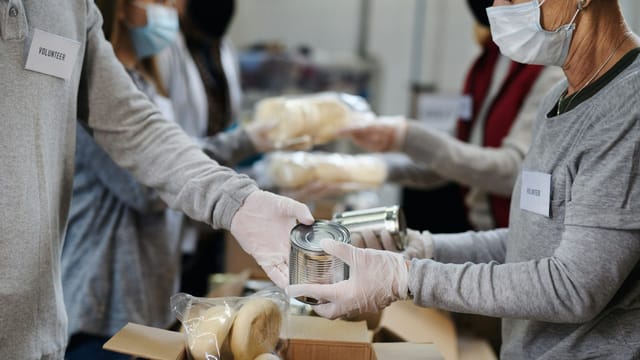

More than half of households surveyed that visited an Ohio food bank were forced to choose between paying for utilities or paying for food, according to a new report.
That 57% statistic was even higher for households with children, which stands at 65%, according to the Ohio Association of Foodbanks annual report which surveyed 2,644 food pantry visitors from April 18 to May 22 this year.
“Ohioans are facing real, real challenges and difficult choices every day, and that those choices are putting them in situations that we know are untenable,” Ohio Association of Foodbanks Executive Director Joree Novotny said.
Utilities were not the only trade-off. In 63% reported choosing between paying for transportation or food, and 59% said they were forced to choose between clothes and personal hygiene products or food. Another 48% said they had to choose between affording medicine or food, and 45% had to decide between paying their rent or mortgage or paying for food.
Households with children saw additional trade-offs as well, with 30% choosing between paying for education or food and 23% choosing between affording childcare or affording food.
“There’s a lot of trade-offs that are being considered and often being made,” Novotny said.
“We have to remember that someone making a choice sacrificing medicine to afford food, or wrestling with being able to put gas in the car to get to work, or put food on a table for their kids, or, even many making choices to regularly skip meals to stretch the resources that they do have, that reinforces concerns about what that means for the health and well-being of individual families and collective communities longer term.”
Slightly more than half (52%) said at least one person in their household skipped a meal during the past year and 59% said they had to skip a meal every month, according to the report.
When it comes to households with seniors, 53% reported visiting food pantries more than 12 times per year.
Food is often the first thing people cut back on, Novotny said.
“You still have to put gas in the car to get to work to keep your job,” she said. “You still have to pay the rent, keep utilities running, but food is a thing you can sacrifice.”
Who was surveyed
Of those surveyed, 46% said there was at least one senior over the age of 60 and 46% said there was at least one child under the age of 18.
Slightly more than half of those surveyed had annual household incomes below $20,000 and 69% reported having an income below $30,000.
Nearly a third of those surveyed said they got an extra job to make ends meet.
About half (49%) had Medicaid coverage and 76% had someone in their household living with a health condition including high blood pressure, diabetes, or heart disease.
A little less than half (45%) received Supplemental Nutrition Assistance Program benefits. Of those households receiving SNAP, 24% said their benefits lasted one week or less.
More than 100,000 Ohioans — including more than 50,000 children — have lost their Supplemental Nutrition Assistance Program (SNAP) benefits since President Donald Trump’s “One Big Beautiful Bill Act” made the largest cuts to food stamps in the history of the program.
Follow Ohio Capital Journal Reporter Megan Henry on X or on Bluesky.
This story is republished from the Ohio Capital Journal under a Creative Commons license. View the original article.