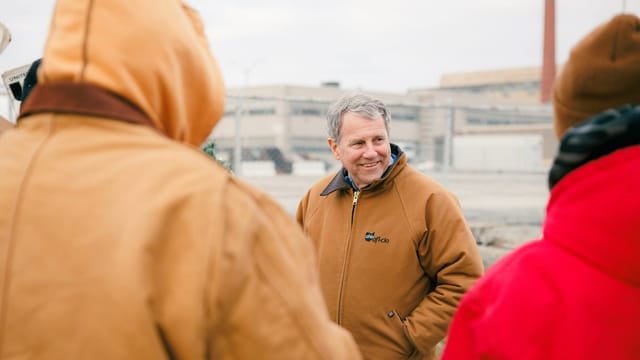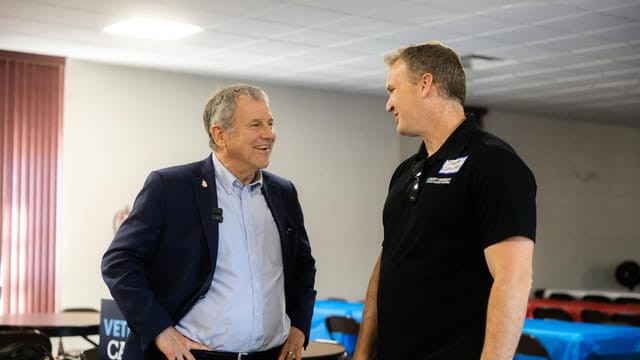
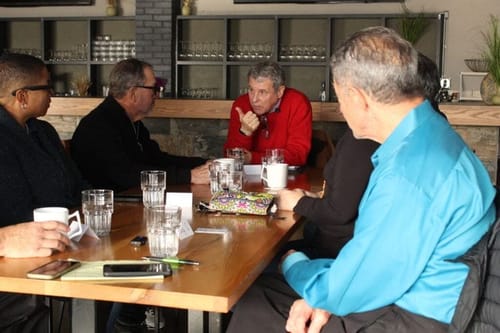

Ohio Democratic candidate for U.S. Senate Sherrod Brown met with several Columbus small business owners Wednesday for a roundtable on affordability. The three-term former senator has held similar events in other cities around the state as part of his bid to return to the U.S. Senate.
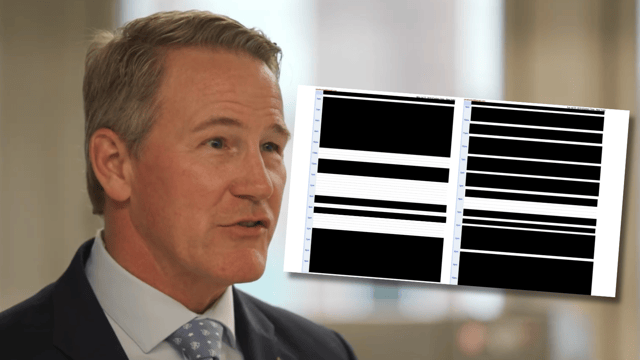
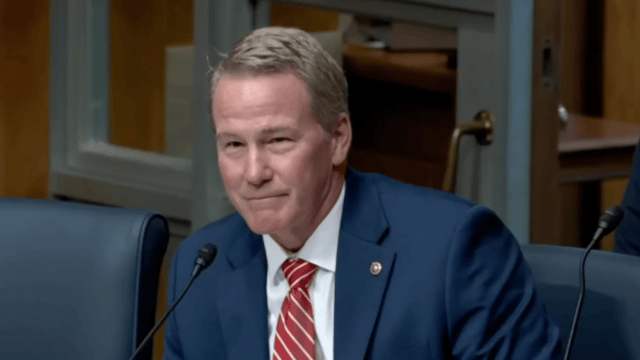
The Republican sweep in Ohio’s 2024 election saw Cleveland-area businessman Bernie Moreno unseat Brown and created a vacancy as J.D. Vance left the chamber to serve as Vice President. Gov. Mike DeWine tapped Lt. Gov. Jon Husted to serve in place of Vance, but he’ll need to win next November to serve out the remainder of the term.
The roundtable
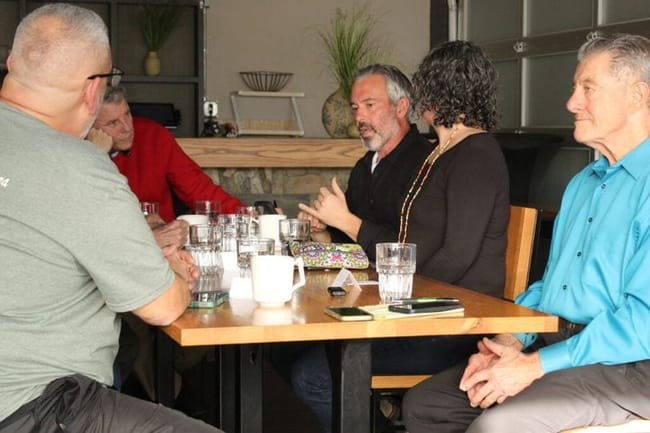
Most of the Columbus business owners Brown met with run restaurants. Letha Pugh owns the bakery Bake Me Happy and burger joint, Prestons. She explained they’re feeling the pinch from the Trump administration’s tariffs. The cost of beef is “astronomical,” she said, basically tripling in price.
“What happens, is there’s a threat of a tariff, the price increases, and then the price just never goes back down,” she said.
“It’s like the supplier is filing an insurance policy for themselves,” Harvest Pizza owner Chris Crader chimed in.
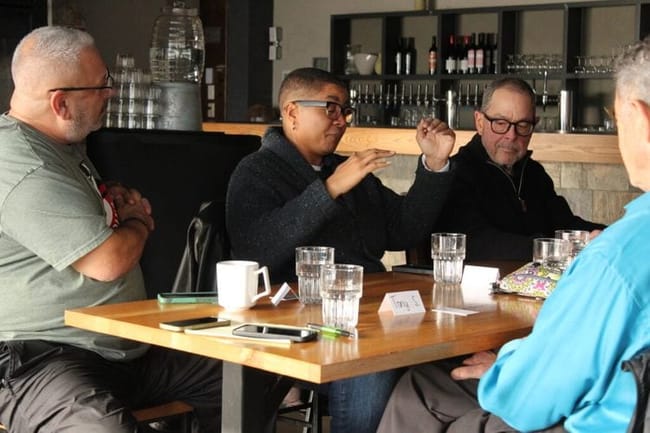
Pugh said their cost of goods went from 30% of revenue to 42%, “that is beyond our margin, so none of us are paying ourselves.”
She’s seen equipment costs rise, too, in part because of tariffs on steel and aluminum.
Brad Rocco from Bexley Pizza Plus echoed that point. “You think you might not be affected by it,” he said, “but if you really think about it, you are.”
“It might be a piece of equipment that was made in the United States, but a good portion of the parts are not,” he went on. “When you start taxing the pieces that go into this equipment, the price of that equipment becomes incredibly expensive.”
And that’s a dicey proposition, he said, when restaurant equipment gets so much use “it’s worth the metal that it’s built with” in about a year.
Rocco and Crader, both pizzamakers, lamented the complexity of buying something as simple as cheese. They explained prices fluctuate like pork bellies in a commodities market.
“You can buy like futures, or you can buy protections for it,” Crader said. “Dude, I’m just trying to make pizza. I don’t have a minor in Economics to figure out your contract.”
They all described a shrinking share of dine-in customers and a rise in food delivery app purchases. Rocco had to close his dining room for a year and a half during COVID. “That changes people’s habits,” he said.
Pugh added there’s little they can do to avoid those apps taking a cut. “If you put a cap on what they can charge, percentage wise, they add a new service charge to make up the difference.”
In addition to Harvest, Crader runs a bakery in Granville. He described setting up a coffee program for workers at the Intel factory going up nearby, but midway through a two-year contract, Intel shortened the agreement and pushed costs down. “They’ve got better lawyers than I do,” Crader said. More recently, he’s seen workers drilling test wells in a neighboring parcel to supply water for data centers and Intel.
“We lost money there, now they’re taking the water,” he said. “My energy costs have gone and I’m like, the whole thing feels like somebody’s really getting really rich off of this. And everybody that we represent, the average person in America, it’s like a struggle.”
Like the others, Tony Scartz, who owns Tony’s Italian Ristorante, said the cost of almost everything has gone up, but he added the Trump administration’s immigration crackdown has been particularly hard on labor. Scartz said he recently lost two Venezuelan employees that had been with him for years.
“They didn’t really want to leave, but they were nervous about being in this country,” he said. “They had children, and they didn’t want to raise their kids in that environment, they felt like the door was going to be opened and they were going to get arrested, and then what’s going to happen to their kids?”
Brown’s input
Speaking to reporters afterward, Brown did his best to hang those challenges on Ohio Republican U.S. Sen. Jon Husted. In particular, he emphasized the likely increase in healthcare costs for people getting insurance through the Affordable Care Act marketplace.
“Jon Husted, nine times, has voted to allow insurance rates to double and triple,” Brown said “He’s there to fix it. He hasn’t fixed it.”
“You heard the problems around here with tariffs,” Brown added, “Jon Husted has not spoken out against those tariffs or done anything about them.”
Ohio Capital Journal reached out to Husted’s campaign for comment without response.
Earlier this month, Husted introduced a measure granting a two-year extension for the enhanced healthcare subsidies set to expire at the end of the year. On social media, he wrote, “Democrats created the broken ACA system, but I’m working to be part of the solution to make health care more affordable for Ohioans.”
But Husted’s proposal went nowhere.
Asked about Husted’s proposal, Brown criticized his opponent for backing the tax cut package known as the One Big Beautiful Bill. That measure made tax breaks from the first Trump administration permanent and paid for it with deep cuts to health care programs.
“He’s done nothing,” Brown said of Husted. “He’s made some speeches, he’s introduced some bills, but he had a chance nine times and turned his back on people in this state.”
Follow Ohio Capital Journal Reporter Nick Evans on X or on Bluesky.
This story is republished from the Ohio Capital Journal. View the original article.