
The race for Ohio’s 9th U.S. Congressional district is one of the state’s most closely contested, and the candidates have contrasting records and positions when it comes to data center development.
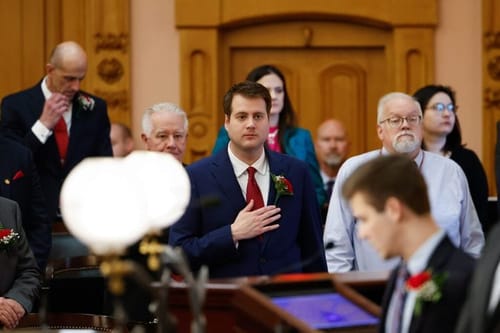
Derek Merrin, the Republican nominee and former state representative who is facing long-time Ohio Democratic U.S. Rep. Marcy Kaptur in the November election, voted for Ohio’s data center tax breaks when he was an Ohio state representative in 2017. Kaptur has spoken out against data centers for draining power and water from local communities, saying the companies should pay for that, not the citizens.
Ohio’s data centers have received $2.5 billion in state and local tax incentives between 2017 and 2024, according to a 2025 report by SRC EvalMetrics on behalf of the Ohio Chamber of Commerce.
Merrin, who served four terms as an Ohio state representative for the Toledo district from 2016 to 2024, did not respond to the Ohio Capital Journal’s questions for this story.
Merrin received a $1,000 political donation from the American Electric Power Ohio Committee for Responsible Government in 2021. AEP had received more than $6 million in data center tax breaks in Ohio as of September 2024, according to Policy Matters Ohio.
Merrin received a $500 political donation from Windstream Holdings’ PAC in 2022. That same year, Windstream Holdings listed eight “key data center locations” in Ohio.
One of the data center locations was operated by Cologix, which received more than $6 million in data center tax breaks as of September 2024, according to Policy Matters Ohio.
Another one of Windstream’s Ohio data centers location was operated by CyrusOne, which received more than $5 million in data center break breaks as of September 2024, according to Policy Matters Ohio.
Ohio has more than 200 data centers, the sixth-highest state in the country, according to Pew Research Center. Most of the data centers are in central Ohio. Cincinnati has 26 and Cleveland has 22, according to the Data Center Map.
Ohioans are seeing increased electric bills. The average Ohio residential utility bills are projected to be about $800 for the summer — a 17% increase compared to last summer, according to a report by Third Way.
Merrin lost a close race to Kaptur during the 2024 election and the Cook Political Report says Ohio’s 9th Congressional District race is a toss-up.
Kaptur raised concerns over data centers at the end of last year.
“How much more will our citizens be forced to pay for power and water?” Kaptur asked, speaking on the U.S. House floor.
“They have a right to know. Will our building trades be true partners in economic growth or just temporary labor while facing higher utility bills at home? And how many permanent jobs will these largely opaque facilities actually provide? … The American people deserve to know how AI data centers will affect their communities.”
When the Ohio Capital Journal asked if Kaptur supports bringing more data centers to Ohio’s 9th Congressional District, Kaptur’s campaign spokesperson Kylie Blitzer responded.
“Economic development should strengthen our communities, not drain their resources, and put added burdens on our people.
“If data center companies want to do business here, they should pay their fair share — not force hardworking people and local municipalities to subsidize billions in tax breaks for wealthy CEOs and shareholders who can easily afford to pay their own way,” Blitzer said in an email.
Ohio Democratic candidate for governor Amy Acton recently announced she supports a conditional moratorium on data centers “if requirements on costs, union labor, transparency, environmental standards, community benefit agreements, and development are not met,” she said in a statement.
Ohio Republican candidate for governor Vivek Ramaswamy’s data center plan is three-fold.
“If a data center is built in your community, then (1) you will no longer have to pay for your home’s electricity, (2) you will pay lower property taxes, and (3) the data center will be required to abide by all air and water quality standards without exception, and we will take the necessary steps to protect Ohio’s fertile farmland,” he said in a statement.
Neither candidate has laid out exactly how they intend to accomplish their promises, whether that be using the limited powers of the governor’s office or some combination of working with the legislature, data center operators, utilities, or utility regulators.
Lawmakers at the Ohio Statehouse have yet to pass any data center legislation.
Conserve Ohio, the grassroots organization behind a proposed constitutional amendment to ban new data centers, are collecting signatures to make the 2027 ballot.
Follow Ohio Capital Journal Reporter Megan Henry on X or on Bluesky.
This story is republished from the Ohio Capital Journal under a Creative Commons license. View the original article.