

Ohio’s mental health landscape is consistently seeing increases in demand, including among medical professionals like nurses and physicians, who are asking for more help.
“We just know health care comes with additional stresses,” said Dr. Laurie Hommema, family medicine physician and senior medical director of well-being at OhioHealth.
OhioHealth created the Well-Being Center, where employees access services, including individual counseling, group services, and “critical incident response.”
Last year, the health care system said it increased the number of “covered counseling visits” for employees from eight to 12 annually.
Hommema and the Well-Being Center then saw an 8% increase in counseling requests from employees in the first nine months of the year, compared with the entirety of 2024.
In Ohio as a whole, requests for behavioral health services have gone up significantly over the years.
According to data from the state of Ohio, demand for the services went up more than 350% from 2013 to 2019, an average increase of 29% per year.
The data showed mental health services accounted for 52% of the total behavioral health demand in Ohio.
The data comes as the state suffers from a mental health shortage in nearly all of its 88 counties, contributing to the struggle for Ohioans to access the care they need.
“With this information, it became clear that there was a need to focus on building up a strong workforce equipped to handle the mental health and addiction needs of Ohioans,” the Ohio Department of Behavioral Health found in the research.
While the demand for a workforce to help with mental health has increased, research over the years has also shown a need for more mental health when it comes to medical professionals.
A 2025 study published in the International Nursing Review found anxiety and depression rates ranging from 23% to 61% among nurses in 35 countries.
About 18% of those who self-reported mental health needs said they experienced symptoms of “burnout.”
Burnout is considered an “occupational phenomenon” by the World Health Organization, where chronic workplace stress can cause exhaustion and other struggles related to one’s work.
In the research published in the study, nurses noted “more frequently engaging with self-care practices” compared with engagement before the COVID-19 pandemic.
Almost half of the nurses participating in the study also reported “experiencing public aggression due to their identity as a nurse.”
Over the past five years OhioHealth has had its well-being program, Hommema said they’ve gone from about 8,000 employee interactions per year to 28,000.
With a landscape of health in Ohio that includes large facilities and very small clinics, from urban settings to deeply rural areas, health care workers have all kinds of experiences that could warrant the need for mental health assistance, ranging from daily health trauma to stressors connected to care access, or lack thereof.
“I think the tension around care delivery and patients needing to be far away from home to get care, it’s a kind of unique health care environment in Ohio,” Hommema said.
“I definitely think you see some tensions from that, that sometimes manifest perhaps in workplace violence or tensions amongst the health care team.”
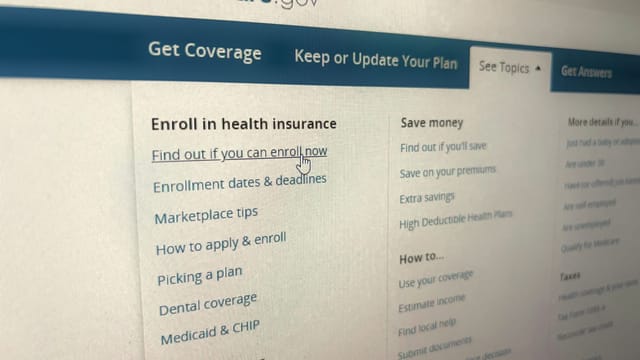
The struggles of medical professionals continue as federal budget cuts to Medicaid and expired tax subsidies from the Affordable Care Act reduce the ability for Ohioans and Americans to receive coverage, thus increasing the likelihood of a sicker public. Hommema said that adds a “moral distress component” to the nurses and doctors’ work.
One of the original designers of the Affordable Care Act, former New Jersey congressman Robert Andrews, said the country has seen a positive shift in ideas around mental health, but hasn’t seen the shift needed to deal with the issue comprehensively.
Therapy for medical professionals and others should be understood by the government as an “investment,” just like easy access to care should be seen that way, he said.
“The caregivers don’t do a great job giving care if they themselves are unhealthy,” Andrews said.
The former congressman now heads up the Health Transformation Alliance, a coalition that seeks to improve health care access through American employers.
The alliance praised Hommema’s work for prioritizing mental health in the medical health care field. Andrews said the care should be replicated throughout the country, so the stigma of mental health, and the perceived separation between the mental and physical health can be eliminated.
“The idea that there is mental health on one side and health on the other just isn’t true,” Andrews said. “A synonym for mental health is health.”
This story is republished from the Ohio Capital Journal. View the original article.