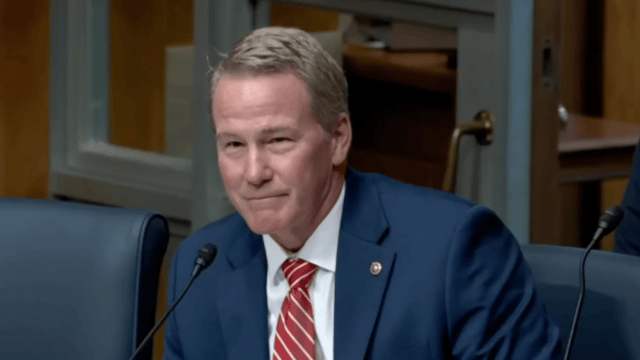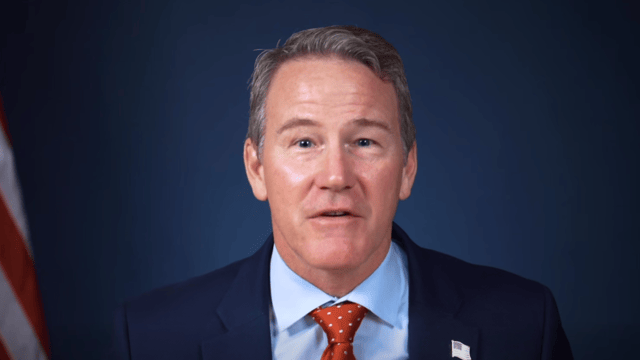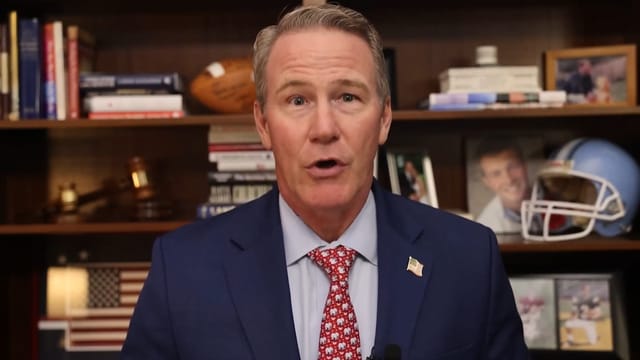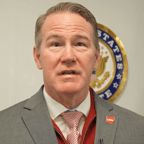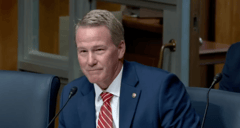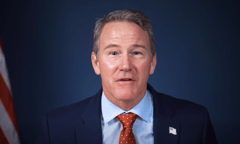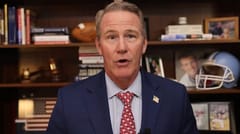
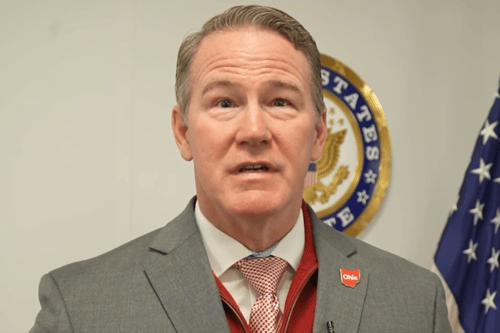
U.S. Sen. Jon Husted, R-Ohio, said on Cincinnati radio Wednesday that he cannot see how the war in Iran ends and that Tehran must reopen the Strait of Hormuz, the Persian Gulf shipping lane Iran has blocked since the conflict began in February.
Speaking on conservative host Bill Cunningham’s program on Cincinnati’s 700 WLW on June 3, Husted described Iran’s leadership as opaque and divided. He said the country’s leaders are “in bunkers” and that “you don’t really know who is actually making the decisions,” pointing to “the political clerics and then the military that are all sort of doing their own thing.”
“It is not clear to me how this comes to an end at this point in time, but it needs to,” Husted said. “Iran needs to open up the strait [of Hormuz].”
The comments come a little more than three months after the United States and Israel launched air strikes on Iran on Feb. 28, opening a conflict that included the killing of Iranian Supreme Leader Ali Khamenei. In response, Iran blocked the Strait of Hormuz — a chokepoint for roughly a fifth of the world’s oil — and the closure has driven up global crude prices and the cost of gas at Ohio pumps. A U.S.-led naval blockade of Iran began in April, and an effort to reopen the waterway is ongoing.
A shift from ‘brief and successful’
Husted’s acknowledgment that he does not know how the war ends marks a more cautious tone than his earlier public statements. Shortly after the fighting began, he described the U.S. military operation as going “much better than anybody thought it would,” and for months he has said he expects the war to be “brief and successful,” a view he has said he shares regularly with the Trump administration.
In a separate interview with Signal Statewide this week, Husted used nearly identical language about Iran’s leadership, saying its leaders “are hiding in bunkers underground” and that “it’s not easy to have negotiations with people like that.” He framed the U.S. goals as twofold — preventing Iran from developing a nuclear weapon while reopening Gulf oil shipments — and said voters “want us to do both.” Asked when the war will have gone on too long, or whether its end is near, Husted declined to say.
Brown runs against the war
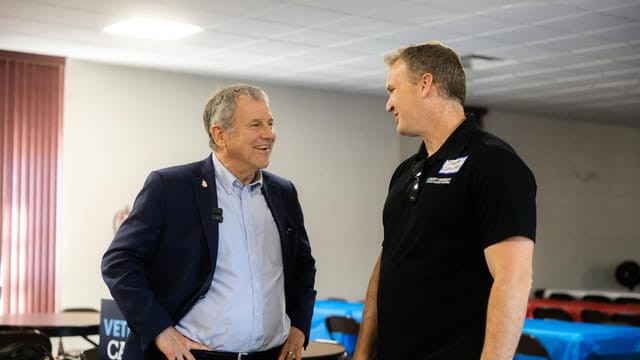
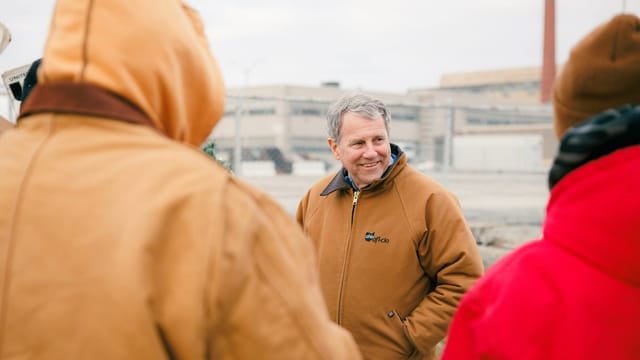
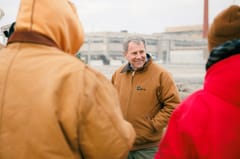
The exchange lands in the middle of Husted’s November race against former Democratic Sen. Sherrod Brown, who is making opposition to the war a centerpiece of his campaign. At a recent stop near Columbus, Brown said Ohio taxpayers “have already spent a billion dollars on this war” — money he argued is not going to schools, roads or public health — and has tied the conflict to higher gas, diesel and fertilizer costs hitting Ohio farmers.
National polling has shown the war is unpopular. A YouGov survey conducted May 29 to June 1 found 29% support for President Donald Trump’s handling of the situation in Iran, a figure comparable to public sentiment on the Iraq War late in the 2006 campaign that first sent Brown to the Senate.
Husted, for his part, has pushed back on Brown, arguing that his long record in Congress contributed to Iran’s rise as a state sponsor of terrorism and that his energy positions raised electricity prices. “I believe that Ohioans understand all that,” Husted said.