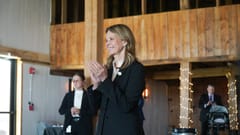
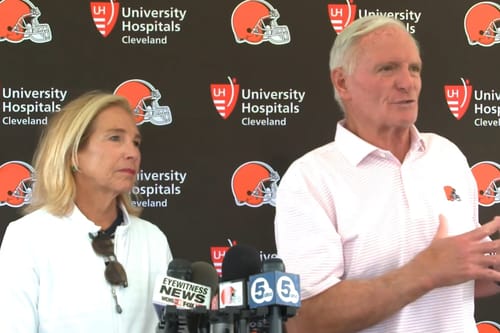

Fourteen months after Ohio Republicans voted to hand Jimmy and Dee Haslam a $600 million state grant built out of other Ohioans’ forgotten money, the Haslams are opening their Bratenahl home to raise money for the man who wants to run the state — and for the legislative leader who pushed the funding plan through.
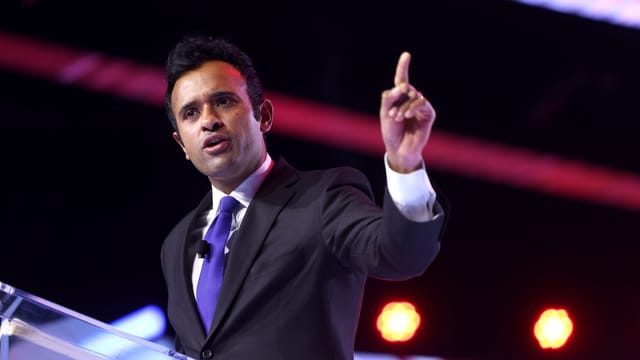
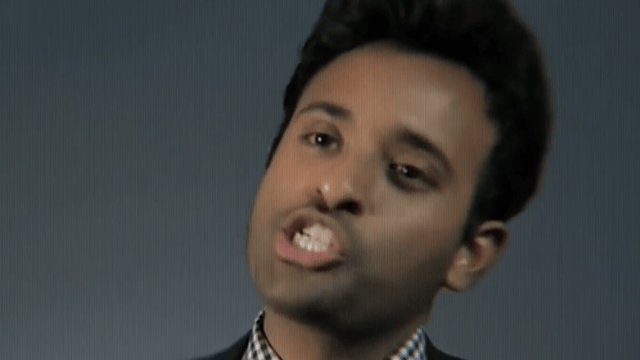
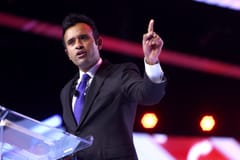
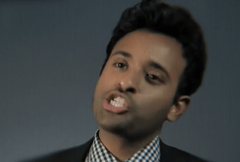
An invitation obtained by TiffinOhio.net shows the Browns owners hosting a fundraiser for Republican gubernatorial nominee Vivek Ramaswamy on Tuesday, Sept. 1. Tickets start at $1,000 a person. Patrons pay $5,000, sponsors $10,000. Hosts are asked for $25,000. Co-chairs are asked to raise $50,000, and event chairs $100,000. The 4:30 p.m. private reception is reserved for chairs, co-chairs and hosts; a photo reception for the leadership committee follows at 5; the general reception and program begin at 6.
Ramaswamy’s running mate, Ohio Senate President Rob McColley, is listed on the invitation, which carries the campaign slogan “Lower costs. Bigger paychecks.” RSVPs are due Thursday, Aug. 27. The invitation notes the host committee was still forming when it went to print.
Ohio caps individual contributions to a joint governor and lieutenant governor ticket at $16,615.67 per election, which means a $100,000 event chair is not writing one check. That figure is a bundling target — a commitment to gather money from other donors on the campaign’s behalf.
The $600 million
The grant at the center of this is the largest single subsidy Ohio has ever committed to a professional sports franchise, and it does not come out of the general fund. It comes out of the Division of Unclaimed Funds — the roughly $4.8 billion pool of dormant bank accounts, uncashed checks, forgotten utility deposits and unclaimed insurance payouts the state holds in trust for its residents, including thousands of people in Seneca and Sandusky counties.
Gov. Mike DeWine had proposed paying for stadium projects by doubling the tax on sports gambling operators. The Ohio House preferred state-backed bonds. Senate Republicans produced a third option: redefine unclaimed property that has sat with the state for a decade as abandoned, sweep it into a new sports and culture facilities fund, and award the Browns $600 million of it as a performance grant. That version won. DeWine signed it into law minutes before the June 30, 2025 budget deadline.
Cleveland Mayor Justin Bibb, who fought the Brook Park move and lost, called the provision “a $600 million public subsidy for a domed stadium in Brook Park.”
The money has not moved. Former Ohio Attorney General Marc Dann and former state Rep. Jeff Crossman sued on behalf of Ohioans whose property is in the fund, and in March a Franklin County magistrate granted a preliminary injunction halting the transfer, finding the challengers likely to prevail on claims that the law is an unconstitutional taking. The Sixth Circuit, on a separate federal track, declined to order similar relief. Dann said the legislature “tried to permanently confiscate this money for a private sports project.”
Ohioans noticed. Claims paid out of the fund nearly tripled in fiscal year 2026, to $182.57 million, as residents rushed to pull their money out before the state could take title to it. Construction in Brook Park is underway anyway.
The running mate
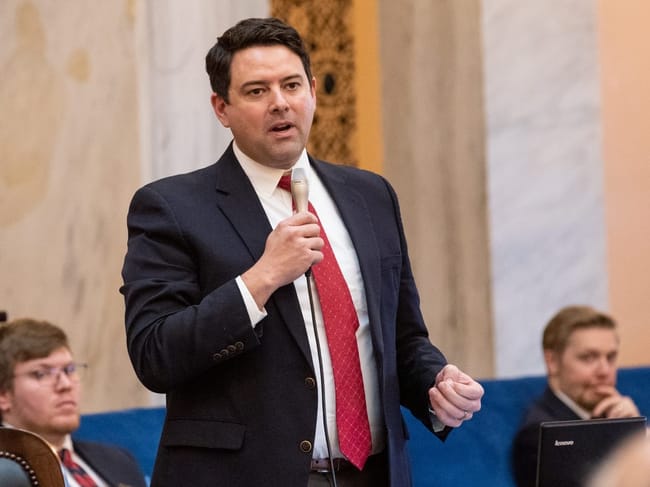
McColley is not incidental to this story. In January 2025, before any bill existed, the Napoleon Republican told the Statehouse News Bureau: “I’m not in favor of something that would just simply be a handout.”
Five months later, his chamber wrote the unclaimed-funds mechanism, and McColley became its most prominent defender, telling constituents in his newsletter that it “saves the state $400 million in debt service.” He argued the state would be repaid through taxes captured at the stadium site, dismissed the constitutional objections, and predicted the plaintiffs would struggle to show any damages.
During 2024, the year before that plan surfaced, McColley’s campaign accepted $30,999 from Jimmy and Dee Haslam, according to a review of state campaign finance reports by the Ohio Capital Journal. His Senate seat was not on the ballot that year. The same review found Ohio House Speaker Matt Huffman took $60,999 from the couple between January 2024 and March 2025, and that Senate Finance Chair Jerry Cirino took $15,000 in August 2024. Huffman’s office said campaign contributions do not influence policy decisions.
NBC4 in Columbus, reviewing the same records, reported DeWine has received $116,908.40 from the Haslams since 2017 and that the family gave more than $500,000 to Ohio political action committees in the year before the stadium request. News5 Cleveland put the family’s total Ohio political giving since 2020 at at least $1,145,000.
The check that is already in
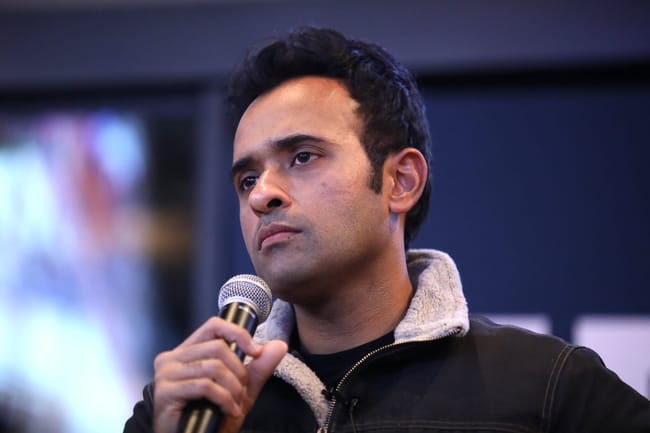
Jimmy and Dee Haslam do not appear in Ramaswamy’s 2026 state campaign finance filings. Nor did TiffinOhio.net find either of them, another member of the Haslam family or a Haslam-controlled entity among the FEC-reported receipts of V-PAC: Victors, Not Victims, the super PAC backing Ramaswamy.
The man who negotiated the $600 million on their behalf does appear, however.
David Jenkins, president of Haslam Sports Group, gave the Ramaswamy-McColley campaign $10,000 on May 20 and another $16,615.50 on July 31, state records show. He listed his employer as Haslam Sports Group both times. That second figure is 17 cents below Ohio’s maximum contribution to a statewide ticket for a single election. His wife, Ada Jenkins, gave $16,615.50 on the same day from the same Strongsville address, bringing the household total to $43,231. The couple are listed as hosts on the Sept. 1 invitation.
Jenkins is not a peripheral figure in the stadium deal. Haslam Sports Group’s own description of his role puts government relations in his portfolio and credits him with leading the stadium planning process that produced what the company calls a public-private partnership. He was promoted to president in August 2025, five weeks after DeWine signed the grant into law.
Catherine Turcer, executive director of Common Cause Ohio, put it this way to the Capital Journal: “Ohioans aren’t naive. It’s not hard to connect the dots.”
The Haslams have also spent heavily against the kind of reform that would loosen the legislature’s grip on Ohio’s maps. In 2024 they gave $50,000 each — $100,000 combined — to Ohio Works, the committee formed to defeat the citizen redistricting amendment, putting them among its largest individual donors. The amendment failed. They have previously hosted fundraisers for J.D. Vance and for U.S. Sen. Bernie Moreno.
What the Haslam name carries
The family fortune that will underwrite the Sept. 1 event was built on Pilot, the truck-stop chain Jim Haslam founded in 1958 and Jimmy Haslam ran as CEO. In 2014, that company entered into a criminal enforcement agreement with federal prosecutors in Tennessee, accepting legal responsibility for a scheme in which employees deceptively withheld promised diesel discounts from hundreds of trucking customers. Prosecutors put the loss at more than $56 million. Pilot paid a $92 million penalty, agreed to full restitution, and separately settled customer claims for roughly $85 million. The agreement explicitly protected no individual from prosecution.
Nineteen former employees were ultimately implicated: 14 pleaded guilty, three were convicted at trial, and two received immunity, according to Trucking Info. Former company president Mark Hazelwood was sentenced to more than 12 years in federal prison. Jimmy Haslam has consistently denied knowing about the scheme, and he was never charged.
Nine years later, the Haslams and Warren Buffett went to war over the sale of Pilot. The family sued Berkshire Hathaway, alleging it had adopted an accounting method that would slash the price Berkshire owed for their remaining 20 percent stake. Berkshire countersued, alleging Jimmy Haslam had promised millions in payments to Pilot executives to inflate the company’s short-term earnings. At a Delaware hearing in December 2023, attorneys disclosed that federal prosecutors in Manhattan were examining Berkshire’s allegations. The two sides settled on the eve of trial in January 2024 on undisclosed terms, with neither admitting wrongdoing, and the Haslams sold the rest of Pilot to Berkshire days later. No charges have been reported against Haslam.
In football, the Haslams’ defining decision was the 2022 pursuit of quarterback Deshaun Watson, who was then facing more than 20 civil lawsuits from women accusing him of sexual assault or harassment during massage appointments. Two Texas grand juries had declined to indict him, and he denied wrongdoing. Cleveland traded three first-round picks for him and gave him a five-year, $230 million fully guaranteed contract — then the largest guarantee in NFL history. Women suing Watson publicly condemned the deal as a reward for his conduct. The NFL suspended him 11 games for violating its personal conduct policy. Three years later, Jimmy Haslam told reporters the franchise took “a big swing and miss with Deshaun.”
And in Cleveland, the same legislature that awarded the $600 million also amended the state’s Modell Law — written after Art Modell moved the original Browns to Baltimore — so that it applies only to teams leaving Ohio, clearing the path to Brook Park. The city and the Haslams then settled their dueling lawsuits for roughly $100 million paid to Cleveland over 15 years, part of it earmarked to demolish the stadium the team is leaving behind.
Billionaires backing a billionaire
Ramaswamy does not need the Haslams’ money to be competitive. He has already put $25 million of his own fortune into the race and, by campaign finance reports filed Aug. 6, had raised roughly $14.4 million more from donors this year, according to NBC4. Democrat Amy Acton reported $16.5 million over the same period.
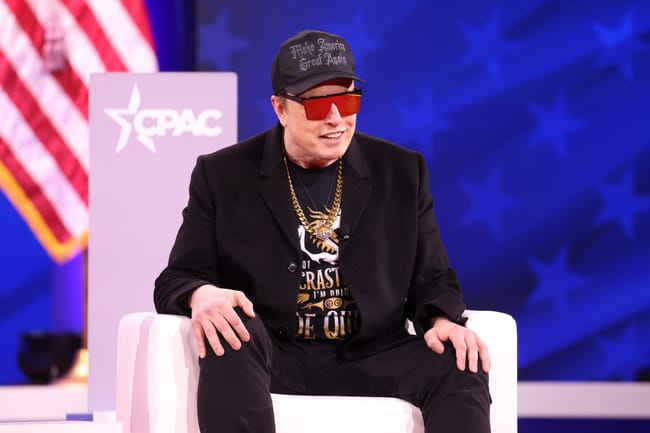
The outside money is more lopsided. V-PAC: Victors, Not Victims, the super PAC whose stated purpose is electing Ramaswamy, has raised roughly $42 million, with about $37 million of it coming from five billionaires who do not live in Ohio — including a $5 million check from Elon Musk in May. The committee has also taken corporate money, including $250,000 from Scotts Miracle-Gro, which pleaded guilty to federal pesticide crimes in 2012.
Ramaswamy has campaigned on cutting government waste and shrinking what the state spends. He has also disclosed a stake in the venture firm 8VC, an investor in defense contractor Anduril, which is collecting an Ohio incentive package worth more than $830 million for its Arsenal-1 plant outside Columbus.
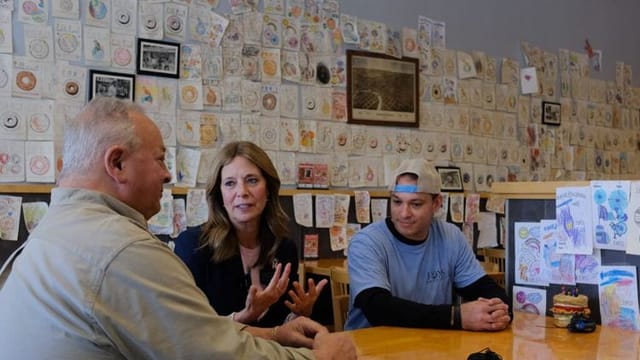
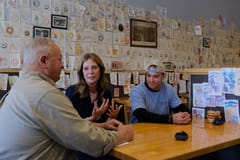
The timing of the Bratenahl event is its own complication. On Wednesday, Acton stood in a Columbus coffee shop and rolled out an anti-corruption platform, pledging three day-one executive orders creating an anti-corruption task force, restricting industry insiders from serving on the boards that regulate them, and building a public database of state contracts. She said it is time to put working families ahead of “billionaires, corporations and special interests.” Ramaswamy’s campaign dismissed the plan as hypocrisy, pointing to dark-money support behind Acton.
Thirteen days later, a family whose $600 million award is still frozen in a Franklin County courtroom will gather Ohio’s donor class in their living room to raise money for the ticket that would inherit the fight.