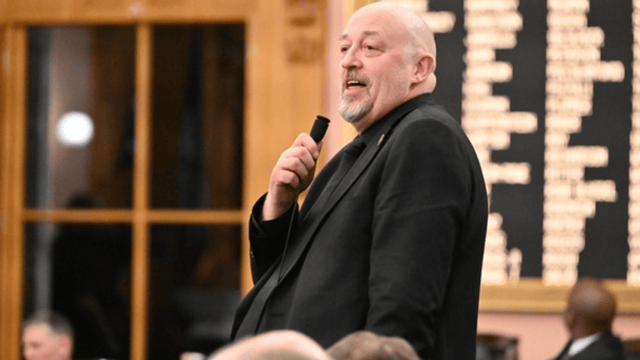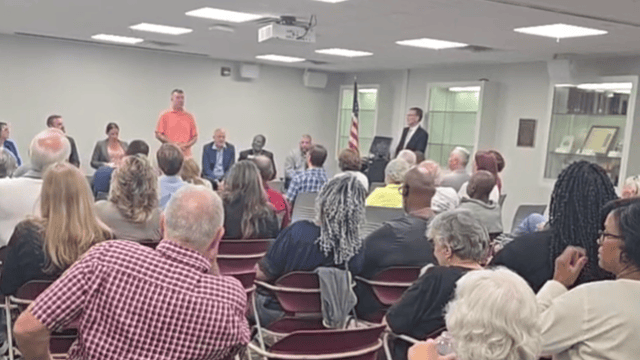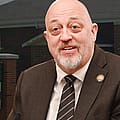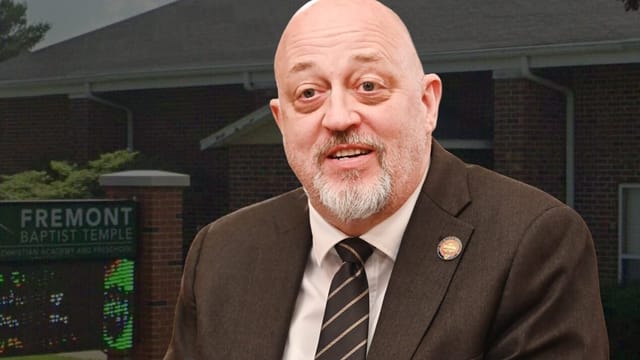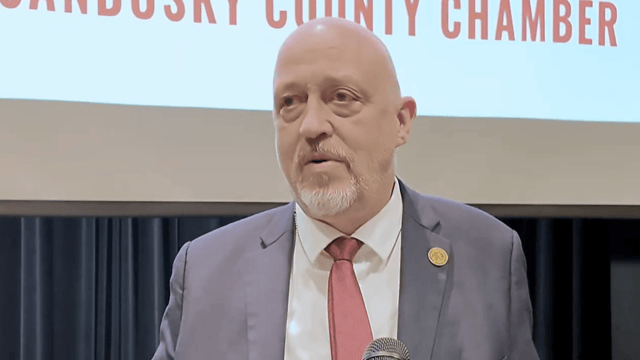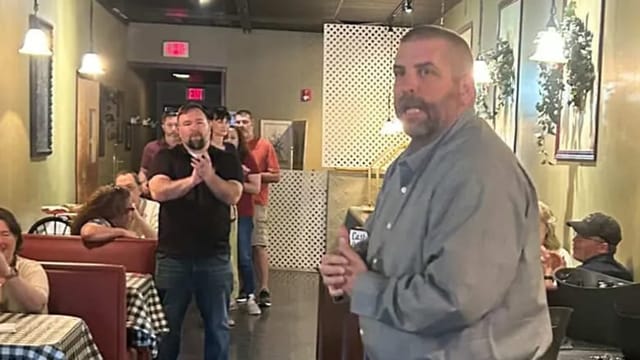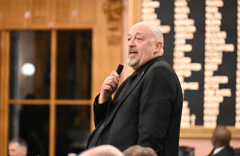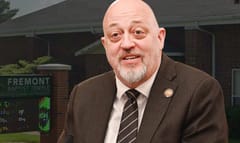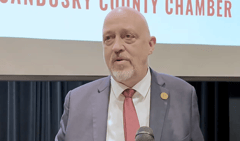

TIFFIN, Ohio — Rep. Gary Click (R-Vickery) has built a legislative record that follows a pattern: first, he tried to send public tax dollars to private religious schools like the one run by his own church. When that failed three times, he turned his attention to cutting the revenue streams that fund the public schools his constituents’ children actually attend.
Two of those efforts are now law. A third is advancing through committee.
Together, they represent the clearest picture yet of how Click has used his seat in the Ohio House to systematically undermine the financial stability of public education — in Tiffin and across the state.
The 2 laws already costing Tiffin schools $1.2 million
Click cosponsored House Bill 186, branded “Stop the Spikes,” which establishes an inflation cap on school district property tax revenue growth. The Ohio House Republican Caucus estimated the bill would save property owners nearly $1.7 billion over three years. That money comes directly from school district revenue.
Click also voted for House Bill 129, which restructures how emergency and substitute levies interact with the 20-mill floor — the mechanism that guarantees school districts a baseline level of property tax revenue. For Tiffin City Schools, which has an emergency levy in place, HB 129 removes the district from that floor.
Gov. Mike DeWine signed both bills into law with an effective date of March 20, 2026.
Tiffin City Schools Treasurer Anne Spence identified the two laws as directly responsible for a projected $1.2 million annual funding loss, according to the Advertiser-Tribune. Revenue that was projected at $17.5 million under prior law will drop to approximately $16.3 million.
The financial pressure has already forced significant changes. The district placed a 0.75% earned income tax levy on the ballot in November 2025 — its first operating levy since 2012 — asking the median household to pay approximately $408 per year to maintain basic classroom operations. The district also sold 82 acres of farmland it had purchased for future expansion and has cycled through four superintendents in recent years during a period of escalating fiscal challenges.
According to the Ohio Legislative Service Commission’s fiscal analysis, HB 129 alone is projected to curtail school district revenues statewide by approximately $162 million in tax year 2026, $223 million in 2027, and $224 million in 2028, with an estimated 211 school districts affected over the first three years.
Click’s next move: killing continuing levies by 2030
Click is not finished. In September 2025, he introduced House Bill 420, the first bill in a three-part legislative package he calls the “Taxpayers Freedom Trilogy — Act One: Discontinuing the Continuum.”
HB 420 would force all property tax levies approved for a “continuing period of time” — meaning levies voters approved as permanent — to expire after tax year 2029. After that, no new continuing levies could be placed on the ballot. Every levy would require periodic renewal by voters.
Continuing levies are a foundational funding tool for school districts, fire departments, EMS services, libraries, and other local government functions across Ohio. They exist because voters approved them as permanent, providing stable, predictable revenue without the cost and uncertainty of repeated ballot campaigns.
The bill was referred to the House Ways and Means Committee and received its first hearing the week of February 9, 2026, with Click and co-sponsor Rep. Bernie Willis (R-Springfield) providing sponsor testimony, according to the Ohio School Boards Association.
Click introduced two companion bills at the same time: HB 421 (“Arresting Inside Millage”), which would allow voters to reduce unvoted property taxes by initiative, and HB 422 (“The Triumph of the Taxpayer”), which would increase the approval threshold required to pass property tax levies. All three were referred to the Ways and Means Committee.
If HB 420 becomes law, every school district in Ohio with continuing levies would face a wave of forced renewal elections. Districts that fail to win voter approval would lose those revenue streams entirely. For a district like Tiffin City Schools — already absorbing a $1.2 million annual hit from HB 129 and HB 186 — the loss of any continuing levy would compound an already precarious financial situation.
The voucher push that started it all
Before he turned to cutting public school revenue, Click spent years trying to create a new public funding stream for private religious schools — including one operated by his own church.
In November 2023, Click introduced House Bill 339, the “Nonchartered Educational Savings Account Program.” The bill would have funneled public education dollars to nonchartered nonpublic schools — private schools that have declined state oversight — at 90% of the statewide average base cost per pupil.
Among the schools that would have benefited: Temple Christian Academy, a PreK-12 nonchartered Baptist school in Fremont operated by Fremont Baptist Temple, where Click served as pastor for 19 years before stepping down to the honorary title of Pastor Emeritus. The school has approximately 40 students, according to National Center for Education Statistics data. Click remains listed on the church’s leadership page.
HB 339 explicitly blocked the state from overseeing schools receiving public money. The bill text declared that the Treasurer of State “shall not regulate the curriculum, instructional methods, or other aspects of a school’s educational program.” It contained no requirements for teacher certification, curriculum standards, or academic performance benchmarks.
The bill had zero cosponsors and died in committee. The concept resurfaced in Senate Bill 68 and was later inserted into the state budget, but Gov. DeWine vetoed the provision, citing the Bishop Sycamore scandal as evidence of what happens when public money flows to unregulated schools.
The accountability gap
The contrast between Click’s two legislative priorities is difficult to reconcile.
His voucher legislation, HB 339, would have created a new public funding stream for schools that are explicitly exempt from state regulation of curriculum, instructional methods, teacher qualifications, and virtually all accountability measures. His property tax legislation — the two bills now law and the third advancing through committee — constrains and threatens to eliminate revenue for public schools that are subject to state curriculum standards, teacher certification requirements, public financial reporting, and voter-approved levies.
School board member Larry Kisabeth told WTOL the revenue losses are compounding frustrations in a district that just asked voters for new money. “The $1 million doesn’t defeat the fact that we passed the levy, but it’s very frustrating for our taxpayers,” he said.
Spence described the financial outlook as “doom and gloom,” explaining that the state will continue to calculate the district’s funding as if it is collecting full property tax revenue — even though HB 129 and HB 186 ensure it is not.
“The state will continue to count us as being at our full evaluation, when for funding purposes we are actually receiving less than what we should be,” Spence told the board.
Meanwhile, the district discussed joining the Vouchers Hurt Ohio lawsuit, a legal challenge to the constitutionality of Ohio’s private school voucher system that has been joined by Toledo Public Schools, Bowling Green City Schools, and nearby Bellevue and Fostoria.
Board member Victor Perez put the stakes plainly: “We are just redistributing the wealth to the private sector. If we don’t stand up for ourselves and our communities, the legislature isn’t going to do that.”