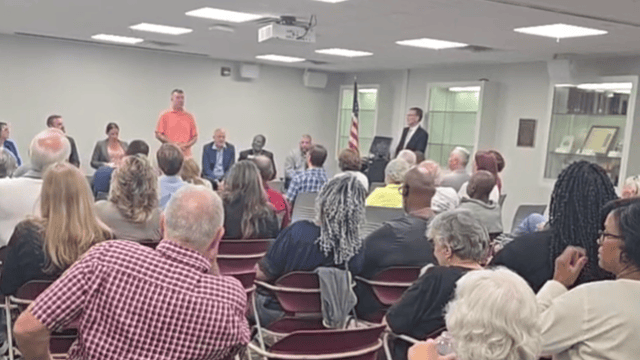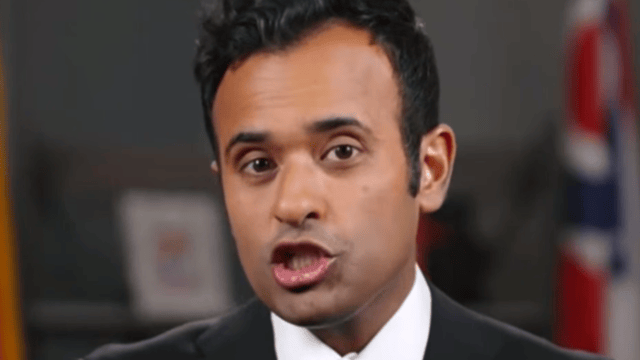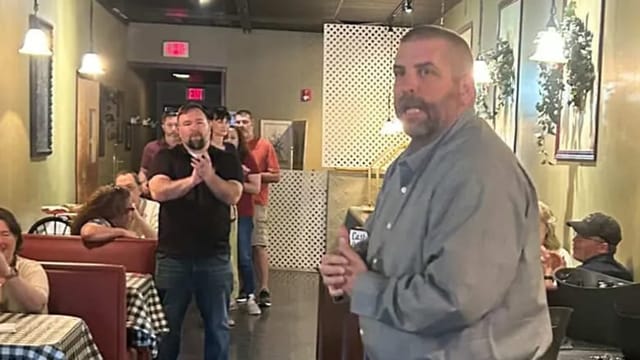
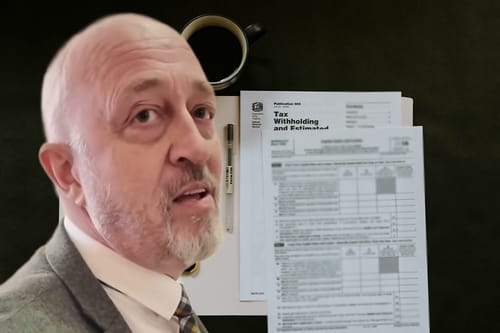
Ohio State Representative Gary Click is actively promoting a federally enacted tax-credit scholarship program that redirects federal tax dollars toward private K–12 education—a policy that could force local property tax increases in rural districts as public school funding shrinks. The program is championed by the American Legislative Exchange Council (ALEC), a corporate-funded organization that has donated directly to Click’s campaign.
The program, enacted as part of the “One Big Beautiful Bill Act” signed into law by President Trump on July 4, 2025, allows taxpayers to receive a dollar-for-dollar federal income tax credit of up to $1,700 for donations to nonprofit scholarship-granting organizations. Those organizations then provide scholarships to families to cover private education expenses, including private and religious school tuition, according to reporting by Chalkbeat.
Click promoted the program in a recent Facebook post by sharing ALEC-produced content that praised the policy and encouraged parents to opt out of public schools. The post used language consistent with ALEC’s national messaging in support of education privatization.
Campaign finance records reviewed by TiffinOhio.net reveal that ALEC made a $1,684.79 contribution to Click’s campaign committee on November 26, 2025, providing additional context for his promotion of the organization’s education policy agenda.
Why This Could Affect Your Property Taxes
Ohio funds public schools through a mix of state aid and local property taxes. When state or federal policies reduce the amount of public funding available to school districts—including through vouchers or tax-credit scholarship programs—districts still must pay for fixed costs like buildings, transportation, and staff. In rural communities with limited tax bases, the remaining option is often to seek additional local property tax levies or make cuts to programs and services. As a result, policies that divert public education dollars can increase pressure on local property taxpayers even if local enrollment does not significantly change.
Understanding the Federal Tax-Credit Scholarship Program
The federal tax-credit scholarship program represents the first-ever federally funded private school choice initiative. According to the Congressional Research Service, the program takes effect in calendar year 2027 and will be administered by the Secretary of the Treasury.
Unlike traditional charitable tax deductions that reduce taxable income, this program offers a dollar-for-dollar tax credit—meaning a taxpayer who donates $1,700 to a qualifying scholarship organization receives a full $1,700 reduction in their federal tax liability. As NPR reported, “It’s about three times as generous as what you’re gonna get from donating to a children’s hospital or a veteran’s group or any other cause,” according to Carl Davis at the Institute on Taxation and Economic Policy.
“It really preferences voucher groups over every other kind of charity,” Davis told NPR. The program functions as what economists describe as “a tax shelter to the wealthy.”
The program has no cap on total funding, though individual taxpayers are limited to $1,700 in credits annually. Eligible students must come from households earning no more than 300% of their area’s median gross income and be eligible to attend public school. In practice, this covers the majority of American families.
States must opt in to participate in the program. As of late January 2026, 27 states including Ohio have formally enrolled or announced plans to participate, while four governors have said their states won’t join.
How the Program Affects Public School Funding
Education policy researchers warn that tax-credit scholarship and voucher-style programs reduce public revenue available for public schools, even though school districts continue to face largely fixed operating costs.
According to research by the Economic Policy Institute, when students leave public schools using vouchers or tax-credit-funded scholarships, districts lose funding tied to enrollment while still paying for staffing, transportation, and facilities. Because many school costs are fixed regardless of enrollment numbers, districts cannot proportionally cut expenses when students depart. The result is fewer resources per student for those who remain in public schools.
The Center for American Progress reports that these funding losses hit rural districts especially hard. Rural schools operate on thin margins and face what economists call “diseconomies of scale”—they must cover fixed costs for teachers, buses, and facilities regardless of enrollment. The report notes that “losing just a few students—and therefore revenue” can “dramatically affect school budgets,” often forcing cuts to staff, academic programs, arts, and extracurriculars.
The Capital Gains Tax Shelter Advantage
The federal program offers an additional financial benefit that distinguishes it from other charitable giving. Donors can contribute appreciated stock to scholarship-granting organizations and receive a tax credit for the full value without ever paying capital gains taxes on the earnings.
For example, according to a Brookings Institution analysis, if someone buys $5,000 in stock that doubles in value, they can donate the shares valued at $10,000 to a scholarship organization, receive a $10,000 tax credit from the federal government, and avoid paying taxes on their $5,000 in capital gains. The Institute on Taxation and Economic Policy estimates this feature could facilitate $2.2 billion in capital gains tax avoidance over the next decade.
Ohio’s Voucher Experience: A Warning for Rural Communities
Ohio’s experience with state-level voucher programs provides a cautionary tale for what the federal program might bring—and shows why rural communities like those in Seneca and Sandusky counties should be particularly concerned.
In 2023, Ohio lawmakers made the state’s EdChoice Expansion voucher program universally available to all families, removing income limits. The results were dramatic and revealing.
An analysis by Policy Matters Ohio found that during the 2023–24 school year, nearly 69,000 new EdChoice Expansion vouchers were issued statewide, while private school enrollment increased by fewer than 3,700 students. This means approximately 65,000 vouchers—more than 94%—went to families already using private schools, essentially providing a taxpayer-funded discount on tuition bills those families were already paying.
The cost implications are staggering. According to data from the Ohio Department of Education & Workforce, the state spent close to $400 million on EdChoice Expansion vouchers in the 2023-24 school year, more than triple the $121 million spent the previous year.
“We have families that are earning $35,000 a year who are now subsidizing the private school tuition of families earning $350,000 a year,” said Scott Heintz, superintendent of Shaker Heights Schools and member of the steering committee for the Vouchers Hurt Ohio lawsuit. “And that, we believe, is just wrong.”
Geographic Disparities: Rural Communities Left Behind
The geographic distribution of voucher benefits reveals a stark urban-rural divide. Policy Matters Ohio’s research shows that private schools accepting vouchers are heavily concentrated in or near urban centers, leaving rural communities to bear the funding losses without gaining access to alternatives.
In wealthy suburban districts like Upper Arlington, the number of students receiving vouchers jumped from 11 in 2023 to 305 in 2024, with no corresponding drop in public school enrollment—clear evidence that vouchers subsidized existing private school attendance rather than expanding choice.
Meanwhile, rural districts lose state funding when students use vouchers but have few or no nearby private schools their residents could attend even if they wanted to. This creates a one-way flow of taxpayer dollars from rural public schools serving 90% of Ohio students to predominantly urban and suburban private institutions.
ALEC’s Central Role in the Privatization Push
The American Legislative Exchange Council has been developing and promoting tax-credit scholarship programs for more than a decade. The organization brings together corporate representatives and state legislators to develop model legislation that is then introduced in statehouses nationwide.
ALEC’s “Great Schools Tax Credit Program Act” provides template language for states to create scholarship tax credit systems. The model legislation authorizes tax credits for individual and corporate contributions to organizations providing educational scholarships “so they can attend qualifying public or private schools of their parents’ choice.”
At ALEC’s 52nd Annual Meeting, economist Stephen Moore praised the federal tax-credit scholarship as a major policy victory, highlighting it as “the first-ever federally funded private school choice program” and noting that it “lets taxpayers donate up to $1,700 annually to scholarship-granting organizations and receive a 100% federal income tax credit.”
ALEC has also passed formal resolutions supporting federal education tax credits. A 2019 ALEC resolution declared support for “Education Freedom Scholarships” to “establish a federal tax credit to support state-designed and controlled educational choice programs,” arguing that “the evidence is clear that school choice does not drain money from traditional public schools.”
ALEC’s Broader Corporate Agenda
Education privatization represents just one component of ALEC’s broader policy agenda, which policy researchers say consistently favors corporate interests over public services and worker protections.
A 2013 Economic Policy Institute analysis found that ALEC’s economic proposals push deep tax cuts for corporations and the wealthy that force “deep cuts in education, infrastructure, and other important state services.” The organization “brings together state lawmakers, corporations, and conservative think tanks to develop and pass legislation to privatize public services in ways that serve corporations rather than the public interest.”
The American Postal Workers Union describes ALEC as “an anti-union, anti-worker organization” whose agenda includes cutting public employees’ pensions and benefits and dismantling collective bargaining rights. In secretive meetings, corporate representatives and state legislators vote as equals on model bills that “diminish workers’ rights” while benefiting corporations.
According to SourceWatch, ALEC has received millions from right-wing foundations created by corporate CEOs, including the Charles G. Koch Foundation. The organization’s funding model allows corporations to donate beyond basic membership fees, with corporate members working with ALEC legislators to raise money from other corporations for “scholarships” that pay for legislators to attend ALEC events.
Funding Challenges for Rural Ohio Schools
The potential impact of federal and state voucher programs comes at a particularly difficult time for rural Ohio school districts, which already face severe structural funding challenges.
According to reporting by the Statehouse News Bureau, rural educators rallied at the Ohio Capitol in May 2025, warning that the proposed state budget underfunds the last phase of the Fair School Funding Plan. A local teacher noted that many rural communities are too poor to raise property taxes: “In smaller and rural towns, we just can’t pass levies…they are already struggling.” Low-income, aging populations mean it’s “very difficult” for rural districts to generate local revenue, leaving schools with budget gaps and potential cuts.
The Ohio River Valley Institute highlights that Ohio’s poorer rural districts face a structural trap: limited property wealth and state laws capping revenue growth mean they often get “stuck with a fixed budget and rising costs.” When expenses increase but funding stagnates, schools must resort to layoffs, larger class sizes, cutting bus routes, and reducing electives and programs—all of which “reduce the value” students receive from their education.
Local Examples: Seneca and Sandusky Counties
In Seneca and Sandusky counties, where public schools serve the overwhelming majority of students and private school alternatives are limited or nonexistent in many communities, the combined impact of state and federal voucher policies could be particularly severe.
Districts like Clyde-Green Springs in Sandusky County, which currently serves approximately 2,000 students, have experienced declining enrollment over recent years according to state audit reports, creating ongoing budget pressures. Any additional funding diversion to private institutions through tax-credit scholarships would compound these existing pressures.
Rural districts must maintain buildings, bus routes, and core staff regardless of enrollment fluctuations. When funding follows individual students to private schools—even students who were never enrolled in public schools—rural districts lose resources while fixed costs remain. The result is increased reliance on local property tax levies in communities that often lack the wealth to approve them.
Who Really Benefits?
Research on existing tax-credit scholarship and voucher programs reveals patterns that should concern rural communities and middle-class families.
Hilary Wething, an economist at the Economic Policy Institute, told NPR: “These are wealthy families who already made the choice to attend a private school, and now we’re just subsidizing their choice.”
Studies have also found that universal voucher and scholarship programs can drive up private school tuition. Jennifer Jennings, a professor at Princeton University, studied what happened to private school prices in Iowa after the state began offering vouchers. She found that for kindergarten, where voucher eligibility was universal, private schools increased their tuition by 21-25% in the program’s first year. In later grades where eligibility wasn’t universal, prices still rose 10-16%. “What we teach in microeconomics is that if you offer a universal subsidy, you should expect prices to increase,” Jennings explained.
The Financial Connection: ALEC’s Contribution to Click’s Campaign
Campaign finance records filed with the Ohio Secretary of State show that the American Legislative Exchange Council contributed $1,684.79 to Gary Click’s campaign committee on November 26, 2025. The contribution provides concrete evidence of the financial relationship between Click and the organization whose education privatization agenda he actively promotes.
While ALEC describes itself as a nonpartisan organization focused on “limited government, free markets and federalism,” critics and researchers note that the group functions as a lobbying organization that allows corporations to directly shape state legislation while maintaining nonprofit status.
Bloomberg Businessweek has compared ALEC’s work to that of lobbyists, noting that “part of ALEC’s mission is to present industry-backed legislation as grass-roots work.” William Schluter, vice chairman of the New Jersey Ethics Commission and a former Republican state senator, said of ALEC’s activities: “When you get right down to it, this is not different from lobbying. It is lobbying.”
National Cost Projections and Fiscal Impact
The true cost of the federal tax-credit scholarship program remains uncertain because it contains no cap on the total amount of credits that can be claimed. According to Education Week, the nonpartisan Joint Committee on Taxation estimated the program would cost up to $4 billion annually, but other analyses project much higher figures.
The Institute on Taxation and Economic Policy estimates that if 59 million people claimed the maximum $1,700 tax credit, the cost could reach $101 billion per year. Even a more modest participation rate of 5 million donors would cost more than $8 billion annually in forgone federal revenue.
These are tax dollars that would otherwise be available for federal education programs, infrastructure, or other public priorities. Instead, they flow to private and religious schools as scholarships with minimal accountability or oversight requirements.
Accountability Concerns and Lack of Transparency
Unlike public schools, which must accept all students regardless of ability or background and operate under elected school board oversight, private schools accepting scholarship funds face few requirements under the federal program.
The Congressional Research Service notes that “unlike most existing state programs, the program does not include any additional requirements related to a student’s receipt of a scholarship, nor does it place any requirements on private schools that enroll scholarship recipients.” There are no mandates for academic assessments, accreditation, or even employee background checks.
Private schools maintain the right to reject students for any reason and can enforce religious requirements or other selective admissions criteria. They are not required to provide special education services, English language instruction, or other accommodations that public schools must offer by law.
As Scott Heintz of the Vouchers Hurt Ohio lawsuit noted regarding state vouchers: “There is literally no way that we can know for sure that a dollar of that is being actually spent to educate Ohio’s private school students.”
Constitutional Questions and Ongoing Litigation
The DeRolph Legacy: Ohio’s Constitutional Obligation
The current fight over vouchers takes place against the backdrop of one of Ohio’s most important constitutional cases. In DeRolph v. State (1997), the Ohio Supreme Court ruled that the state’s method for funding public education was unconstitutional, violating Article VI, Section 2 of the Ohio Constitution, which requires a “thorough and efficient system of common schools throughout the state.”
The court found that Ohio’s heavy reliance on local property taxes to fund schools created unconstitutional disparities. Between 1997 and 2002, the Ohio Supreme Court issued four decisions in the case, repeatedly finding that the state’s funding system—and the legislature’s attempted fixes—remained unconstitutional.
One of the DeRolph court’s most significant findings was that the state’s “over-reliance on the local property tax” violated the constitution. According to education policy analysts, this phrase has been interpreted to mean that excessive dependence on local tax levy decisions—the very outcome that voucher programs can create—is constitutionally problematic.
The DeRolph decisions established that Ohio’s school funding system must be both equitable and adequate. The rulings led to more than $12 billion in state investment in school facilities construction through the Ohio Facilities Construction Commission, with emphasis on high-need districts.
The Vouchers Hurt Ohio Lawsuit: DeRolph Redux
More than 300 Ohio school districts—representing nearly half of all districts in the state—have joined a lawsuit challenging the constitutionality of the EdChoice voucher programs. The coalition is led by the same organization and attorney, William Phillis of the Ohio Coalition for Equity & Adequacy of School Funding, who brought the original DeRolph case.
On June 24, 2025, Franklin County Common Pleas Judge Jaiza Page ruled that Ohio’s EdChoice program is unconstitutional, finding that it violates the same “thorough and efficient” clause at issue in DeRolph. In a 47-page decision, Judge Page wrote:
“The State may not fund private schools at the expense of public schools or in a manner that undermines its obligation to public education.”
Judge Page found that the voucher program creates an unconstitutional second system of “uncommon private schools” directly funded by the state, with private schools receiving “substantially more state funding per student than public schools.” According to the Statehouse News Bureau, she noted that “where EdChoice participating private schools are inexplicably receiving double the per-pupil state funding than public schools, it is difficult to say that EdChoice is simply a scholarship that follows and/or benefits the students as opposed to a system that benefits private schools.”
The ruling addressed multiple constitutional violations alleged by the plaintiffs:
Creation of an unconstitutional dual system: The complaint argues that funding for EdChoice comes from the same budget line-item that funds public schools, meaning every dollar going to private schools is a dollar less for constitutionally required public education.
Forcing property tax increases: According to the Vouchers Hurt Ohio coalition, “Private school vouchers force local school districts to raise local taxes through levies to make up the reduction in state dollars”—precisely the kind of over-reliance on property taxes that DeRolph found unconstitutional.
Worsening segregation: The lawsuit contends that private schools take public tax dollars while using selective admissions criteria based on academics, athletics, disciplinary records, financial status, race, and religion, exacerbating segregation in public schools.
Religious establishment concerns: With more than 90% of Ohio’s private schools being religious institutions, the lawsuit argues the voucher program violates constitutional prohibitions against giving religious sects control of public school funds.
Judge Page allowed the EdChoice program to continue during the appeals process, anticipating that the case will work its way to the Ohio Supreme Court. The state filed its appeal on July 23, 2025, with Attorney General Dave Yost stating he is “confident that we will win on the merits.”
However, public school advocates point to the DeRolph precedent as reason for optimism. William Phillis noted that during the DeRolph litigation, there was similar skepticism about success before a Republican-dominated Supreme Court—yet the court ruled for public schools four times. “We’re moving forward with the understanding that the people on the court have some integrity,” Phillis told the Ohio Capital Journal.
What This Means for Seneca and Sandusky Counties
For communities in Seneca and Sandusky counties, where public schools serve the overwhelming majority of students and act as anchors for community identity and economic development, the convergence of federal and state voucher policies poses serious risks:
Direct fiscal impact: State and federal funding diverted to private schools means fewer resources for public school districts serving the vast majority of local students.
Fixed costs remain: Rural districts must maintain buildings, transportation systems, and core staffing regardless of enrollment, so even modest funding losses force difficult choices about programs, personnel, and services.
Limited local alternatives: Unlike urban areas where multiple private schools compete for voucher dollars, rural communities have few or no private alternatives, meaning tax dollars flow out of the community without providing local options.
Property tax pressure: As state and federal funding shifts toward private education, districts must either cut services or seek additional local revenue through property tax levies in communities already struggling economically.
Educator recruitment challenges: Funding uncertainty and program cuts make it harder to attract and retain quality teachers in rural schools competing with better-resourced suburban districts.
The Road Ahead
The federal tax-credit scholarship program takes effect in January 2027, giving states and communities limited time to understand and respond to its implications. Ohio’s decision to opt in means residents of Seneca and Sandusky counties will see federal tax dollars redirected from public coffers to private scholarship organizations, with the bulk of benefits likely flowing to families already using private schools in more populous areas.
Representative Click’s active promotion of ALEC’s education privatization agenda—backed by direct campaign contributions from the organization—raises questions about whose interests are being served. While ALEC and school choice advocates frame these policies as expanding opportunity, the evidence from Ohio’s state voucher experience suggests otherwise: overwhelmingly, the programs subsidize private education for families already making that choice, while public schools serving the majority of students face funding pressures and increased reliance on local property taxes.
For rural communities that have long depended on strong public schools as pillars of civic life and economic opportunity, the stakes could not be higher. As funding follows students who were never in public schools to begin with, and as corporate-backed organizations like ALEC push model legislation favoring privatization, the schools that serve as community anchors face an uncertain future.
The question facing voters in Seneca and Sandusky counties is whether their elected representatives will fight for fully funded public schools accessible to all students, or continue promoting policies that drain resources from rural communities to subsidize private education elsewhere.