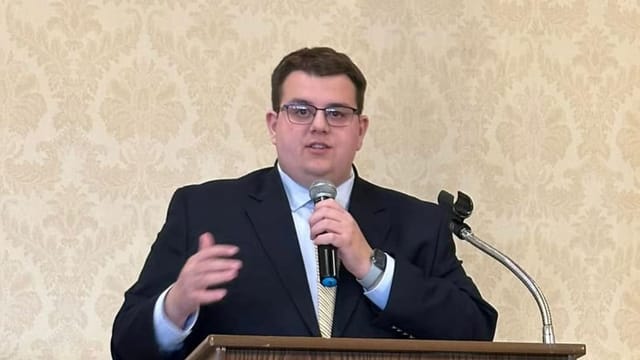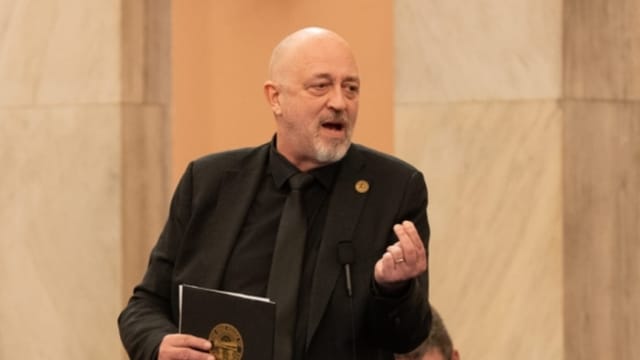

The Ohio Joint Legislative Ethics Committee has decided not to move forward with an ethics complaint filed against Republican Ohio state Sen. Brian Chavez over alleged oil and gas conflicts.
The Ohio Joint Legislative Ethics Committee did not take any action on the complaint within the 14-day window as required under Ohio law.
“This failed publicity stunt was nothing more than a libelous smear campaign against a respected State Senator that was backed by California special interests dead set on killing the oil and gas industry in Ohio,” John Fortney, spokesperson for the Ohio Senate Republicans, said in a statement.
Ohio Joint Legislative Ethics Committee Executive Director Tony Bledsoe said in an email that he could not comment on any “specific matter which may or may not be before JLEC.”
A group called Washington County for Safe Drinking filed the ethics complaint last month which argues Chavez’s alleged conflicts of interest and voting record as the Ohio Senate Energy Committee Chair shows he has prioritized personal financial gain.
“Our efforts are rooted in civic responsibility,” Washington County for Safe Drinking Water said in a statement. “… This is not radicalism; it is participation. A healthy democracy depends on accountability, balance, and a commitment to fairness for all.”
Buckeye Environmental Network, Save Ohio Parks, and FaCT Ohio also signed the letter, which called for an investigation.
The ethics complaint alleged Chavez fast-tracked a bill that could financially benefit him.
Ohio Senate Bill 219 would change the state’s orphan well program by proposing a dedicated fund for plugging orphan wells and streamlining notice requirements before work would begin.
An orphan well is an abandoned oil and gas well that has no owner, meaning no one is able to properly plug the well.
It also makes it easier for drillers to get expedited review of projects, limits liability after a well owner sells one of their wells, and gets rid of a requirement for drillers to make road-use agreements with local governments.
The bill was introduced by Ohio state Sen. Al Landis, R-Dover, in June, passed the Senate in November, and is now in the Ohio House.
Chavez Well Service has bid on five orphan well contracts since Chavez was appointed to the Ohio Senate in December 2023 and won one contract worth more than $200,000, according to the complaint.
Chavez was elected to a four-year term in 2024.
“If Senate Bill 219 were to become law, the Ohio Department of Natural Resources would receive less funding to protect Ohioans, while the oil and gas industry would benefit from reduced oversight,” Washington County for Safe Drinking Water said in a statement.
“Given Senator Chavez’s disclosed and undisclosed interests in the industry, he could personally benefit from the bill’s provisions.”
Washington County for Safe Drinking Water argues that Chavez should have recused himself from any involvement in S.B. 219.
“Instead, he co-sponsored the legislation, accelerated its movement, and publicly advocated for it in the Energy Committee, which he chairs,” Washington County for Safe Drinking Water said in a statement.
Ohio’s Orphan Well Program has plugged approximately 2,300 abandoned wells since its inception in 1977.
Follow Capital Journal Reporter Megan Henry on Bluesky.
This story is republished from the Ohio Capital Journal. View the original article.