

Do you think majorities in small towns and rural communities keep voting against their own interests? Are you mystified why some believe the things they do? If so, you should read Beth Macy’s new book.
You might think you already know the reason: That people in those places rely on a right-wing media machine that pumps out a 24/7 blast of disinformation. But it’s not that simple.
Macy shows how that machine filled a vacuum left by the demise of local journalism.
It also followed decades of disinvestment in education. And trade policies enthusiastically backed by Democrats and Republicans that devastated small businesses and working people. And an opioid epidemic that is now an intergenerational affliction.
There’s also the fact that a lot of more-comfortable people have been scornful without any real understanding of how dire things have become.
A native of Urbana, Ohio, Macy is an accomplished journalist and author.
In her critically acclaimed book “Dopesick,” she chronicled the way Purdue Pharma addicted vulnerable Americans, devastated millions of families and made off with the profits. Her latest book, “Paper Girl, a Memior of Home and Family in a Fractured America,” examines the impact those and other malign forces have had on her own Ohio hometown.
Bubbles
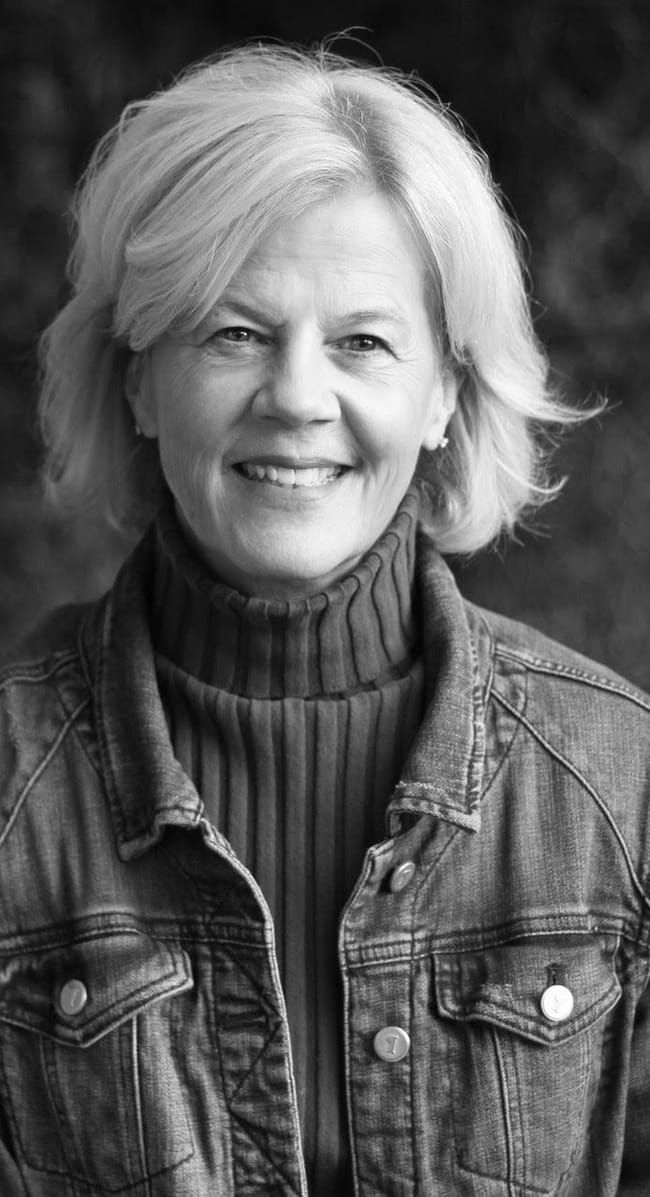
Macy herself was hardly a product of Urbana’s country club set.
“…I was among the poorest kids in my class, and I felt it,” she writes. “Not just as I delivered newspapers from the back of my ten speed, befriending up and down the class ladder, but also on my block of South Walnut Street, where slurry voices inside our house sometimes pierced the joyful noise of our kickball games and hide-and-seek.”
Macy grew up with her share of trauma in the humble part of town. And she’s spent a career examining what’s happened to the powerless.
Even so, she wasn’t prepared for what she found in today’s Urbana.
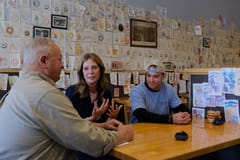
Starting the project, Macy, now of Roanoke, Va., made extended visits to Ohio and did multiple interviews with family members and high-school friends, including the Urbana police chief.
She saw alienation, misinformation, and desperation that blew her away.
“I think it says we’re living in total bubbles,” Macy said in an October interview.
“I live in a blue dot in southwest Virginia in a city of roughly a quarter-million people, and my friends think exactly what I think, for the most part. I get along with my neighbors who are of various political stripes, but you know who you can talk to about politics and who you can’t.”
Stepping outside those bubbles can be disquieting.
Macy described being driven around town by a high school friend who was a firefighter.
He pointed out places where he revived people who were overdosing, a sadly common experience.
“Then he started talking about who was QAnon,” Macy said, referring to a far-right conspiracy theory.
It claims that President Donald Trump is fighting a cabal of Satan-worshipping pedophiles. Some people believe in it despite an utter lack of evidence — and despite Trump’s obvious reluctance to release investigative files about real-life pedophile Jeffrey Epstein.
“It was people I’d known,” Macy said of the QAnon adherents her friend identified.
“Store owners and nurses and a dear friend who’d organized the class reunion. And then to just hear it out of their mouths and just hatred for the press. I’d say, ‘I’m the press.’ And they’d be like, ‘Oh, you’re OK.’ There were all these far-fetched theories they were comfortable saying to someone they hadn’t spoken to in 40 years. My jaw dropped on an almost hourly basis.”
In her book, she described her friend Karla, a lawyer. She went to dinner one night with four friends, two of whom were her cousins. She told them she’d gotten the COVID vaccine that day.
“‘We were hanging out, our drinks had come, but we hadn’t ordered yet, and they all got up and left,‘” Macy quotes Karla as saying. “‘I said, ‘You guys are joking, right? And they were like, ‘No, we don’t want to get COVID, and you’re actively sloughing off virus at our table.’”
Those stories might help explain why a majority keeps voting for U.S. Rep. Jim Jordan, a Republican who lives in Urbana.
Known for his fiery appearances in committee hearings and on right-wing media, Jordan hasn’t passed a single piece of legislation in his 18 years in Congress.
Unreported hardship
There isn’t just one reason for the wildfire spread of suicidal poppycock. But a big one Macy identified was the decline of her local newspaper. It’s especially painful to her because she worked there both as a delivery girl and then as a reporter.
During her research trips to Urbana, Macy met and followed young people who, like her, came from the poor side of town.
They include Silas James, a trans man who grew up having to act as the functional adult in an extremely dysfunctional family.
An excellent student, Silas faced a titanic struggle figuring out how to go to Clark State College to study welding.
He didn’t have access to the financial aid Macy and her cohort did, but he’d gotten scholarships. But then Silas also had to find a way to reliably make the 30-minute drive. There were times when it might as well have been 3 days.
Macy said he was far from alone.
In a community in which nearly a third of kids are chronically absent from school, they also face fallout from the Great Recession, the family-dissolving opioid crisis, and lives lived on social media that can be astonishingly vapid and cruel.
Even the exceptional kids like Silas find it almost impossible to make a better life, no matter how hard they try.
Macy said she learned it’s far harder now to climb out than when she did it in the 1980s.
“There’s so many ways to count it,” she said. “I was desperate not to be just anecdotal, so I interviewed the police chief and the fire chief — who runs (emergency medical services) — multiple times just to get hard data. I asked how many mental health calls (a year) did you get when you started in the mid-80s? Forty. How many do you get now? Three hundred seventy.
“I’m not making that up. I’d tell my friends who are in the professional class in Urbana, and they’d say, ‘Well, isn’t it like that everywhere?’ And I’d say, ‘This is your local community and you had no idea.’”
In her book, Macy writes that while the local paper “used to cover everything from DUIs to city council meetings to fire station fundraisers, readers were now left to rely on press releases and Facebook posts, creating a gaping void in my community’s understanding of itself. People now knew every detail of what their national political candidates were saying and doing, but almost nothing about the lives of their neighbors.”
Without a healthy local newspaper, better-off Urbana residents had no clue how the other half was living.
In a group interview, even retired teachers were shocked to learn about plunging rates of attendance and language proficiency among students in their own community.
“With the hollowing out of the middle class you have the country club set and what someone called the ghetto set and neither knows what the other is doing and there’s no real press to report on that,” Macy said.
Hurt dogs bite
None of the problems facing the small-town and rural poor are helped by what Macy sees as a lack of empathy that’s too common on the left.
She said many urban and suburban professionals don’t see the harm that the 1992 North American Free Trade Agreement did to communities such as Urbana.
At another author’s book-signing, Macy got into a discussion with a prominent photographer, who asserted that Democrats hadn’t done a thing to piss anybody off on the other side.
Telling the woman about her trips back home, “I suggested that maybe she was too insulated to understand the utter rage provoked by globalization, Christian nationalism and rural despair — and how truly nihilistic the American experiment seemed to be turning,” Macy writes in her book.
“We argued for a bit and then she pushed back hard, as if she didn’t believe me. Finally I threw up my arms and sputtered out the rawest description I could manage on the spot: Hurt dogs bite.”
Macy described how, with the rise of online tribalism and the demise of a journalistic town square, people have been radicalized — to their own detriment.
A former boyfriend had worked as a journalist, and back then he was one of the most liberal people she knew. But he felt increasingly alienated over not agreeing to every bit of the orthodoxy.
“He described moving away from the Democrats, as he describes it, for being vilified by his friends,” Macy said. “The Democrats haven’t done everything right by any means. Look at globalization… Clinton said it was a win-win, and places like Urbana will never see it as a win-win.
“It’s not like (her ex) is wrong about everything. But once his community shuts him off, then he finds community on the internet. So when I ask him where he’s getting these whackadoodle beliefs — I don’t ask him like that — he says he’s spending four to seven hours a day reading (what is actually) Russian propaganda.”
Believing Obamacare was a scam, he declined to carry health insurance and was dead at 63.
Hope
Macy’s mother was dying in 2020 — in the midst of one of the most traumatic presidential elections in U.S. history.
As it happened, Macy was shocked by the information chasm dividing her own family.
A Newsmax-watching sister denied clear election results “as our mother was literally breathing her last breaths. I thought, holy crap, what’s happened to my family, my community and my country?”
That sister had also spent years denying that her husband — a Christian conservative her preacher whom told her to marry — had molested her daughter from an earlier marriage, Macy writes. Her denial amplified the trauma.
Such trauma is disturbingly common, and has an impact on political discourse.
Macy quoted Pulitzer Prize-winning novelist Barbara Kingsolver, who has written extensively about life among the poor in Appalachia.
“When people are living with a lot of trauma and poverty, it changes their thinking process; they see things more in black and white, all or nothing,” she quoted Kingsolver as saying.
“My plea is for respect — to think about talking with people who disagree with you and carrying some respect to the conversation because nothing else will work.”
Macy said that fits well with what the experts she spoke to said.
“We have to connect the disparate threads in our life,” she said. “We have to build the community. So doing things, meeting new people, connecting them with other people, it’s actually fun. It’s an antidote to despair.”
That includes talking earnestly with people with whom you might not be in perfect agreement.
Macy described how her Fox News-watching brother traveled from Urbana to Roanoke to see her nonbinary child’s band play.
“Tim didn’t know anyone who was nonbinary, but he loved the music and he loved my kid,” she said. “He asked me questions that weren’t mean-spirited. He taught me that you can ask a hard question. You can extend each other grace.”
As high as she found Urbana’s social siloes to be, Macy said she wants to keep them from fossilizing there and elsewhere. That means taking action.
She’s been doing things like passing out narcan kits and joining the board of a diaper bank.
“Audrey Lorde said that despair is the tool of our enemies,” Macy said. “I know there are days when you just want to hide, but we’ve got to get out there. As I say in the book, we have to scramble for hope fiercely the way a farm girl wrestles a muddy sow. We have to flex those hope muscles and figure out what we can do and how we can get our voices heard.”
This story is republished from the Ohio Capital Journal. View the original article.