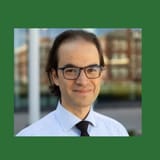
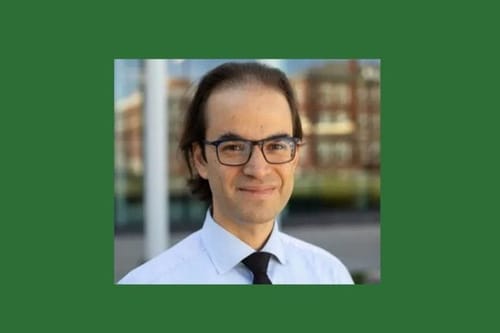
A federal judge denied a request from a University of Kentucky law professor to allow him to return to the classroom and end an investigation into his criticism of Israel and support of Palestine.
U.S. District Judge Danny Reeves, who was appointed to the bench by President George W. Bush, ordered Thursday that the university may continue its investigation into alleged conduct by Professor Ramsi Woodcock. The judge requested to be apprised of the results to make future rulings in the case.
Reeves’ 41-page order showed that he remained largely unconvinced by Woodcock’s attorneys’ allegations of bias in the university’s actions.
“While Woodcock may fear a nefarious intent behind the University’s investigation, he has not cleared the bar of demonstrating that the investigation was taken to harass or in bad faith,” Reeves wrote. “Instead, the University’s investigation was triggered by external complaints.”
Woodcock filed the lawsuit in November seeking to be returned to his duties as a full-time tenured professor. His suit also seeks to block UK from using the International Holocaust Remembrance Alliance’s (IHRA) definition of antisemitism in disciplinary proceedings.
“This case is about university officials torching the First Amendment and the university’s own regulations in an effort to protect a colonization project that practices apartheid and commits genocide,” Woodcock said in a statement to the Lantern Friday.
“There is strong precedent stretching back to the Civil War that federal courts must intervene when rogue state actors, like the university officials in my case, abuse their authority to try to silence speech that they happen to dislike. I am confident that, with the aid of advice from an appellate panel, the court will act to reinstate me to teaching, and that could potentially happen during the coming semester.”
Jay Blanton, a spokesperson for the university, told the Lantern in a statement that UK “appreciates the Court’s thoughtful and clear ruling in this matter.”
“The review of Professor Woodcock’s conduct is ongoing, and we will provide updates as the court has asked for in its ruling,” Blanton added.
Woodcock and UK officials testified in federal court last month. During the hours-long proceeding, Woodcock disputed allegations against him, saying the university misrepresented actions that were part of an academic’s life, such as engaging in scholarly debate. He said his comments on Palestine and Israel were rooted in months-long academic research.
In letters to Woodcock, UK cited four professors who had heard him speak at academic conferences or read his comments on Listservs. They told UK that Woodcock spoke about genocide in Gaza at an academic conference and during another university’s panel discussion and had “spammed” Listservs with personal viewpoints on Palestine and Israel. UK later said four students “some of whom are Jewish” had said Woodcock spoke about the topic in an optional lecture and had shouted “Free Palestine” while in a car with UK law students.
Woodcock’s complaint said he does not talk about his conclusions regarding Palestine and Israel “in his classes because he did not want to cause students to face persecution for speaking about Palestine.”
Woodcock’s attorneys have raised concerns about the ability of Farnaz Farkish Thompson, a partner of McGuire Woods based in Richmond, Virginia, hired by the university, to be an unbiased investigator in the matter. In a letter to her, they said she was listed as a contributor to Project 2025, which was created as a guiding document for the Trump administration leading up to the 2024 presidential election. The document calls for U.S. support of Israel.
Among his various conclusions, Reeves wrote: “It should come as no surprise that the University would seek out an investigator with background knowledge on Israel and Palestine relations due to the nature of the speech at issue. That hiring choice does not breach the threshold for bad faith or harassment.”
Reeves also said Woodcock’s attorneys failed to show that UK President Eli Capilouto would be “a biased adjudicator” in determining disciplinary proceedings into the professor’s conduct. Capilouto shared a public message in July that did not name Woodcock directly, but indicated the university was aware of his online petition calling for military action against Israel and called his views “if accurately attributed … repugnant.”
Woodcock received notice of the university’s investigation days later.
Reeves said that UK “must be allowed to distance itself from any ideology or speech that threatens its efficient operations or undermines its mission or ethos.”
Woodcock has continued to remain “a tenured faculty member with full pay and benefits from the University” while he has not been allowed to teach or enter the College of Law building, Reeves wrote. The judge said that “does not generally threaten irreparable harm.” Woodcock had testified that by not having access to the law building, he could not continue attending faculty meetings or use the law library for research.
Woodcock may amend his complaint after “the investigation is completed or any subsequent disciplinary procedures have concluded and claims have been exhausted,” Reeves said.
Both sides are to give status reports every 30 days to Reeves about the status of the investigation and other future proceedings.
This story was originally produced by Kentucky Lantern, which is part of States Newsroom, a nonprofit news network which includes Ohio Capital Journal, and is supported by grants and a coalition of donors as a 501c(3) public charity.
This story is republished from the Ohio Capital Journal. View the original article.