
WASHINGTON — Education experts and advocates warned Wednesday that the recent federal student loan system overhaul stemming from the GOP’s mega tax and spending cut law will drive borrowers to private lenders and could derail their higher education plans.
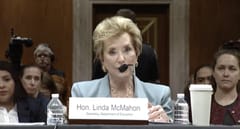
U.S. Rep. Bobby Scott of Virginia, the top Democrat on the House Committee on Education and Workforce, convened a panel to blast the sweeping loan changes, as well as separate, ongoing efforts from President Donald Trump’s administration to dismantle the Education Department and its impact on the federal student aid system.
“Student loan debt now exceeds $1.7 trillion. Borrowers need clear guidance and certainty,” Scott said. “Instead, they’re forced to deal with uncertainty and chaos created by an administration that has systematically weakened the federal student aid system.”
Scott criticized Education’s plans to transfer core student aid functions to the Treasury Department. Under an interagency agreement, or IAA, announced in March, Treasury will take over Education’s responsibility for collecting on defaulted federal student loan debt in what marks the first step in a multi-phase process toward Treasury taking on the entire federal student loan portfolio.
The Virginia Democrat said Treasury “has no expertise serving students or institutions of higher education or monitoring servicers for accuracy.”
Meanwhile, the Education Department finalized regulations — most of which took effect July 1 — that implement sweeping student loan system changes outlined in the GOP’s “big, beautiful” law.
Scott said that the sweeping changes to the federal student loan system originating from that law are “compounding the issues that have risen from the dismantling of the Education Department.”
Borrowing limits
Among the major changes are new loan limits for graduate and professional students, a restructured repayment system that gives new borrowers only two plans to choose from and the elimination of a key loan program for graduate and professional students that allowed for unlimited borrowing.
Wil Del Pilar, senior vice president at the nonprofit policy and advocacy group EdTrust, said the mega tax and spending cut law “restricts access to federal graduate lending, pushing many borrowers, especially those from low-income and middle-income backgrounds, many of whom are students of color, into the hands of private banks.”
Del Pilar, who was deputy secretary of postsecondary and higher education for the Pennsylvania Department of Education, said that would present a series of challenges for borrowers.
“That means higher interest rates, fewer consumer protections, stricter credit requirements, and flat-out denials for some, forcing those students to halt their educational journey,” he said.
Access to graduate education
Clare McCann, managing director of policy and operations at the Postsecondary Education and Economics Research Center, said her organization was “very concerned that for many borrowers who want to continue to pursue a graduate education, that they will find themselves locked out of the private market or unable to access affordable loans without a qualified cosigner.”
McCann, whose organization is housed at American University, added that the center’s research suggested almost 40% of student borrowers subject to the new caps have either poor or no credit scores, making them unlikely to be able to borrow money in the private market without a cosigner.
McCann noted that allowing largely unlimited graduate lending is “unwise” and “puts both students and taxpayers at risk,” while calling on Congress to “allow students to borrow enough to make high-return investments in themselves, so long as their loans remain affordable and repayable based on the salaries students should expect.”
Ellen Keast, a spokesperson for the department, defended the student loan system overhaul, in a statement shared with States Newsroom on Wednesday.
“Blank checks to universities resulted in tuition skyrocketing for American students and families. Mass student loan forgiveness failed in nearly every courtroom it entered. The student loan portfolio is at a fiscal cliff because the last Administration perpetrated the lie that students do not need to repay their loans,” Keast said. “The Trump Administration is righting these wrongs – all while implementing historic reforms to federal student aid that will drive down the cost of college and simplify student loan repayment.”
This story is republished from the Ohio Capital Journal under a Creative Commons license. View the original article.