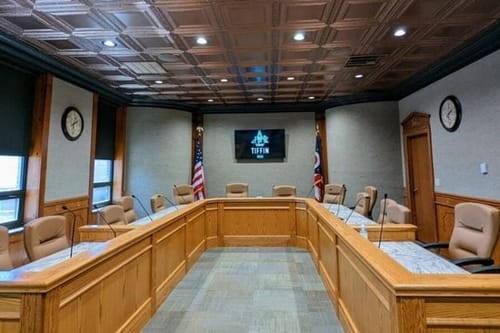
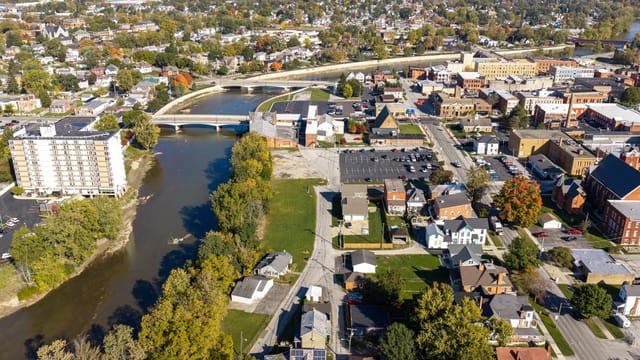
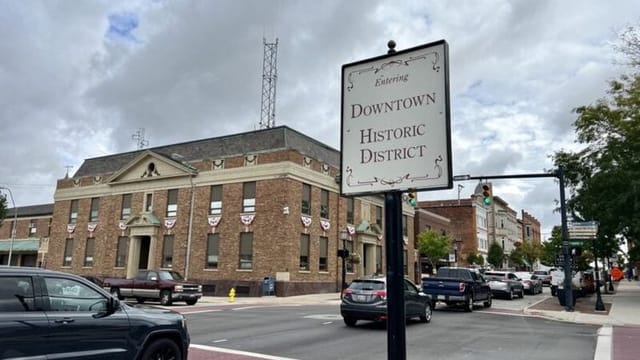
The City of Tiffin is proposing a temporary waiver of its minimum financial reserve requirement after declining income tax collections prompted spending reductions in the proposed 2027 municipal budget.
The spending plan, introduced Monday, projects a year-end unencumbered General Fund balance of $4,250,892, approximately $727,000 below the $4,977,841 required under a financial policy adopted last year. The projected balance represents 21.35% of the previous year’s operating expenses, compared with the city’s 25% minimum.
Income tax receipts were down 2.66% through October, reversing several years of growth. Mayor Lee Wilkinson’s administration has responded by reducing planned expenditures, limiting nonunion employee raises to 1% and scaling back plans to hire additional police officers.
The proposed ordinance would authorize council to waive the reserve minimum for 2027, an exception expressly permitted under the existing policy. The city would be required to restore compliance by December 31, 2028, through continued spending controls and additional budget adjustments or revenue measures if necessary. The finance director would report the General Fund balance and progress toward compliance to council monthly.
Reserve policy adopted in 2025
City Council approved the General Fund Carryover Balance Policy by a 7-0 vote on April 7, 2025. The measure, Resolution 2025-20, was introduced by Councilmember Kevin Roessner and supported by the administration.
During discussions preceding its adoption, Wilkinson recommended the 25% minimum to protect the city against emergencies and unexpected expenses. City officials also discussed the importance of maintaining sufficient cash for future capital projects without jeopardizing daily operations.
The policy includes a provision allowing council to authorize exceptions to the minimum balance requirement. Ordinance 2026-78 would invoke that provision, citing the decline in income tax revenue and the administration’s determination that maintaining the full reserve would require further reductions affecting municipal services.
According to the November 13 budget attachment, projected 2026 General Fund operating expenses total $19,911,362.81. Maintaining one-quarter of that amount would require an unencumbered General Fund balance of $4,977,841 at the end of 2027. The proposed budget instead anticipates $4,250,892, a shortfall of $726,949 against the policy’s minimum.
The city’s proposed General Fund appropriations for 2027 total approximately $19.35 million.
Income tax decline prompts budget adjustments
At a November 9 budget workshop, Wilkinson told council that income tax collections had increased annually in recent years, with growth ranging from 1.2% to 5.3% since 2019. The administration had been counting on approximately 2.5% annual growth when planning future expenditures.
Finance Director Jill Lindhorst reported Monday that October income tax receipts totaled $937,797.23, down $77,091.47 from October 2025. Year-to-date collections were 2.66% below the previous year, requiring the administration to adjust spending plans developed under expectations of continued revenue growth.
During the November 9 discussion, city officials estimated that maintaining the full 25% reserve requirement could require eliminating at least one or two staff positions. The administration instead prepared a budget that reduces planned expenditures while allowing reserves to temporarily fall below the minimum.
The proposed changes include limiting the nonunion wage increase to 1%, with each additional percentage point estimated to cost approximately $30,000. Operational and professional services appropriations have also been reduced in several departments, while the proposed $100,000 allocation for the downtown Façade Enhancement Program has been eliminated.
The administration has also narrowed the difference between budgeted expenditures and anticipated revenues. Wilkinson told council that the city has historically budgeted approximately 5% more in expenses than expected income, relying on departments to leave some appropriations unspent. That difference was reduced to approximately 4% in the proposed 2027 budget. Actual year-end reserves will depend on spending and revenue collections throughout the year.
Police hiring scaled back to preserve staffing flexibility
The revenue decline has also affected personnel planning. Police Chief David Pauly told council November 9 that the department had 29 sworn officers, two below its authorized strength of 31. He had planned to hire two additional officers in 2027 but agreed to Wilkinson’s request to reduce that plan to one.
Pauly said five sworn officers would be eligible for retirement in 2027, with three potentially leaving. Those departures could create additional hiring needs and increase demands on remaining personnel while replacements are recruited and trained. Pauly said the last thing he wanted was to hire an officer only to have to lay that person off because of financial constraints.
Fire Chief Rob Chappell also discussed the financial considerations surrounding future staffing commitments. His department currently operates with four crews of 10 firefighters, one position short of its preferred staffing level on each crew. Chappell said pursuing a federal staffing grant would depend on whether the city’s revenue outlook could support the additional personnel costs after the grant period.
City maintains substantial balances in designated funds
Tiffin’s October financial report showed an unencumbered General Fund balance of $5.52 million, while the unexpended balance across all city funds stood at approximately $42.74 million. Much of that money is held in accounts designated for specific purposes and cannot simply be redirected to cover ordinary General Fund expenses.
During the November 9 workshop, city officials explained that approximately 60% of the city’s investments were associated with sewer funds, while about 30% were attributable to the General Fund. The investments generate just under $1 million annually, according to the meeting minutes, but drawing down available General Fund investments would provide only temporary relief.
The administration has expressed hope that declining income tax collections will prove temporary. Officials pointed to recent ownership changes at several local industrial properties and the prospect of additional business development as potential sources of future revenue growth.
Ordinance 2026-78 received its first reading Monday and remains pending before council. Members are scheduled to resume budget discussions November 23 at 5:15 p.m., with engineering, public works and wastewater officials expected to review their department spending plans.
The proposed reserve waiver would apply to the 2027 fiscal year, with the city required to restore its minimum balance by the end of 2028. Until then, the administration’s spending controls and future income tax collections will determine how quickly the General Fund can return to the level established under council’s 2025 policy.
The City of Tiffin is proposing a temporary waiver of its minimum financial reserve requirement after declining income tax collections prompted spending reductions in the proposed 2027 municipal budget. The spending plan, introduced Monday, projects a year end unencumbered General Fund balance of $4,250,892, approximately $727,000 below the $4,977,841 required under a financial policy adopted last year. The projected balance represents 21.35% of the previous year's operating expenses, compared with the city's 25% minimum. Income tax receipts were down 2.66% through October, reversing several years of growth. Mayor Lee Wilkinson's administration has responded by reducing planned expenditures, limiting nonunion employee raises to 1% and scaling back plans to hire additional police officers. The proposed ordinance would authorize council to waive the reserve minimum for 2027, an exception expressly permitted under the existing policy. The city would be required to restore compliance by December 31, 2028, through continued spending controls and additional budget adjustments or revenue measures if necessary. The finance director would report the General Fund balance and progress toward compliance to council monthly. Reserve policy adopted in 2025 City Council approved the General Fund Carryover Balance Policy by a 7 0 vote on April 7, 2025. The measure, Resolution 2025 20, was introduced by Councilmember Kevin Roessner and supported by the administration. During discussions preceding its adoption, Wilkinson recommended the 25% minimum to protect the city against emergencies and unexpected expenses. City officials also discussed the importance of maintaining sufficient cash for future capital projects without jeopardizing daily operations. The policy includes a provision allowing council to authorize exceptions to the minimum balance requirement. Ordinance 2026 78 would invoke that provision, citing the decline in income tax revenue and the administration's determination that maintaining the full reserve would require further reductions affecting municipal services. According to the November 13 budget attachment, projected 2026 General Fund operating expenses total $19,911,362.81. Maintaining one quarter of that amount would require an unencumbered General Fund balance of $4,977,841 at the end of 2027. The proposed budget instead anticipates $4,250,892, a shortfall of $726,949 against the policy's minimum. The city's proposed General Fund appropriations for 2027 total approximately $19.35 million. Income tax decline prompts budget adjustments At a November 9 budget workshop, Wilkinson told council that income tax collections had increased annually in recent years, with growth ranging from 1.2% to 5.3% since 2019. The administration had been counting on approximately 2.5% annual growth when planning future expenditures. Finance Director Jill Lindhorst reported Monday that October income tax receipts totaled $937,797.23, down $77,091.47 from October 2025. Year to date collections were 2.66% below the previous year, requiring the administration to adjust spending plans developed under expectations of continued revenue growth. During the November 9 discussion, city officials estimated that maintaining the full 25% reserve requirement could require eliminating at least one or two staff positions. The administration instead prepared a budget that reduces planned expenditures while allowing reserves to temporarily fall below the minimum. The proposed changes include limiting the nonunion wage increase to 1%, with each additional percentage point estimated to cost approximately $30,000. Operational and professional services appropriations have also been reduced in several departments, while the proposed $100,000 allocation for the downtown Façade Enhancement Program has been eliminated. The administration has also narrowed the difference between budgeted expenditures and anticipated revenues. Wilkinson told council that the city has historically budgeted approximately 5% more in expenses than expected income, relying on departments to leave some appropriations unspent. That difference was reduced to approximately 4% in the proposed 2027 budget. Actual year end reserves will depend on spending and revenue collections throughout the year. Police hiring scaled back to preserve staffing flexibility The revenue decline has also affected personnel planning. Police Chief David Pauly told council November 9 that the department had 29 sworn officers, two below its authorized strength of 31. He had planned to hire two additional officers in 2027 but agreed to Wilkinson's request to reduce that plan to one. Pauly said five sworn officers would be eligible for retirement in 2027, with three potentially leaving. Those departures could create additional hiring needs and increase demands on remaining personnel while replacements are recruited and trained. Pauly said the last thing he wanted was to hire an officer only to have to lay that person off because of financial constraints. Fire Chief Rob Chappell also discussed the financial considerations surrounding future staffing commitments. His department currently operates with four crews of 10 firefighters, one position short of its preferred staffing level on each crew. Chappell said pursuing a federal staffing grant would depend on whether the city's revenue outlook could support the additional personnel costs after the grant period. City maintains substantial balances in designated funds Tiffin's October financial report showed an unencumbered General Fund balance of $5.52 million, while the unexpended balance across all city funds stood at approximately $42.74 million. Much of that money is held in accounts designated for specific purposes and cannot simply be redirected to cover ordinary General Fund expenses. During the November 9 workshop, city officials explained that approximately 60% of the city's investments were associated with sewer funds, while about 30% were attributable to the General Fund. The investments generate just under $1 million annually, according to the meeting minutes, but drawing down available General Fund investments would provide only temporary relief. The administration has expressed hope that declining income tax collections will prove temporary. Officials pointed to recent ownership changes at several local industrial properties and the prospect of additional business development as potential sources of future revenue growth. Ordinance 2026 78 received its first reading Monday and remains pending before council. Members are scheduled to resume budget discussions November 23 at 5:15 p.m., with engineering, public works and wastewater officials expected to review their department spending plans. The proposed reserve waiver would apply to the 2027 fiscal year, with the city required to restore its minimum balance by the end of 2028. Until then, the administration's spending controls and future income tax collections will determine how quickly the General Fund can return to the level established under council's 2025 policy.
Continue reading for free.
Sign up for TiffinOhio.net's free newsletter to continue. No spam. Unsubscribe anytime.