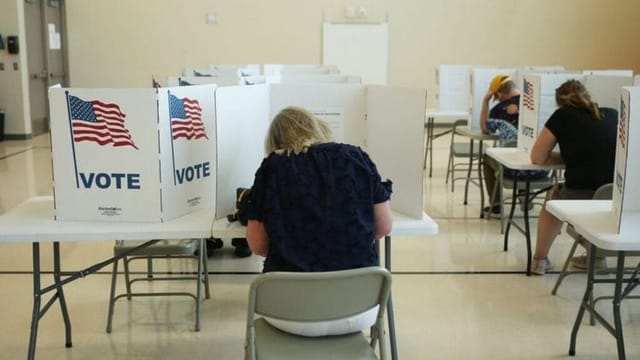
A recent U.S. Supreme Court decision makes it easier for political parties to put their stamp on the most important campaigns, just as the struggle heats up for control of Congress in the midterm elections.
Simply put, the ruling “gives the parties more money to spend,” said David Kolker, senior counsel at the nonpartisan Campaign Legal Center.
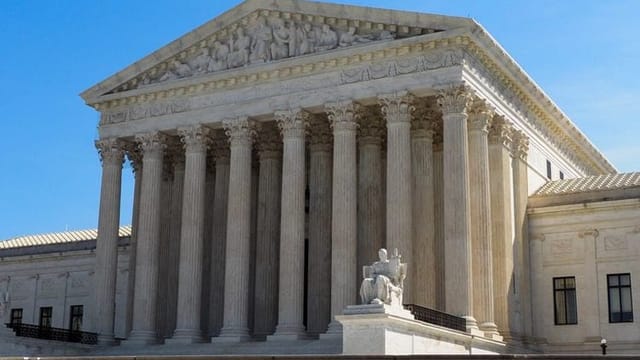
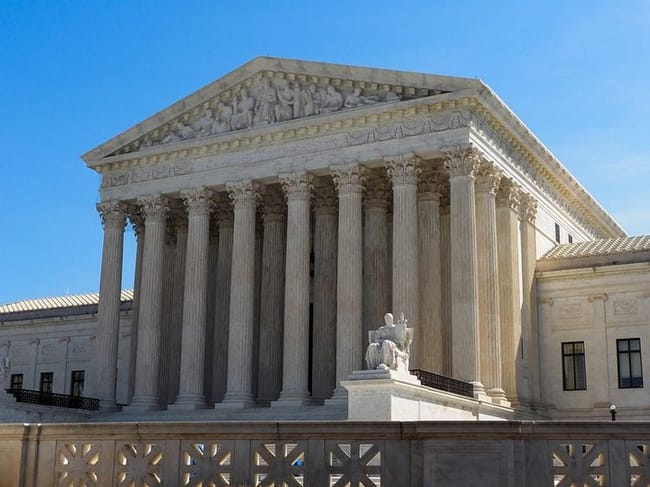
In a 6-3 decision on June 30, the court struck down limits on how much political parties could spend in coordination with specific candidates.
But will it make a difference, particularly in mega-money Senate races in Ohio, Maine, Texas, Iowa and elsewhere?
In sheer dollars from big donors, maybe not. In strengthening the role of political parties and how they use those dollars to help campaigns, yes.
“The idea there will be an explosion of money that’s not already going to be there, I don’t really see that. The super PAC money is already there,” said Brendan Glavin, director of insight at OpenSecrets.org, a nonpartisan group that tracks and analyzes money in politics. Super PACs can spend unlimited sums independent of campaigns.
Don Levy, Siena Research Institute director, saw evidence in July of how eagerly the parties could spend money — or yank it back.
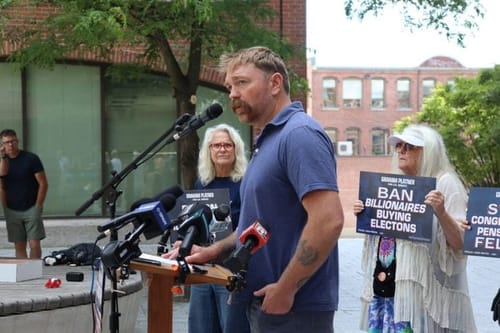
Maine Democratic Senate candidate Graham Platner’s now-defunct campaign was rocked by new allegations of sexual abuse, which he has denied. Siena conducts polls in Maine.
When the scandal broke, Senate Minority Leader Chuck Schumer and Democratic Senatorial Campaign Committee Chair Kirsten Gillibrand, both of New York, issued a terse three-sentence statement in response.
One of those sentences was: “The DSCC will not invest in the Maine Senate race if Platner remains on the ballot.”
That indicated “money is top of mind” for the party, Levy said. Sen. Susan Collins, R-Maine, is seeking reelection in a state that Democratic presidential nominee Kamala Harris won in 2024 by 7 points.
The court and big money
The Supreme Court has been methodically tearing down barriers aimed at limiting big money in politics.
In 2010, the Citizens United decision overturned decades-old restrictions on corporate independent expenditures, allowing them to spend unlimited sums from their corporate profits to support the candidates of their choice.
The ruling led to the creation of super PACs, allowing special interests to raise and spend unlimited funds to boost political candidates.
An analysis by Daniel Weiner, director, elections and government at the Brennan Center for Justice, found that their funding “largely comes from a small group of the very wealthiest donors.”
From 2010 to 2022, super PACs spent about $6.4 billion on federal elections. They spent an estimated $2.7 billion in the 2024 election.
There were, and are, limits on contributions to specific candidates and political parties. Super PACs cannot coordinate with campaigns.
Until the Supreme Court ruling, there were limits on how much the parties could coordinate. Not anymore.
Parties have “complained about being outspent by the outside super PACs. Whether that’s true or not you could debate,” said Kolker.
The court decision, though, makes it easier for big donors to funnel money to the parties, knowing the parties can now seamlessly direct the funds to candidates they feel need it most.
Republicans pushed for the ruling, with many in the GOP believing that Democrats had the advantage of obtaining more, often smaller, contributions to their candidates, while Republicans relied on bigger donors who felt more bound by contribution limits and restrictions.
Republicans hailed the decision.
“By striking down these unconstitutional caps on coordinated spending, the Court has restored core political speech and ensured parties can compete on a level playing field,” said a joint statement from Sen. Tim Scott of South Carolina, chairman of the National Republican Senatorial Committee, and Rep. Richard Hudson of North Carolina, who chairs the GOP’s House campaign committee.
Democrats saw things much differently. The ruling “is a win for billionaire donors and special interests who want more influence over the GOP agenda and an invitation for corruption,” said a joint statement from Democratic Party Chairman Ken Martin, Rep. Suzan DelBene, D-Wash., who heads the party’s House campaign committee, and Gillibrand.
Maine and other swing states for Senate control
Democrats need a net gain of four Senate and three House seats in November’s elections to win control of those chambers.
The biggest money is likely to pour into a handful of Senate races.
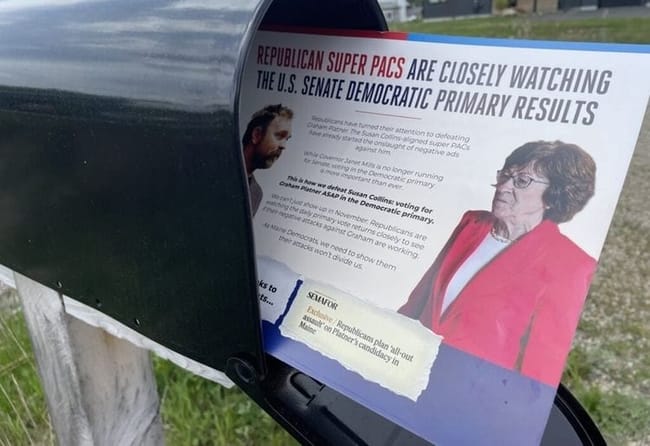
Maine has been a top Democratic target, though the turmoil over Platner’s candidacy makes it unpredictable.
It had been a competitive race. In the Siena/New York Times/Portland Press Herald poll June 19-26 poll, before the latest Platner controversy erupted, he led Collins by 2 points. Trump’s approval rating was 36%.
Maine Democrats have until July 27 to choose a replacement for Platner, who left the race July 8.
The court ruling is “not going to be a huge game changer for the amount of money flowing into a competitive race. They already have super PAC money, and already have megadonors giving to parties,” said Glavin.
Money could matter more in Ohio, where big spending in 2024 – a non-presidential election record of $483.4 million, according to AdImpact – helped Republicans paint incumbent Sen. Sherrod Brown, a Democrat, as out of touch with the GOP-trending state. Brown lost to Republican businessman Bernie Moreno by 4 points.
“I think money made a difference last time as they drove up Brown’s negatives,” said Jessica Taylor, Senate and governors editor at the nonpartisan Cook Political Report. Brown now will be able to tap more party expertise and funding as he runs this year against Sen. Jon Husted, a Republican appointed to the seat in 2025 to replace Vice President JD Vance.
Iowa is a different sort of money battleground. “Money could make a big difference if Democrats spend there,” Taylor said. Democrats are trying to win the seat now held by Sen. Joni Ernst, a Republican who is not seeking reelection. State Rep. Josh Turek, a Democrat, is running against U.S. Rep. Ashley Hinson, a Republican.
Levy offered this example of where shifting party money could matter. Suppose polls hold up and former Gov. Roy Cooper, a Democrat, remains favored to win a North Carolina Senate seat now held by Republican Thom Tillis, in his campaign against Republican Michael Whatley.
“The national party could say we’ll write off North Carolina because Cooper has a big lead and is extremely well known in the state. It would be difficult to beat him,” Levy said. Maybe they’d direct more money to Texas, where state Rep. James Talarico and Attorney General Ken Paxton were tied in last month’s Siena poll.
The court ruling gives “a lot more power to party leaders who control how these funds are spent,” said Kolker, and probably more clout to Congress itself, making it easier to impose party discipline.
Does big money matter?
Experts are quick to warn that big money is no surefire guarantee of success.
There are just too many moving parts influencing voters – their economic situation, their views of President Donald Trump and their disillusionment with the political establishment, to name a few.
“You want to have a robust TV program but the political environment is still going to matter in a lot of these races,” said Taylor.
What often matters most for a candidate and a political party is building an image and reputation and sustaining it, which is why in election after election, incumbents usually win.
“There is still an incumbent advantage. There are cycles where voter discontent and frustration reaches a point where the only way to express your frustration is to vote against whoever is in power,” said Todd Eberly, professor of political science at St. Mary’s College of Maryland.
Maine provides a strong example of the advantages and disadvantages of money.
Collins has been a senator since 1997. “Collins will play to her strength. The people of Maine, regardless of what the left may say, they feel she has good moral character and is in touch with the values of Mainers,” Levy said.
Democrats will undoubtedly try to tie her to Trump and the Washington establishment. At the same time, he said, “Maine is an inexpensive state and money will fly in there to say Susan Collins is in tune with Maine.”
The race will be a test of all the factors that influence a race, financial and otherwise.
“Candidates who spend more, their probability of winning has increased significantly,” said Eberly. “With one exception. If you’re an incumbent, it (big spending) doesn’t make much of a difference.”
This story is republished from the Ohio Capital Journal under a Creative Commons license. View the original article.