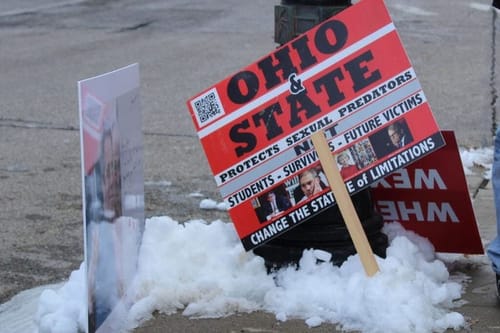

Survivors of sexual abuse at the hands of a former Ohio State University doctor protested outside the school’s Board of Trustees meeting this past Thursday.
The university has already settled cases with nearly 300 survivors of Dr. Richard Strauss to the tune of $60 million. But hundreds more survivors have so far refused to settle.
In August, the federal judge overseeing the five remaining lawsuits sent the dispute to mediation.
“It has become obvious,” Judge Michael Watson wrote, “that any litigation victory for plaintiffs may be pyrrhic.”
“The best way for plaintiffs to close this horrific chapter of their lives, and for Ohio State to move forward as a respectable institution of higher education,” he continued, “is through a mutual resolution short of trial.”
Survivors have deposed several prominent public figures in relation to the case, including Republican U.S. Rep. Jim Jordan — an assistant wrestling coach at Ohio State during Strauss’ tenure, former athletic director Andy Geiger and two-time Heisman trophy winner Archie Griffin, who served as assistant athletic director.
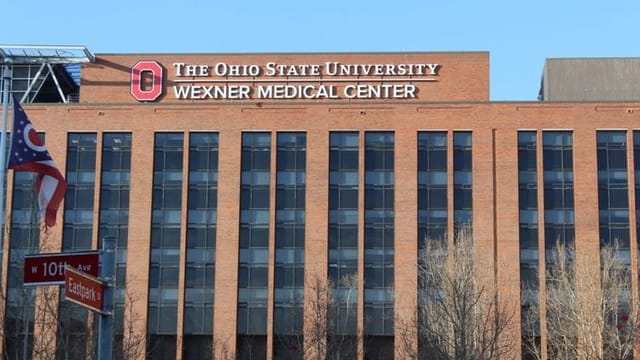
But they’ve so far been unable to depose Les Wexner, the former L Brands CEO, Jeffrey Epstein confidante and perhaps Ohio State’s greatest benefactor.
Wexner’s first term on the board of trustees overlapped with Strauss’ tenure and he was chairman of the board in 1996 when disciplinary proceedings against the doctor saw him barred from treating patients in the athletics department and student health services.
The doctor remained a tenured faculty member until 1998, though, and he quickly set up a private off-campus clinic where he continued to sexually abuse patients.
When he retired, Strauss was granted emeritus status.
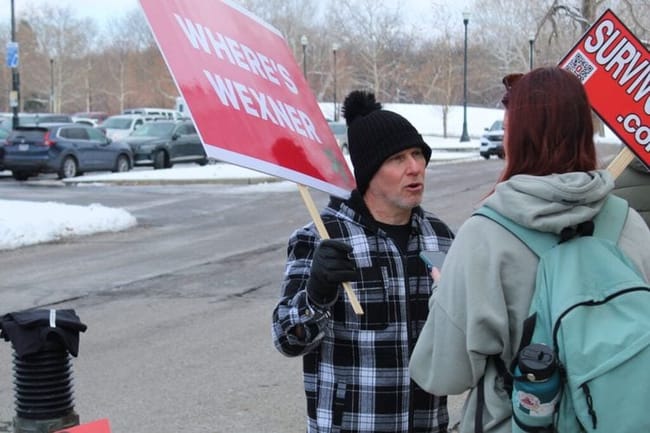
Survivors’ protest
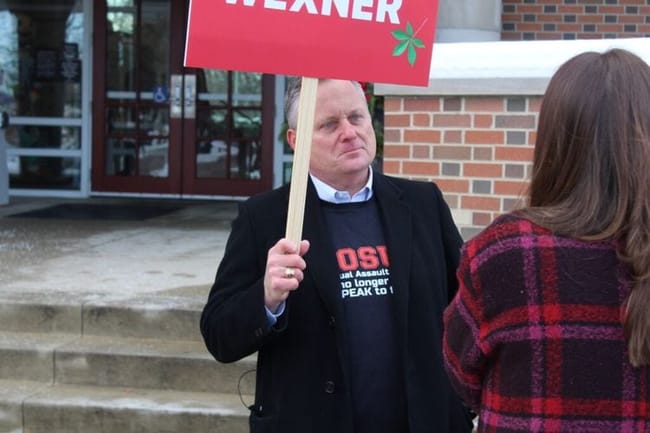
Outside the trustees meeting, survivors like Stephen Snyder-Hill waved signs reading “Where’s Wexner.”
Board chairman, John Zeiger, used to be Wexner’s attorney. His son and law partner Matthew Zeiger now represents Wexner.
“I think our biggest beef right now is that there’s a lot of really gross internal conflicts, in our opinion,” Snyder-Hill said.
“Because Zeiger, his kid, represents Wexner, who’s on our list to be subpoenaed, and his kid is not letting him take a subpoena, so they’re just evading the law, and he sits in there on the board.”
Thursday’s meeting was the first they’ve attended since OSU President Ted Carter assumed his office.
But Snyder-Hill didn’t sound optimistic about his impact on court-ordered mediation. He pointed to Carter’s comments to The Lantern early this year about a different lawsuit.
The school was forced to move hundreds of students after finding mold in a residential tower. But when he was asked about a lawsuit tied to the incident, Carter said “most people are going to find we don’t settle.”
Adding to survivors’ frustration is the recent hire of E. Gordon Gee. The former OSU president led the school at the time of disciplinary actions against Strauss, and the doctor twice appealed to Gee directly in hopes of having his privileges to see students on-campus reinstated.
Gee’s administration didn’t let Strauss back, but neither did it pursue the matter further.
When attorneys working on OSU’s internal investigation spoke to Gee, he couldn’t recall the correspondence from Strauss. But Gee said his staffers “would have briefed him on Strauss’ situation at the time, and that he ‘would have directed them to handle it.’”
“And then Ted Carter calls him his ‘wing man?’” Snyder-Hill said in disbelief. “I’m like, that’s a poor choice of words right now, especially if he had any knowledge of this back then, and he did.”
Tom Lisy graduated from Ohio State in 1991. As a freshman on the wrestling team, he explained, Strauss assaulted him on two occasions. Like Snyder-Hill, he isn’t expecting mediation to reach an agreement that leaves both sides feeling whole.
“I don’t think it’s possible for us to feel whole,” he said. “I mean, based on what we’ve been through as students, and based on now what we’ve been through as alumni.”
“On the front side, they had a chance to try to mend fences, in a sense, and that time has passed.” Lisy added.
He sees the university’s obstinance as a misguided exercise in brand protection. The school pursued a bid to dismiss cases under the statute limitations all the way to the U.S. Supreme Court. But after the justices declined to hear Ohio State’s appeal the cases were able to go forward.
That pyrrhic victory Judge Watson talked about? That’s on school leaders, Lisy said.
“They’ve already done damage the university. They’ve done damage to the student body. They’ve done damage to the image,” he said. “When they first found out about Strauss, that was the time to do something, and they didn’t do it.”
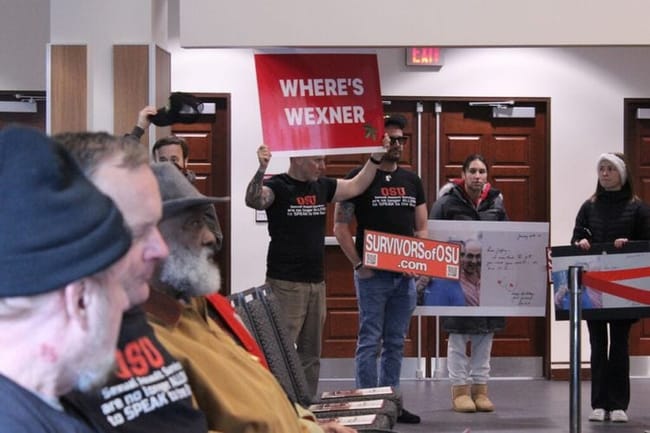
The meeting
After an hour outside in the cold, the demonstrators filed inside to the meeting — grumbling somewhat at school officials asking them to remove their signs’ wooden handles.
They stood in the back quietly holding their signs while President Carter read his report and the board moved through its agenda. There were no outbursts and the whole thing was over in less than half an hour.
Any hopes of speaking directly to President Carter were disappointed. He left through a back door. Board chair John Zeiger declined to speak to the press.
In a written statement, university spokesman Ben Johnson noted the school has already settled with more than half of those who have come forward with claims.
“All male students who filed lawsuits have been offered the opportunity to settle,” he wrote. “In addition, the university continues to cover the cost of professionally certified counseling services and other medical treatment, including reimbursement for counseling and treatment received in the past.”
“Ohio State led the effort to investigate and expose Richard Strauss, and we express our deep regret and apologies to all who experienced Strauss’ abuse,” Johnson added.
Follow Ohio Capital Journal Reporter Nick Evans on X or on Bluesky.
This story is republished from the Ohio Capital Journal. View the original article.