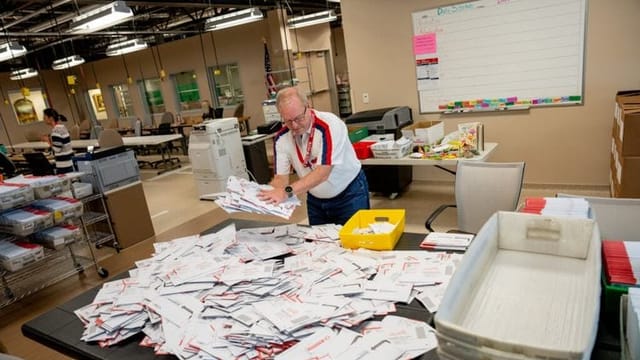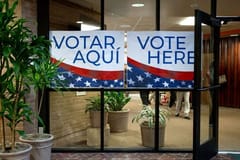

Democrat-led states and voting rights groups re-filed lawsuits Wednesday to block the Trump administration from executing a new regulation to restrict mail-in voting, while a federal judge lifted a nationwide pause on the policy in line with this week’s U.S. Supreme Court decision that handed the administration a procedural win.
Democratic officials in 24 states and the District of Columbia launched a new federal lawsuit challenging a U.S. Postal Service rule establishing federal vote-by-mail standards as unconstitutional and a coalition of voting rights advocates filed a supplemental complaint against the USPS rule after the Supreme Court struck down a similar suit as premature.
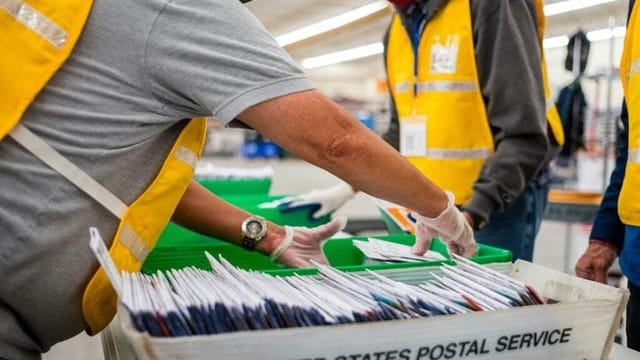
The rule establishes new ballot-design requirements and mandates states collect information from voters and voting-age citizens and transmit that information to the federal government. It forbids the Postal Service from delivering or collecting mail-in ballots from people who have not been confirmed as eligible voters.
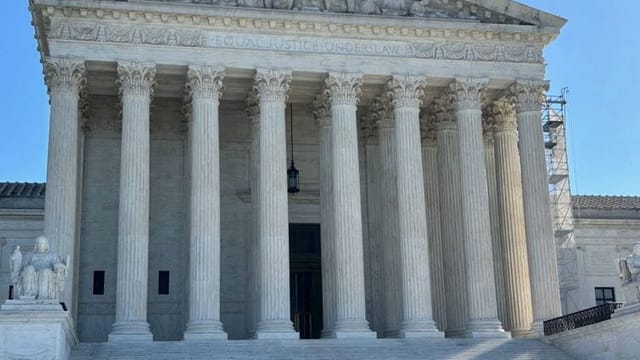
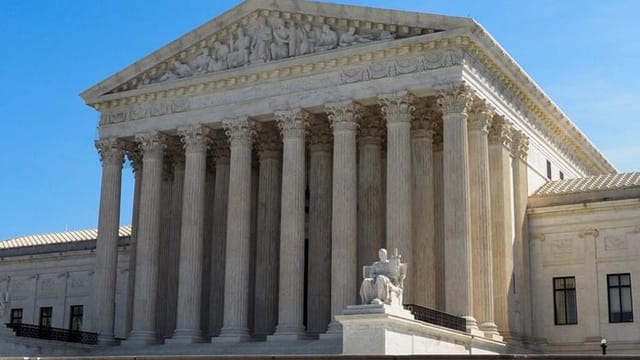
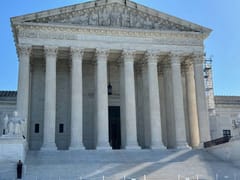
The Supreme Court’s decision Monday, with the three liberals dissenting, said states had not had the right to challenge President Donald Trump’s March 31 executive order because there was no corresponding enforceable final rule.
The new filings largely incorporated earlier arguments, but updated the procedural history to reflect that the USPS rule is now final, and presumably open to legal challenge.
“As recently as August 12, 2026, USPS told the Supreme Court that there was significant ‘uncertainty concerning the government’s future actions,’” the voting rights groups wrote. “That uncertainty is now gone.”
In fact, the final rule published Aug. 21 hewed closely to the March executive order, the groups said.
“The Final Rule now makes concrete what Defendants previously called speculative,” they wrote.
States’ responsibility
The voting rights groups said the rule would create a significant burden for voters.
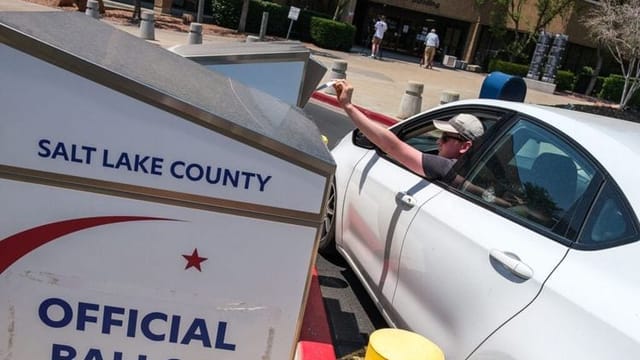
The Democratic officials added that the requirements would place a significant strain on their resources, forcing them to scramble to overhaul their vote-by-mail systems less than three months before midterm elections.
And the rule impedes on a power that the U.S. Constitution expressly gives to states: election administration.
While Congress can make laws related to voting, the president and Postal Service have virtually no role, the state officials said.
“Whether a qualified voter may vote by mail is a question of state law, as is the question of whether a ballot will be accepted for processing and tabulation,” the states’ complaint reads. “Congress has not afforded USPS any authority whatsoever to set rules for federal elections or mail voting, even though Americans have cast ballots by mail for generations.”
The states also noted that Trump has objected to mail in voting for political purposes.
“One need not look further than the White House to explain USPS’s unprecedented and unlawful conduct,” they wrote. “President Trump has long opposed mail voting, expressing that it would ‘LEAD TO THE END OF OUR GREAT REPUBLICAN PARTY.’ Since reassuming office, the President has aimed to—in his words— ‘get rid of MAIL-IN BALLOTS.’”
The states that brought the suit are: Massachusetts, Virginia, Arizona, California, Colorado, Connecticut, Delaware, Hawaii, Illinois, Maine, Maryland, Michigan, Minnesota, Nevada, New Jersey, New Mexico, New York, North Carolina, Oregon, Pennsylvania, Rhode Island, Vermont, Washington and Wisconsin.
Decision coming soon
Also Wednesday, U.S. District Judge Indiria Talwani removed her nationwide preliminary injunction blocking the administration from implementing the executive order that directed the USPS to create new restrictions and standards for mail-in ballots. She dissolved her order only to comply with the Supreme Court decision, which she suggested might be different if the court considers a complaint filed after the USPS final rule.
“While Plaintiff Organizations have substantial arguments that might persuade the Supreme Court to reach a different result if Plaintiff Organizations have an opportunity to present them, this court is compelled by the Supreme Court’s ruling” to lift the injunction, she wrote.
Talwani also set a quick briefing schedule for both cases Wednesday, with the final brief before a decision on a request for a new temporary injunction due Aug. 31.
That decision is likely to see an appeal.
White House response
Trump and administration officials have largely framed the order as an election security measure.
In a statement Wednesday, White House spokeswoman Lauren Bis repeated that defense and blasted Democrats for seeking to undermine the rule.
“The Supreme Court ruling was a major win for the security of American elections,” Bis wrote. “Radical Democrats continue to oppose commonsense measures that protect the security of mail-in ballots and ensure only Americans are electing American leaders. The Trump Administration will continue to lawfully enact the agenda President Trump was elected on — which includes the safety and security of our elections.”
This story is republished from the Ohio Capital Journal under a Creative Commons license. View the original article.