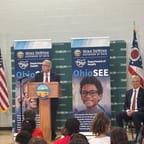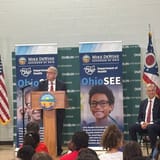
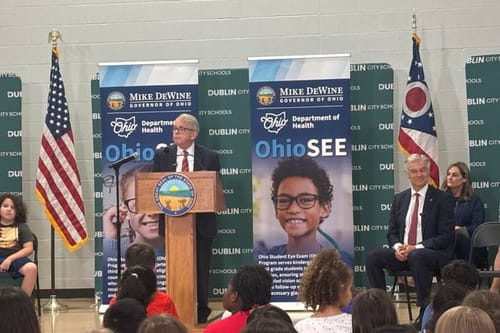

Ohio Gov. Mike DeWine started a countdown from ten and when the students in the elementary school gymnasium got down to one, nearly a dozen students sitting up front put their glasses on for the first time.
The newly bespectacled students beaming with joy were recipients of the OhioSEE program which provides students in kindergarten through third grade comprehensive eye exams and glasses at schools for no cost.
“This is a program that is very, very cost-effective,” DeWine said recently at a Dublin City Schools elementary school. “It’s a program that makes phenomenal differences in children’s lives. We have tens of thousands of kids out there who are needing an eye exam, who are not getting an eye exam.”
The OhioSEE program has administrated nearly 1,900 eye exams and nearly 1,200 students have received glasses, according to the Ohio Health Department.
Ohio law requires schools to do a school vision screening to students need an eye exam, but many students who fail a screening never receive follow-up care. Some of the barriers to receiving follow-up care include a lack of transportation, lack of providers in the area, or being underinsured.
At least 35,000 Ohio students who needed glasses did not receive them during the 2022-23 school year.
The $10 million pilot program was enacted through last year’s state budget and it started in January. The Ohio Department of Health administers the program, which was born out of the Children’s Vision Strike Force that DeWine commissioned in 2024.
About 230 school districts are enrolled in the OhioSEE pilot program in 15 counties — Allen, Butler, Clark, Clermont, Cuyahoga, Erie, Franklin, Guernsey, Huron, Jackson, Lorain, Mahoning, Marion, Montgomery, and Ross.
Those counties were chosen by the state health department because 80% of children living there were identified as needing additional vision care after an initial screening, but never received it.
“These kids have a difficult time,” said Centers for Medicare & Medicaid Services Administrator Dr. Mehmet Oz, who joined DeWine at the central Ohio elementary school Tuesday.
“They can’t see the chalkboard. They also get bored. They get disruptive. They get frustrated.”
DeWine announced at the end of last that Ohio will receive more than $200 million from the Centers for Medicare & Medicaid Services and the U.S. Department of Health and Human Services through the Rural Health Transformation Program, and part of those funds will be used to expand OhioSEE into additional counties.
“We believe with this money … OhioSEE is going to enable us to pretty much cover the whole state,” DeWine said.
The state health department estimates the program will serve up to 14,000 students per year once OhioSEE is fully implemented.
An estimated 1 in 4 school-aged children have vision problems that could affect their ability to learn, according to the American Optometric Association.
“Children with vision problems are at a higher risk for falling behind in the classroom, especially as they’re learning to read, write, and interact with classmates,” ODH Director Dr. Bruce Vanderhoff said in a statement.
Follow Ohio Capital Journal Reporter Megan Henry on X or on Bluesky.
This story is republished from the Ohio Capital Journal under a Creative Commons license. View the original article.