
Ohio House Bill 249, passed by the Ohio House on Wednesday on a 63-30 vote, was sold as a bill to protect children from indecent exposure. A closer look at the statute it amends tells a different story.
Section 2907.09(B) of the Ohio Revised Code — the public indecency statute that HB 249 directly modifies — prohibits certain conduct “under circumstances in which the person’s conduct is likely to be viewed by and affront another person who is in the person’s physical proximity, who is a minor, and who is not the spouse of the offender.”
That clause has been in Ohio law for years. HB 249 did not remove it.
In plain language: Ohio’s public indecency protections for minors do not apply if the minor is married to the person committing the act. The bill that Ohio Republicans passed Wednesday to criminalize drag performances and gender nonconformity in the name of protecting children left that exemption untouched.
Ohio still allows child marriage
Ohio law currently allows 17-year-olds to marry with juvenile court consent, a 14-day waiting period, and an age gap of no more than four years between the parties, under a law signed by former Gov. John Kasich in 2019.
Before 2019, there was effectively no minimum marriage age in Ohio. A Dayton Daily News investigation found that more than 4,400 girls age 17 or younger were married in Ohio between 2000 and 2015, including 59 who were 15 or younger. In one case, a 14-year-old pregnant girl married a 48-year-old man.
Between 2020 and 2024, at least 52 17-year-olds were married under the current law, according to Ohio Department of Health data cited by lawmakers.
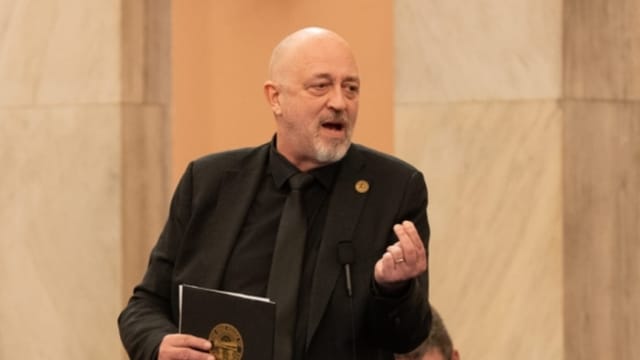
A bipartisan bill to ban child marriage entirely — Senate Bill 341, introduced in February by Sens. Bill Blessing (R-Colerain Twp.) and Bill DeMora (D-Columbus) — was referred to the Senate Judiciary Committee and has not received a vote.
“For God’s sakes, why wouldn’t we do this?” Blessing said at the bill’s introduction. “We really should not have a situation where children have the ability to get married in Ohio.”
Advocates say child marriage enables abuse
Victim advocates have long argued that Ohio’s marriage laws create conditions for exploitation. Married minors are emancipated from their parents, meaning they become financially dependent on their spouse. They typically cannot access domestic violence shelters, retain attorneys, or file for divorce on their own.
“When one spouse is a minor, the power imbalance is easier to exploit, harder to push back against, and harder to escape,” said Maria York, policy director for the Ohio Domestic Violence Network, at the February press conference for SB 341, according to NBC4.
Fraidy Reiss, executive director of Unchained At Last, described marriage at 17 as “a nightmarish legal trap” in which minors — almost always teen girls — are left dependent on adult husbands with no legal recourse.
Data from Unchained At Last cited by lawmakers shows more than 5,000 underage girls were married in Ohio between 2000 and 2024.
What HB 249 prioritized instead
Rather than closing the spousal exemption for minors in the public indecency statute, HB 249 added new provisions targeting drag performers and transgender Ohioans.
The bill expands the definition of “adult cabaret performance” to include “performers or entertainers who exhibit a gender identity that is different from the performer’s or entertainer’s biological sex using clothing, makeup, prosthetic or imitation genitals or breasts, or other physical markers.” It bans such performances in any public venue where a minor may be present.
A separate provision changes the public indecency statute from “private parts” to “private area” — a change that advocates say would criminalize transgender and gender-nonconforming people who use gendered public facilities like locker rooms during daily life.
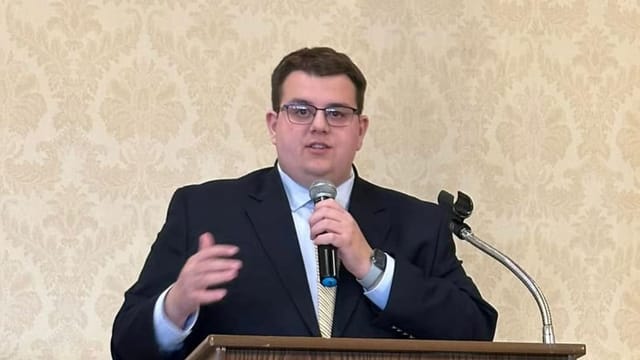
Primary sponsor Rep. Josh Williams (R-Oregon) confirmed that interpretation during floor debate, saying the bill would stop transgender Ohioans from using gendered public facilities. Before the full House vote, Williams appeared to call transgender people “perverts.”
“As long as I’m alive, I’m going to prevent perverts from exposing kids to obscene material,” Williams said.
Public performances that meet the definition of obscenity are already illegal under existing Ohio law.
The contradiction
Ohio House Republicans voted Wednesday to criminalize drag performances and gender nonconformity as threats to children. They did not vote to remove the clause in the same statute that exempts married minors from indecent exposure protections.
The bill to actually end child marriage in Ohio — SB 341 — remains in committee. HB 249 now heads to the Ohio Senate.