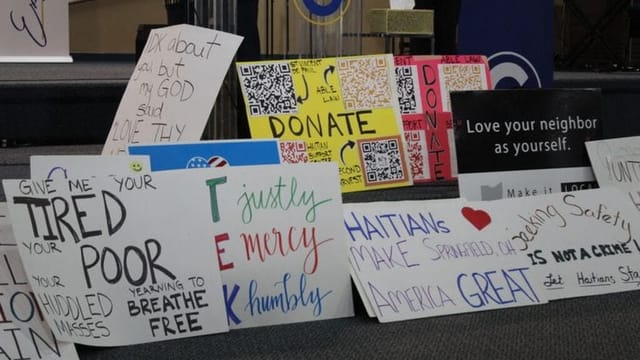

Anxiety among Haitians in Ohio has been growing as the federal government has started flying people who lost protected status back to the troubled Caribbean country.
Meanwhile, an aid organization, the International Rescue Committee, reports that attacks are spreading in Haiti.
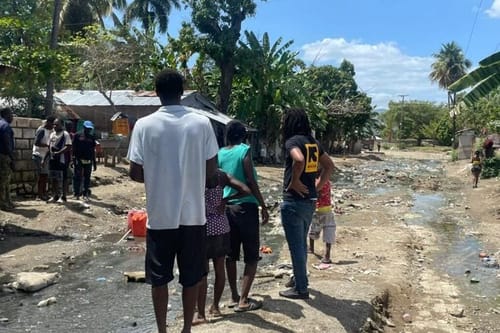
Gangs already rule most of the capital, Port-au-Prince. And they’re expanding their influence into the rest of the country using murder, kidnapping and sexual violence — including against children — to do so.
Now the violence has devastated Kenscoff, a farming community about 12 miles south of Port-au-Prince, the International Rescue Committee said last week.
Recent violence there caused 50 kidnappings and at least 47 deaths, the aid group reported.
It “reflects an escalating, deadly pattern for civilians as gangs continue to expand their territory outside of the capital and destabilize surrounding areas, the International Rescue Committee is warning,” the group said in a written statement. “The IRC is working with our local partner Organisation Féministe Marijàn to scale up critical protection services and cash assistance for communities affected by the latest violence.”
The violence and displacement come in a country where more than half the people can’t get enough to eat, Allie Pasieka, the International Rescue Committee’s Deputy Director of Programs in Haiti, told the Capital Journal last month.
And the additional violence makes it even more difficult to address such problems.
As it occurs, Haitians in Springfield and elsewhere have begun to be deported after losing temporary protected status on July 27.
“There have been at least three deportation flights of Haitian nationals who had TPS so far,” International Rescue Committee spokesperson Sylvan Foley said in an email. “From what our team has seen, they’re arriving in Cap-Haïtien in the north of the country, which is a relatively stable area compared to Port-Au-Prince, so we don’t have programs there. However, we’re closely monitoring as many of the people who fled were originally from (Port-au-Prince) and other highly insecure areas so we are waiting to see if they try to go back to reconnect with family or a sense of home.”
Haitians in Ohio and elsewhere received protected status after a devastating earthquake in 2010, and conditions in their home country have only deteriorated since.
The incoming Trump administration canceled most aid to Haiti in January 2025.
Then it terminated Haitians’ protected status without making a determination that it’s safe for people to return. The law creating protected status requires such a determination, but the U.S. Supreme Court in June said in a split decision that the courts can’t review such actions.
Since August, former holders of protected status have been called in by immigration officials and fitted with electronic ankle monitors — sometimes with tragic results.
Pierre Damas Bel, a 20-year-old Wright State University student, walked in front of a tractor trailer on Interstate 70 on Aug. 31. His family said he had been harassed by other students about his ankle monitor.
In addition to the humiliation of wearing such a device, the prospect of going back to a place as dangerous and dysfunctional as Haiti is causing terror, immigrant advocates say.
The recent events in Kenscoff only add to such fears.
“People in Kenscoff are facing a cycle of unimaginable violence — something all too common for many communities in Haiti,” Mwiti Mungania, the Internal Rescue Committee’s Country Director for Haiti, said in a written statement. “The toll of losing your home, loved ones, your sense of safety, over and over again is hard to overstate. This compounding burden of repeated displacement not only makes it harder for humanitarian workers to reach those in need, it creates an atmosphere of fear that remains long after the attack ends. Every day our staff and partners hear reports of kidnapping, forced recruitment and sexual violence. This is why our protection interventions are essential, supporting people on the path back to psychological safety and stability.”
This story is republished from the Ohio Capital Journal under a Creative Commons license. View the original article.