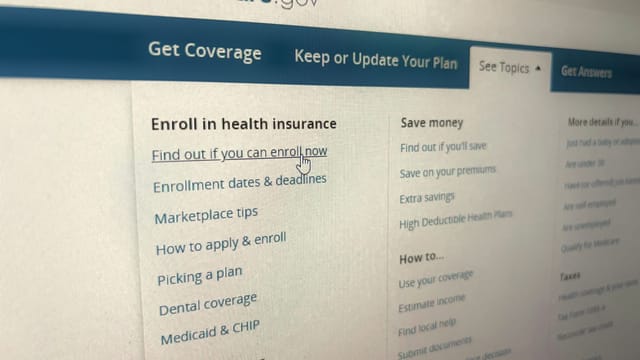


Ohio has seen the biggest enrollment drop of any state since congressional Republicans allowed subsidies for insurance in Affordable Care Act marketplaces to expire, nearly by a third of the half-million Ohioans who bought insurance there dropped it.
Now, faced with a smaller, sicker clientele, the 11 insurers remaining in Ohio’s marketplace are proposing to increase premiums on average by 14.7% for 2027, according to an analysis by the Center for American Progress.
Natasha Murphy, the group’s director for health policy, said the new expense will only add to the burden besetting hundreds of thousands of Ohioans who are already struggling to get by.
“It’s just exacerbating the affordability crisis that millions of Americans are finding themselves in — especially as it relates to their monthly premiums,” Murphy told the Capital Journal.
Last summer, congressional Republicans renewed President Donald Trump’s 2017 tax cuts. That was a provision in Trump’s Big Beautiful Bill that provided $1 trillion in cuts for the richest 1% of Americans over 10 years while cutting more than $1 trillion from Medicaid and federal food assistance over the same period.
And while they renewed the tax cuts, congressional Republicans last year declined to renew pandemic-era subsidies for insurance purchased on the ACA exchanges. That caused premiums to more than double for nearly 497,000 Ohioans who bought their health insurance there.
It would have cost about $350 billion to extend the subsidies to 24 million Americans for 10 years. Meanwhile, Trump’s war of choice with Iran has created $38 billion in direct costs in six months — with no end in sight.
After the subsidies expired, 161,000 Ohioans dropped marketplace coverage.
That leaves insurers with customers who are likely to be sicker and more expensive to cover, Murphy said.
“They’re anticipating that the folks who remain in the market are going to be sicker and more expensive,” she said. “A lot of the folks who were healthier — and unfortunately some folks who weren’t that healthy — thought they weren’t able to afford their coverage and dropped out of the marketplace.”
The coverage losses on ACA exchanges come as policymakers are bracing for the brunt of Medicaid cuts to kick in Jan. 1. The Big Beautiful Bill hopes to create the biggest savings by placing bigger paperwork burdens on recipients and restricting states’ ability to raise revenue.
The Congressional Budget Office estimates that the provisions in the Trump bill and the expiration of ACA subsidies will lead to 16 million more Americans being without health insurance by 2034.
Murphy sees the moves as part of a long-term Republican project to undermine the Affordable Care Act, President Barack Obama’s signature legislation — and even Medicaid itself. She called it “death by a thousand cuts.”
“And then when you look at the Medicaid work requirements and what it’s going to take for states to finance their Medicaid programs, it’s a full-throated attack on the ACA,” Murphy said. “But it’s also a pretty significant undermining of Medicaid as a core health-safety net for millions of Americans.”
If so many Americans lose their insurance, it will have downstream consequences.
Emergency departments — especially those in rural communities and poor neighborhoods — will be forced to care for more, sicker people who can’t pay. That will force those hospitals to cut services or even close, ER docs warn.
“The unfortunate reality is that hundreds of thousands of Americans have dropped marketplace coverage, many of whom are and will remain uninsured,” Murphy said. “That’s going to have broad implications for individual and family-level health, but more broadly, you’re going to see providers and hospitals see their uncompensated care costs rise and that’s all going to be exacerbated by the upcoming Medicaid changes.”
This story is republished from the Ohio Capital Journal under a Creative Commons license. View the original article.