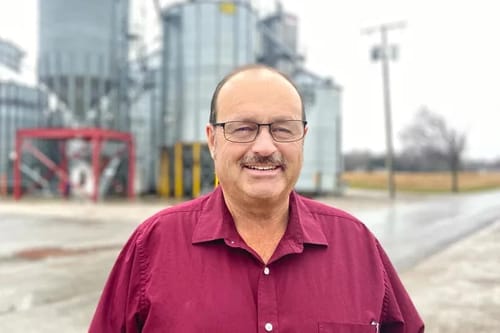
TIFFIN, Ohio — Seneca County Commissioner Bill Frankart called Health Commissioner Julie Richards on Jan. 7 to express what she described as “concerns” about her inquiry into Seneca Poultry LLC — an inquiry she had launched days earlier at the request of a Common Pleas Court judge and a local resident worried about groundwater contamination near a closed landfill, TiffinOhio.net has learned.
Three months later, in an Advertiser-Tribune candidate Q&A published the week of April 6, Frankart told voters that Seneca Poultry “is locally monitored by the Seneca County Soil and Water Conservation District.” That claim was publicly corrected by Seneca Conservation District Administrator Morgan Metzger, who told the Advertiser-Tribune that her agency has no role in monitoring the facility and was directed by the Ohio Department of Agriculture from the outset that all oversight is handled exclusively by ODA’s Division of Livestock Environmental Permitting.
The sequence raises a pointed question: if Frankart did not know who is responsible for overseeing the poultry operation, what exactly was he concerned about when he called the health commissioner?
The details of Frankart’s call and Richards’ broader inquiry are laid out in a timeline document prepared by the Seneca County General Health District, dated Jan. 9, 2026. The document, obtained by TiffinOhio.net, traces the health district’s involvement day by day, beginning on Dec. 31, 2025.
How the inquiry began
On Dec. 31, 2025, Richards received an email from Seneca County Common Pleas Court Judge Steve Shuff requesting that she look into a resident’s concerns about a well drilled near the former County Road 90 Landfill, where the City of Tiffin dumped waste from 1956 until it was closed in 1972.
The resident, Rachel Riley, told health district staff that a well had been drilled within 300 feet of the closed landfill. Riley said the well was not listed on the required Ohio 513 form filed by Seneca Poultry managing partner John Bolte. She expressed concern that the law had not been followed and that groundwater could be contaminated. Riley requested the well be capped and sealed until proper testing and paperwork were completed.
Ohio Administrative Code Chapter 3745-513 governs drilling, building, and excavating on or near former solid waste sites. The 300-foot threshold is significant: activities within that distance of a closed landfill’s waste boundary trigger regulatory requirements designed to protect against disturbance of buried waste and contamination of groundwater.
Richards reviewed Bolte’s Ohio 513 form and confirmed it did not mention the well.
The facility has been the subject of sustained public concern over its proximity to the Sandusky River, the former landfill, and the potential for runoff from the operation to increase drinking water treatment costs for Tiffin residents.
State and local agencies struggled to get answers
Richards spoke with Ryan Sendelbach, the health district’s Director of Environmental Health, who said the only involvement the health district had with the property was approving the first well — one drilled more than 1,000 feet from the landfill, as required by state law for potable wells.
Richards also called Seneca County Prosecuting Attorney Derek DeVine, who told her he had been trying to get information about the well drilled within 300 feet of the landfill but had been unable to get responses from the Ohio EPA or other agencies with the information needed to act.
On Jan. 6, Richards sent a public records request to Allison Reed at the Ohio EPA requesting all Ohio 513 forms filed by Bolte or on behalf of Seneca Poultry. Richards noted she had been told by the Ohio Department of Agriculture that a second Ohio 513 form existed, because the first one did not mention the well near the landfill. Reed responded that the agency had received the request and was working on it.
Frankart’s call
On Jan. 7, Frankart called Richards. According to the health district’s timeline, when Richards returned the call, Frankart “expressed concerns about my inquiry into Seneca Poultry, LLC.” The timeline states that Frankart “said he understood my need as the Health Commissioner to inquire and get answers.”
The same day, Richards received a voicemail from Bolte asking her to return his call, and an email from Riley’s attorney also requesting a callback.
What Bolte told the health commissioner
On Jan. 8, Richards returned Bolte’s call. According to the timeline, Bolte told Richards he had filled out the Ohio 513 form in July with the Ohio EPA’s Division of Solid Waste. He said he asked the agency where to list the well on the form, did not receive a response, and the 30-day window expired. Bolte said the Ohio EPA took no action and never responded.
Bolte told Richards that on Dec. 30, the Ohio EPA verbally directed him to complete a second Ohio 513 form. He said he asked the agency to put that directive in writing, but it did not. He therefore did not file a second form disclosing that a well would be drilled within 300 feet of the closed landfill.
That same week, The Toledo Blade reported that one of the two wells at the Seneca Poultry site is only 70 feet from the former landfill. Although classified as nonpotable, the well’s proximity to decades-old municipal waste raised concerns among residents and local officials about potential groundwater contamination. The Blade also reported that one of Seneca Poultry’s two barns was built only 100 feet from the landfill — 200 feet closer than the 300-foot buffer normally required by state law.
Then came the candidate Q&A
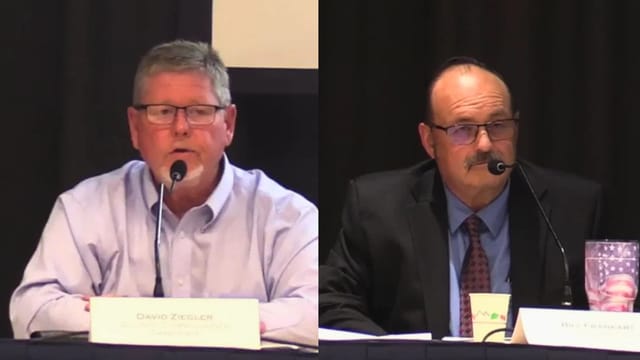
Three months after his call to the health commissioner, Frankart submitted his responses to the Advertiser-Tribune’s candidate Q&A ahead of the May 5 Republican primary for Seneca County Commissioner. Asked about the Seneca Poultry operation, Frankart stated the facility “is locally monitored by the Seneca County Soil and Water Conservation District.”
That was wrong.
Seneca Conservation District Administrator Morgan Metzger corrected the record in an article published by the Advertiser-Tribune on April 6. Metzger told the newspaper that the conservation district was directed by the Ohio Department of Agriculture from the beginning of Seneca Poultry’s operation that all oversight is handled exclusively by ODA’s Division of Livestock Environmental Permitting. The conservation district has no role in monitoring the facility.
The distinction is not academic. Seneca Poultry’s size — nearly 120,000 egg-laying chickens as of early January, according to The Blade — places it under state jurisdiction as a concentrated animal feeding operation. The Seneca County Soil and Water Conservation District has authority over manure application at smaller farming operations, but facilities permitted through ODA’s Division of Livestock Environmental Permitting or the Ohio EPA fall outside its scope.
Frankart acknowledged the error in his response to the Advertiser-Tribune, saying his understanding of the oversight structure had evolved. “This is the first permitted livestock facility in Seneca County, so we are all learning the process,” he said.
Frankart is a former member of the Seneca County Soil and Water Conservation District board.
The primary
Frankart faces Republican challenger Jim Distel, a Clinton Township trustee, in the May 5 primary. In the same Advertiser-Tribune Q&A, Distel said he had heard from residents who “felt dismissed or intimidated when raising concerns about the poultry operation.” Distel said he would “never bully residents or approach decisions with a predetermined outcome.”
Early voting in the May 5 primary begins April 7 at the Seneca County Board of Elections, 71 S. Washington St. in Tiffin.